Category: Commercial Roofing

The Best Roofing System for Restaurants: Duro-Last PVC

When it comes to choosing the best roofing system for restaurant owners, having a reliable, high-performing roof is critical to the long-term protection of your business. That’s why our team of roofing experts recommend the Duro-Last roofing system as the ideal roofing solution for restaurants.

In this blog post, we’ll explain what is Duro-Last PVC (Polyvinyl Chloride), the features that come along with this roof system, and why it’s the best choice for your restaurant.

Let’s get started!

What is Duro-Last PVC Roofing?

duro last logo

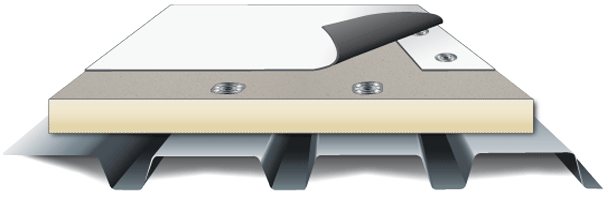
The Duro-Last PVC roofing system is a custom fabricated system consisting of a flexible, single-ply thermoplastic membrane optimal for flat or low slope roofs. 

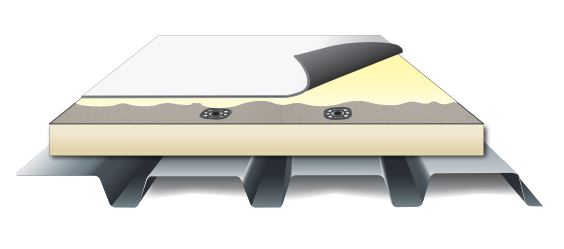
The Components of PVC

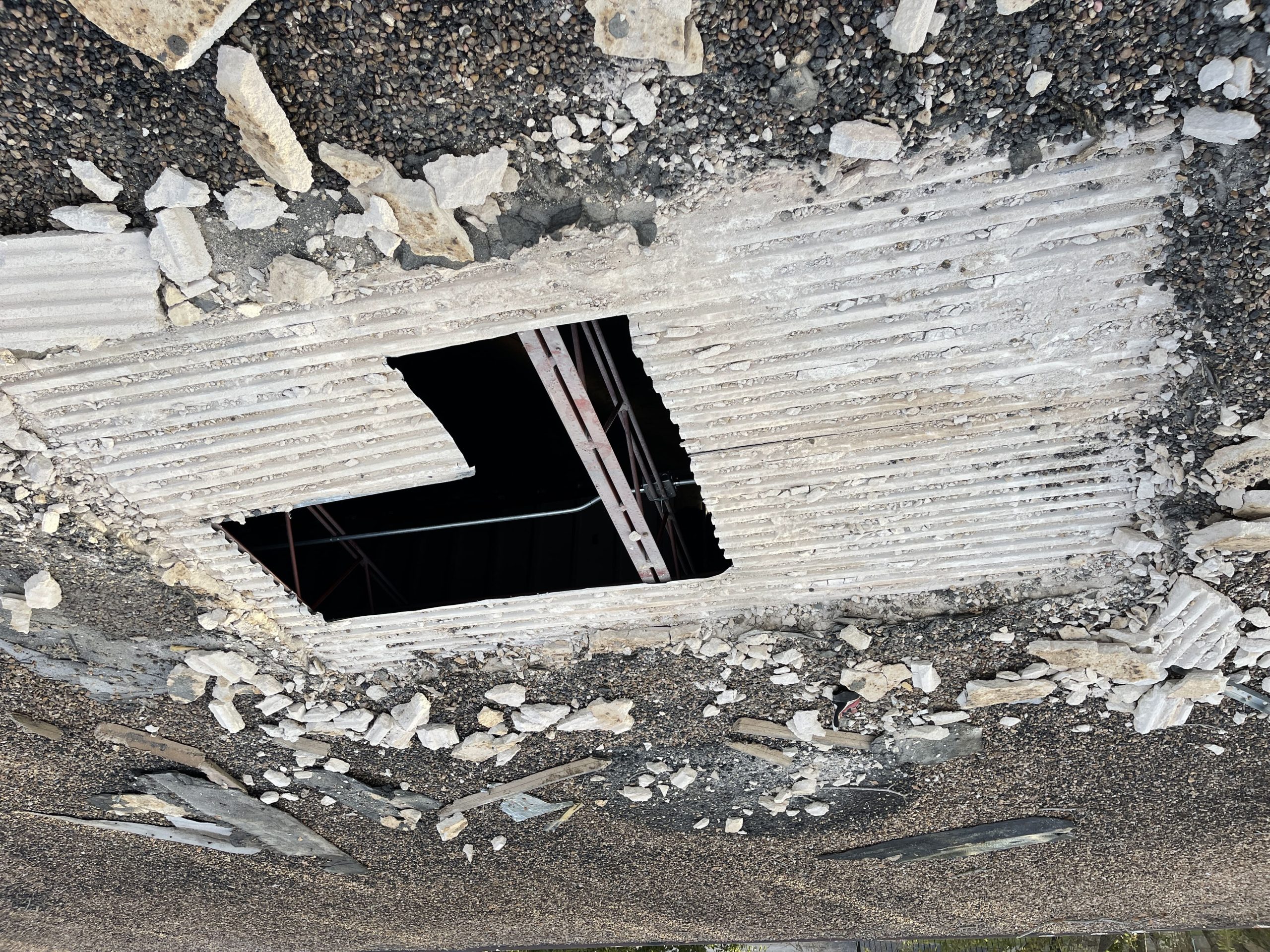
Roof Decking

A roof deck is the foundation for your roof. Deck material is the important structural element that helps support the insulation and waterproofing (membrane layers). Whether the project is a membrane tear-off, complete reroof or new construction the roof deck will be visually inspected before the application of the roof system. 

Main Types of Commercial Roof Decking:

  • Plywood or Oriented Strand Board (OSB)
  • Steel – cold-rolled, corrugated
  • Structural Concrete
  • Lightweight Insulating Concrete
  • Gypsum

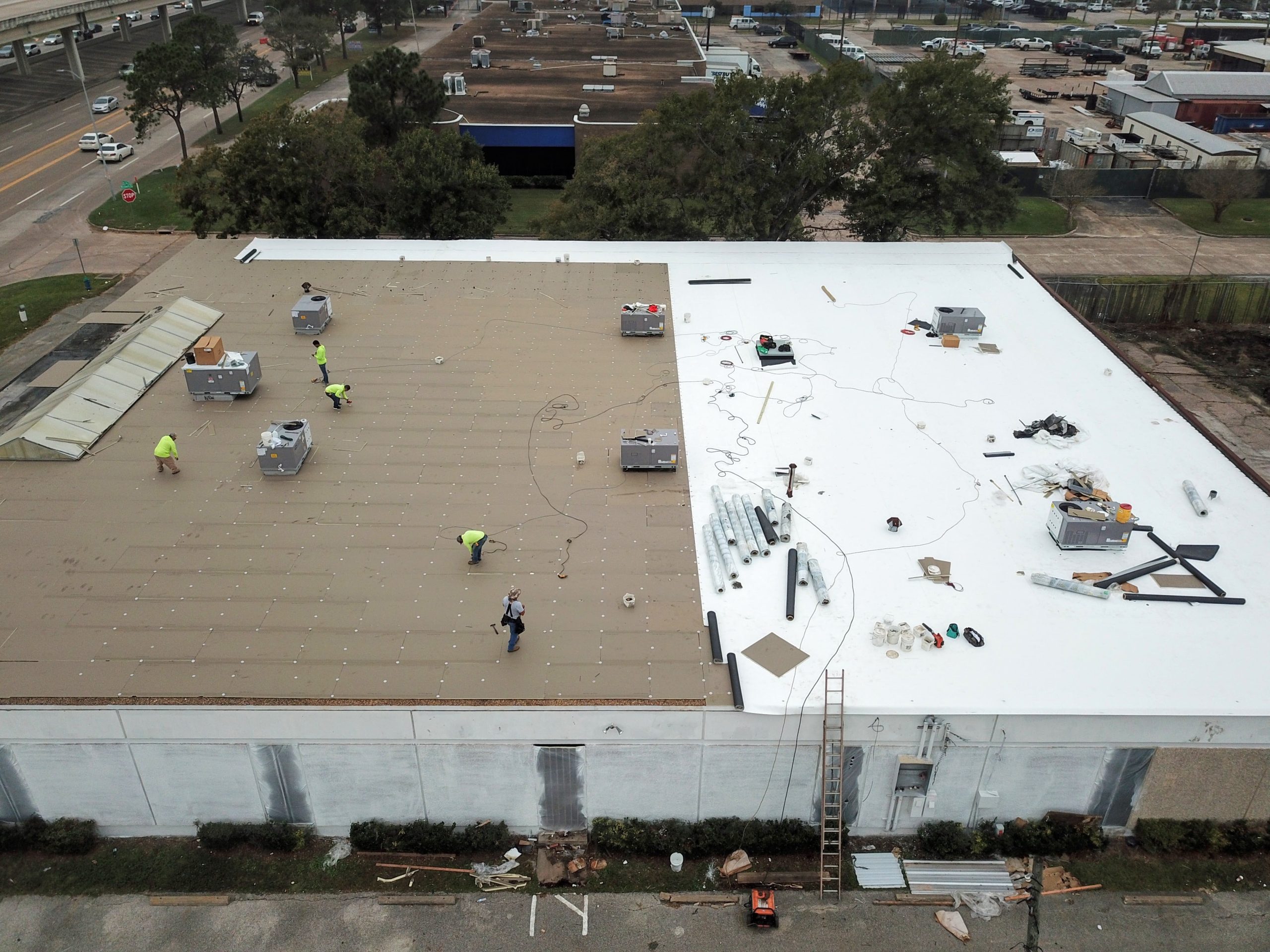
Base Layer is Metal Panel Decking, Repaired Section of Decking

Complete Tear-Off

Insulation

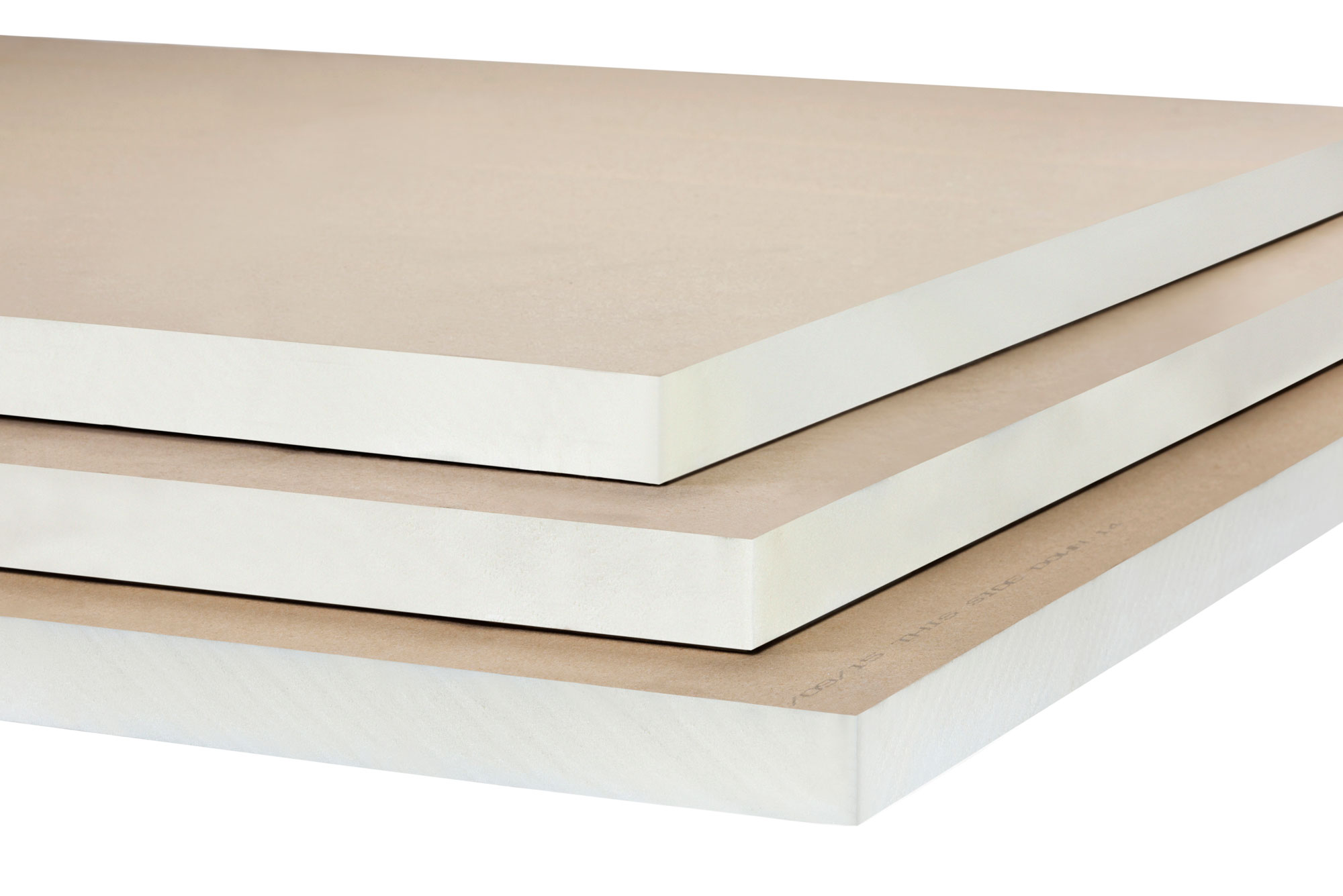
This is the key to energy efficiency. Polyiso (polyisocyanurate) is the most commonly used type of insulation. It offers the highest R-value of any rigid insulation. R-value measures the insulation’s resistance to heat flow. It’s important to note that for commercial buildings, there are minimum insulation R-value requirements that vary from state.

Popular Types of Roof Insulation Available:

  • Duro-Guard ISO
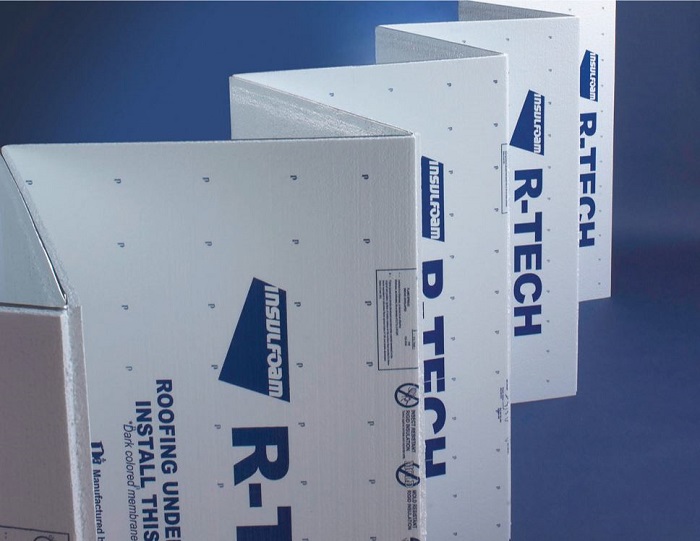
  • Duro-Guard EPS Fan-Fold
  • DensDeck
commercial roof installation

Duro-Guard EPS Fan Fold

Duro-Guard ISO

Find the minimum insulation R-value requirements for commercial buildings here

Roof Membrane

Duro-Last’s roof membranes come in varying thicknesses, measured in mils. The membranes are available in custom-fit, prefabricated sections. This membrane is custom-fabricated in sections up to 2,500 square feet, fitting each roof precisely to its unique specifications. Instead of in the field, up to 85 percent of the seams are completed under ideal, factory-controlled conditions – reducing waste, saving on labor and preventing leaks.

Membrane Thickness Options:

  • 40 mil
  • 50 mil
  • 60 mil

Installation Process

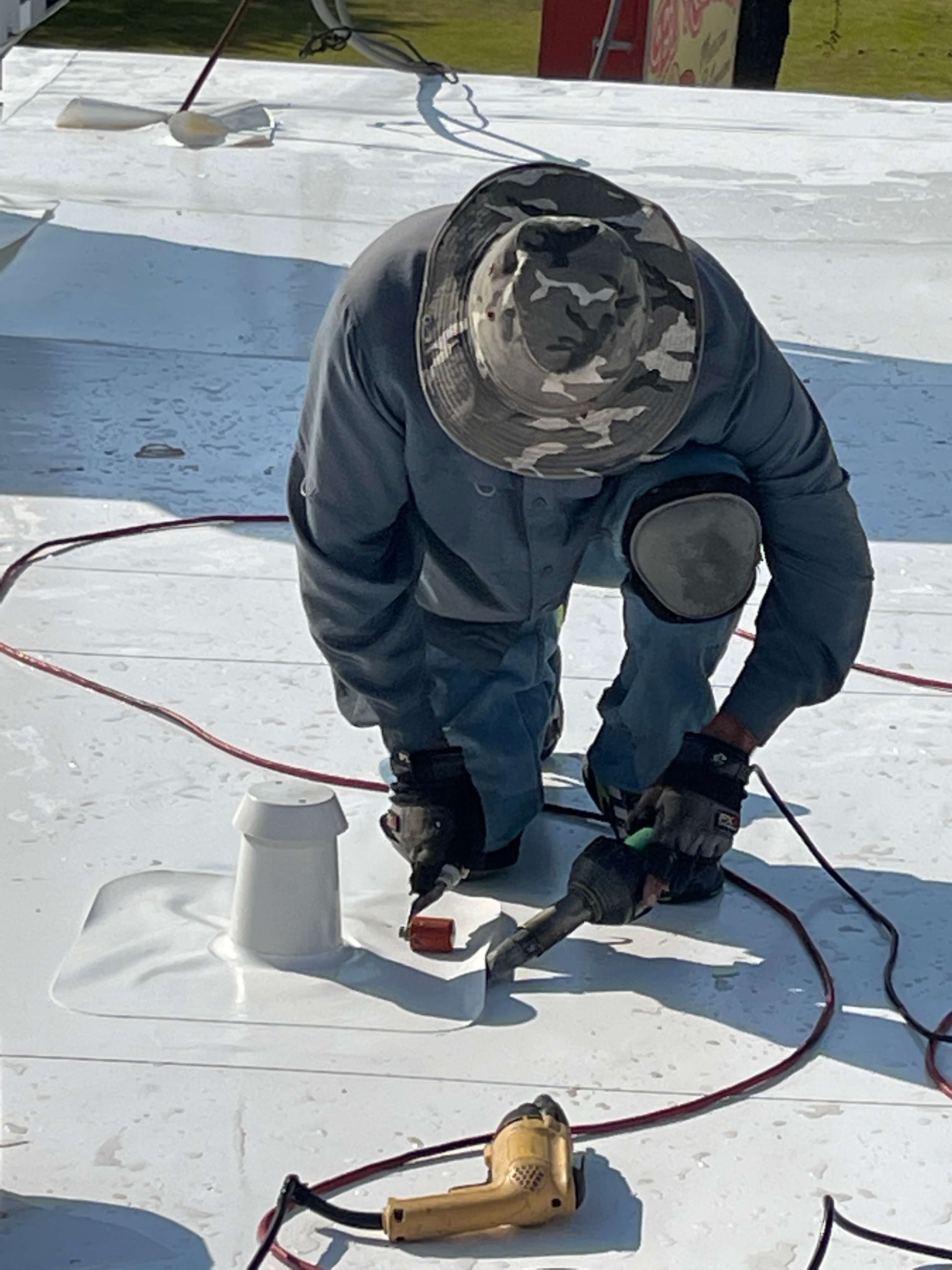
Mechanically attached: The membrane is securely attached to the underlying roof deck using plates and fasteners along the seams, then the overlapping seams are heat welded using a heat gun or welding machine.

Fully adhered: The membrane is bonded directly to the insulation or roof deck using a bonding adhesive or low rise spray foam, typically the low rise spray foam sticks better. Then the overlapping seams are heat welded using a heat gun or welding machine.

Accessories

The Duro-Last system also includes prefabricated flashing, boots for pipes, and vents, ensuring a perfect fit for each roof. Custom-fabricated flashings are manufactured with Duro-Last membrane material and feature a weft-inserted scrim which provides puncture and tear resistance along with tensile strength at transitions – the most critical areas of any roof installation.

Why PVC Duro-Last Is Ideal for Restaurants

Durability

Duro-Last roofs are recognized as the best roofing system for their excellent durability and long-term performance. Here are a few features that contribute to the durability of a Duro-Last roofing system:
  • Various membrane thicknesses based on specific needs, with thicker membranes offering better resistance to wear and tear.
  • Resistance to chemicals, oils, and grease—critical for restaurant kitchen exhausts that can cause buildup on the roof.
  • The ability to withstand high winds and extreme weather conditions.
  • Reduced on-site installation errors and minimized seam completion thanks to each roof’s prefabrication at a Duro-Last manufacturing plant.
  • Resistance to punctures and tears from foot traffic, debris, or maintenance equipment.
  • Heat-welded seams provide a watertight bond that protects against leaks and weather damage.

This positions Duro-Last as the best roofing system for commercial and restaurant environments.

Longevity

A typical Duro-Last roof has an impressive lifespan of about 20-30 years. This longevity is primarily determined by two key factors: the thickness (mil) of the membrane and the quality of the installation.

Thicker membranes offer increased durability, providing better protection against the wear and tear common in commercial settings, particularly restaurants. Proper installation is also critical, as Duro-Last roofs are prefabricated in a controlled environment to ensure precision and reduce on-site errors, further enhancing their lifespan. With the combination of high-quality materials and expert installation, Duro-Last is consistently the top choice available, offering restaurant owners a reliable, long-lasting solution that can withstand the demands of their environment, from heavy foot traffic to harsh weather conditions.

Energy Efficiency

The Duro-Last PVC roofing system is engineered for energy efficiency, significantly reducing your restaurant’s HVAC expenses. Its white, reflective membrane deflects the sun’s heat, helping your HVAC system operate more efficiently and lowering energy consumption. Additionally, the insulation’s high R-value enhances temperature control by reducing heat transfer, keeping your restaurant cool during hot weather and warm during colder months.

Fire-Resistance

The PVC formulation incorporates fire-retardant chemicals that enhance its resistance to combustion, prevent the spread of flames and also makes it self-extinguishing, adding an extra layer of protection to your roof. Duro-Last roofing membranes meet or exceed major national fire and wind code requirements, as well as most required regional approvals throughout the country.

Low Maintenance

Duro-Last roofs require minimal maintenance however, it is still important to keep your roof maintained and clean to maximize the roof’s lifespan. Here are a few maintenance tips to do so :

  • Inspect for leaks in the building after severe weather storms
  • Minimize foot traffic as much as possible
  • Conduct a roof cleaning 1-2 times per year, checking for screws, nails, sharp objects, or outside debris (especially if building is surrounded by a lot of trees/vegetation) 
  • Schedule roof inspection at 15 years mark

You can find Duro-Last’s Care and Maintenance Guide & Owner Checklist here 

What is the Cost of a Duro-Last Roof System?

The average Duro-Last roofing cost per square foot is approximately $7.50 with a varying range of $6-$12+ per square foot. The pricing for your roof system can depend on these following factors:

  • Size of your roof (square footage)
  • Current roof system (one layer, two layer application process) 
  • Insulation requirements
  • Thickness of Membrane Choice
  • Installation Choice
  • Roof pitch
  • Warranty 

Types of Warranty Offered for the Duro-Last Roofing System

Unique in the industry, Duro-Last offers a 15-Year Supreme Warranty with consequential damage coverage for commercial applications of the Duro-Last Roofing System. Additional Supreme warranties, as well as our Basic, Ultra and Residential warranties are also available. Hail and high-wind warranties can also be obtained for Duro-Last installations.

Additionally you will receive our own Company 10 Year Material and Labor Workmanship Warranty with every job completion.

Restaurants that use Duro-Last Roofing

Several well-known names in the fast food industry including, Chick-fil-A, Jack in the Box, Wendy’s, and Sonic, have chosen the Duro-Last roofing system for their locations. Here are a few Duro-Last commercial projects we’ve completed, highlighting some restaurants.

Conclusion

Ultimately, Duro-Last PVC roofing stands out as the top choice for restaurant owners due to its optimal performance features. Its custom fabrication, tailored specifically to each individual roof, combined with a controlled manufacturing process that ensures a precise fit, sets it apart from the competition. Whether you’re launching a new restaurant or upgrading an existing roof, Duro-Last provides the reliability and durability your business needs to operate smoothly for years to come. One final important note: selecting a certified and experienced roofing contractor is crucial to ensuring proper installation, helping you avoid unnecessary and costly repairs down the road caused by negligence or inexperience. 

What Is TPO Roofing? The Ultimate Guide To TPO

Discover The Benefits & Disadvantages of TPO Roofs

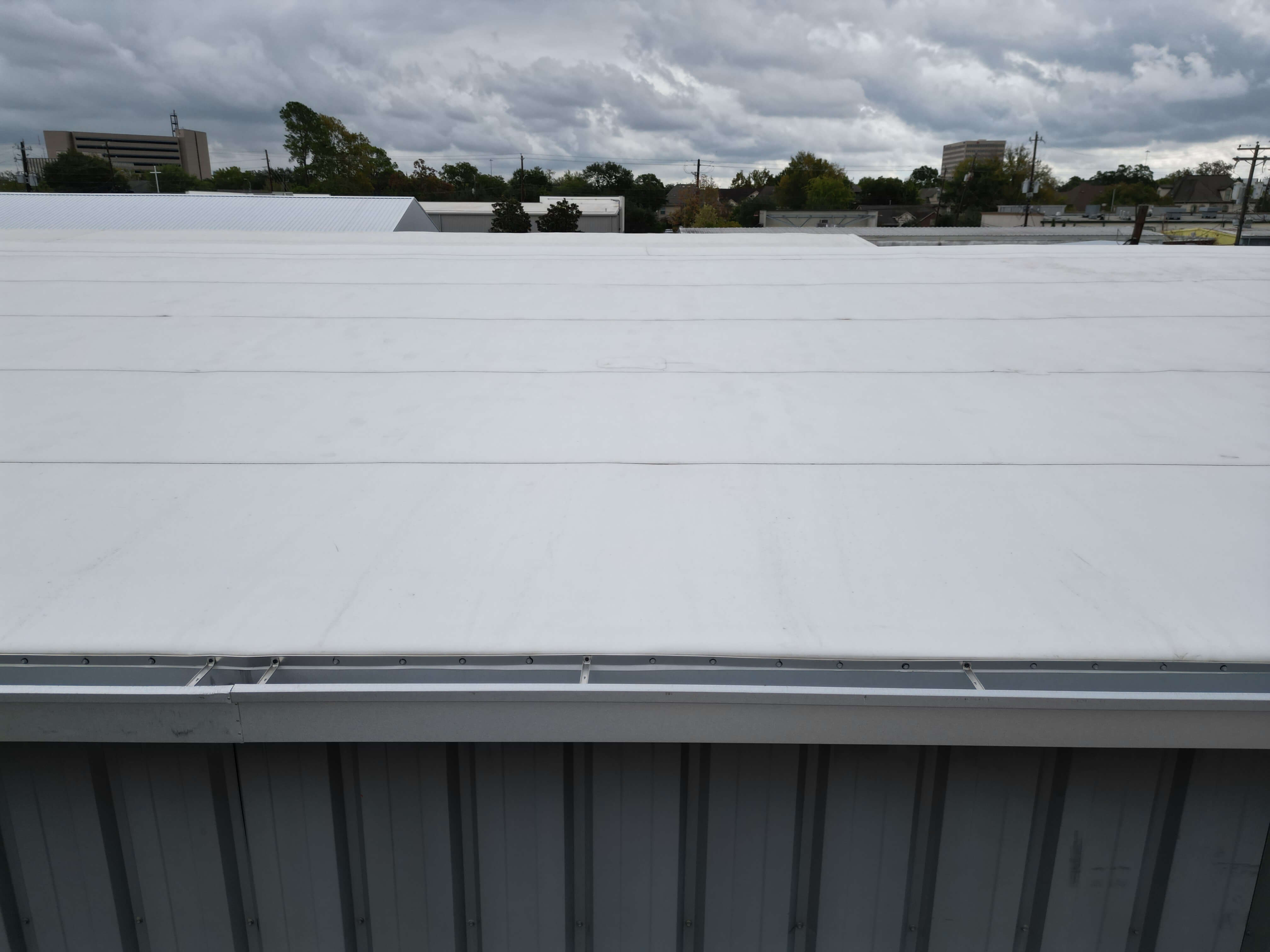
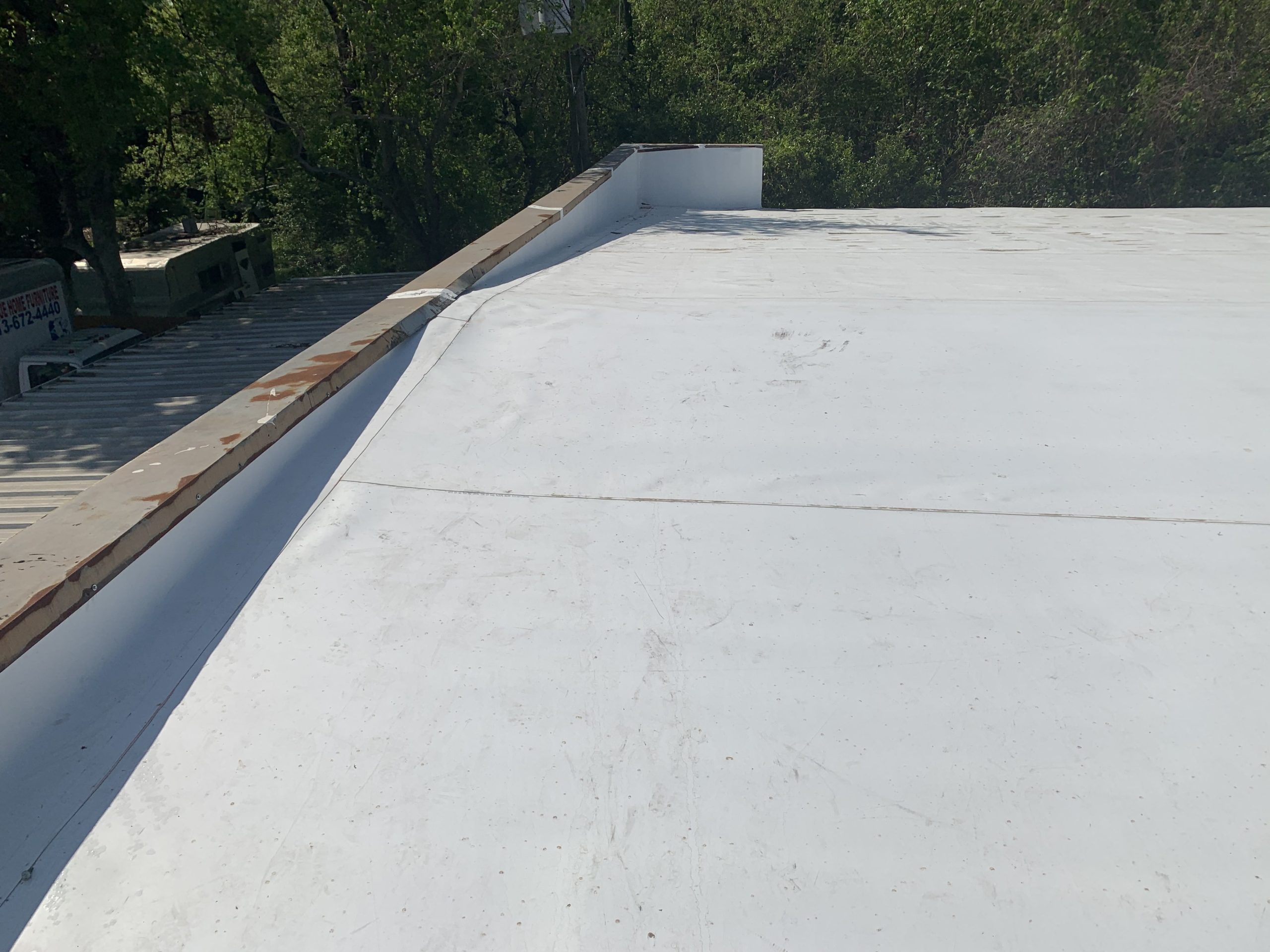
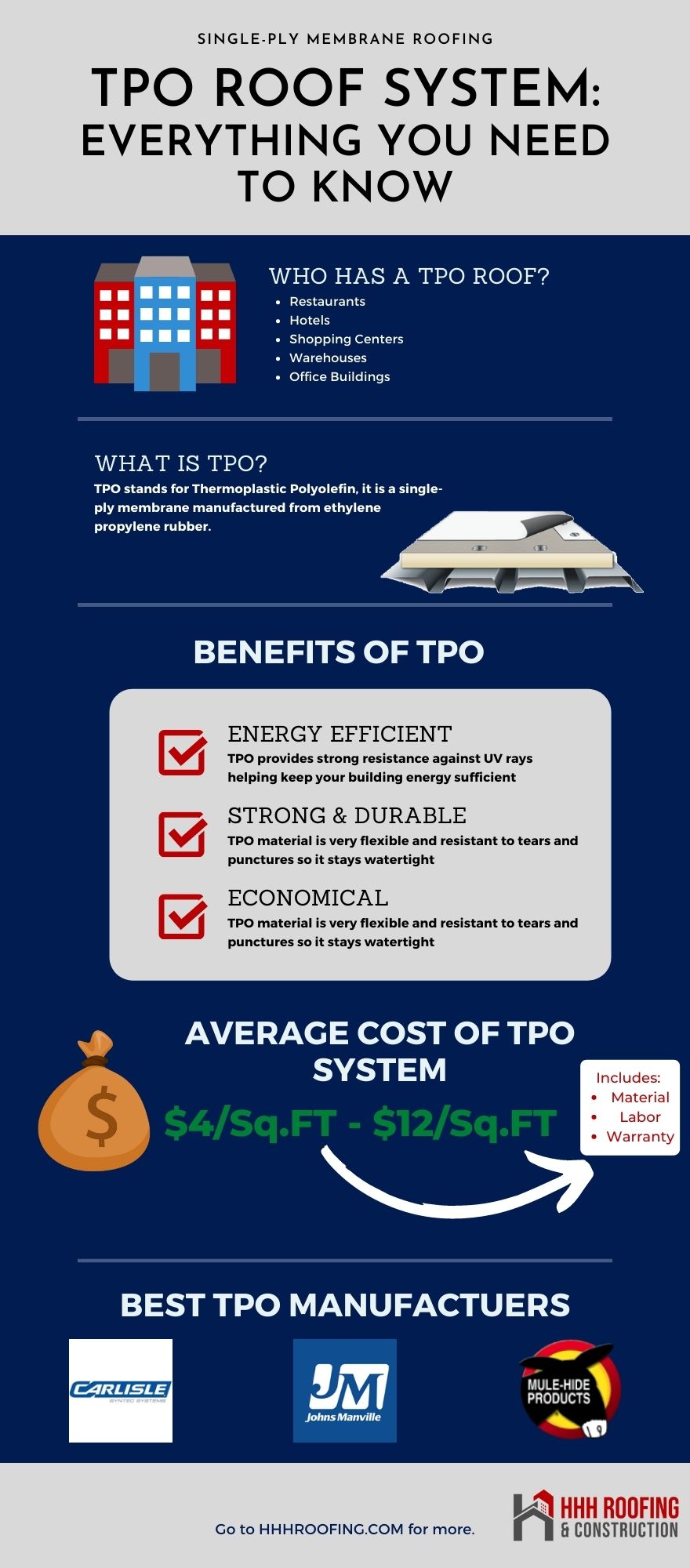
TPO roofing, short for Thermoplastic Olefin, is a versatile, durable, and energy-efficient option for flat roofs in various climates. Comprising rubber, plastic, and reinforcing materials, it resists UV rays, chemicals, and the elements. Ideal for energy-efficient buildings, it’s a preferred choice for residential and commercial properties due to its ease of installation and low maintenance.

According to reports and data, it stands out as one of the most rapidly expanding roofing systems in the industry.

Benefits of TPO Roofing for Houston Commercial Properties

  • UV Resistance and Durability: TPO roofing stands strong against UV rays and harsh weather conditions, extending its lifespan.

  • Energy Efficiency: Its reflective properties deflect sunlight, reducing cooling costs, and contributing to energy-efficient buildings.

  • Leak Prevention: TPO’s flexibility and strong seams help prevent leaks, ensuring reliable protection for flat roofs.

  • Cost-Effectiveness: TPO roofing is a budget-friendly option compared to some alternatives, offering long-term savings.

  • Low Maintenance: Requiring minimal upkeep, TPO roofing remains a hassle-free choice for property owners.

  • Variety of Colors: With a range of color options, TPO roofing can complement a building’s aesthetic while maintaining its functionality.

How Do You Install TPO?

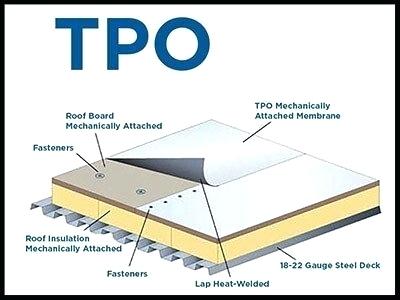
Mechanically Attached

Mechanically attaching TPO roofing involves securing the membrane with fasteners and plates, providing stability and efficiency in flat roof installations.

Fully Adhered

Adhering TPO roofing means bonding the membrane with adhesive directly to the substrate, offering a seamless appearance and strong protection against leaks and elements.

Induction Welding

Induction welding TPO roofing uses electromagnetic energy and specially designed plates to melt and fuse the membrane with the substrate, creating secure and durable seams without open flames or adhesives. This method is efficient, safe, and known for its reliability in roofing applications.

How long does TPO Roofs Last?

TPO roofing is renowned for its durability, making it a solid choice for homes and businesses alike. Generally, a well-installed TPO roof can last anywhere from 20 to 30 years or more. This resilience is due to TPO’s resistance to UV rays, weather, and its ability to reflect heat. Regular maintenance, including inspections and debris removal, can help extend its lifespan. Manufacturer warranties often provide insight into the expected longevity, usually ranging from 15 to 30 years based on various factors. In essence, TPO roofing offers a long-lasting solution with proper care, ensuring reliable protection for decades.

What insulation is needed for a tpo roof?

When considering insulation for a TPO roof system, the approach is tailored to the specific building. Each building and TPO roof configuration is unique, influenced by factors like:

  • The existing roof on the building
  • The number of insulation layers already in place
  • The required R-value for the building
  • Warranty specifications stipulated by TPO manufacturers

Below, we outline typical insulation options commonly encountered:

EPS Fan fold

EPS Fan Fold Insulation stands as a prevalent and cost-effective insulating option. While it offers a relatively low R-Value of approximately 2.27, its popularity is driven by its affordability. This type of insulation is frequently chosen when installing a TPO Roof over existing surfaces like an old TPO Roof, modified torch roof, or coatings.

Poly Iso

Another prevalent insulation choice is POLY ISO, frequently available in sheets of 4×8 or 4×4. Its R-Value is contingent on the thickness chosen, ranging from 1″ to 2.2″, 3″, and more. On average, it offers an R-Value of approximately 6.5 per inch. This insulation finds common application in new constructions, over graveled roofs, modified torch roofs, or when increasing the building’s R-Value to comply with codes. Pricing fluctuates based on the chosen thickness.


TPO Roofing Installation for Houston Commercial Roofs

Installing TPO roofing on commercial properties in Houston demands a meticulous process to ensure longevity and performance. Below is an outline of the essential steps involved in the installation:

1. Surface Preparation:

  • Thoroughly clean and inspect the roof surface, ensuring it is free of debris, dirt, and damage.
  • Repair any existing issues, such as leaks or structural damage.
  • Properly prepare the substrate to ensure a solid foundation for the TPO membrane.

2. Insulation Application:

  • Depending on the building’s needs and energy efficiency goals, install appropriate insulation materials.
  • Ensure proper insulation thickness and type to meet Houston’s climate demands.

3. TPO Membrane Installation:

  • Unroll the TPO membrane across the roof, ensuring proper positioning and alignment.
  • Secure the membrane using the chosen installation method: mechanically attached, fully adhered, or ballasted.
  • Pay special attention to seams, ensuring they are tightly sealed for water resistance.

4. Heat Welding Seams:

  • In the case of mechanically attached or fully adhered installations, employ heat welding to fuse the seams of the TPO membrane.
  • This process creates strong, watertight connections that prevent leaks and enhance durability.

5. Flashing and Edge Details:

  • Install flashing components around roof penetrations, edges, and corners for added protection.
  • Proper flashing ensures water doesn’t infiltrate vulnerable areas of the roof.

6. Quality Assurance:

  • Thoroughly inspect the entire TPO roofing system to identify any imperfections or defects.
  • Address any issues promptly to ensure a flawless installation.

Conclusion: TPO roofing installation for Houston commercial roofs is a comprehensive process that requires attention to detail and expertise. From preparing the substrate to fusing seams and applying proper insulation, each step contributes to a reliable and long-lasting roofing system. By enlisting the skills of seasoned professionals, businesses can ensure their TPO roof is effectively installed to withstand Houston’s weather while providing energy efficiency and protection for years to come.

Top 5 Common Causes of Commercial Roof Leaks

Commercial leaks can cause significant damage, disrupt operations, and result in financial losses for businesses. Understanding the common causes of commercial leaks is crucial for effective prevention and timely intervention. In this blog post, we will explore the top five most frequent causes of commercial leaks. By gaining insights into these common causes, businesses can take proactive steps to safeguard their properties

Table of Contents

1. Open Penetrations on roof

Penetration on the roof refers to any hole that is made through your roof. Many commercial roofs have membrane-based material that can be easily penetrated with any sharp object such as a nail or knife.

Flat commercial roofs often feature a range of components, including roof vents, HVAC units, drains, gas lines, and pipes. These elements penetrate the roof’s membrane, creating openings or passages referred to as penetrations. Areas of penetrations should be properly sealed during the initial roof installation.

How Does It Affect My Roof?

Penetrations on your roof affect the integrity of your roof. Water infiltration occurs through the opening, subsequently traveling beneath the membrane until it locates a path within the building, ultimately leading to the occurrence of a leak.

Modified Torch penetration

DuroLast Penetration

2. Installation done improperly

A common cause of a leak is ultimately the material utilized not being installed correctly. It is important to hire a company that specializes in the material that you are installing on your flat roof.

How Does it Affect My Roof?

There have been many instances where we inspect a building and find that the roofer didn’t follow the material installation guidelines. Leaving the owner with more headaches as they are now stuck with multiple issues such as leaks.

3. Improper Drainage (ponding water)

First, Let’s talk about the importance of a proper Drainage system on your flat roof. 

With flat roofs, you have to play the game a little differently in comparison to your typical traditional residential roof system. A Residential roof tends to have a slanted roof allowing the water to run down your roof onto the gutters. On a flat roof, however, you do not get that luxury since you are dealing with a low slope roof (aka a flat roof). This helps differentiate between the differences in water drainage on a flat roof compared to a slanted residential roof.

Slanted residential roof

commercial Flat roof

How Does a Proper Drainage System Help My Roof?

If water lingers in one spot for too long, it puts excessive stress and weight on the roof. This becomes even more problematic if the roof is already older or compromised because it increases the chances of leaks. Moreover, the excess water can damage the roofing material, making it more prone to future leaks. Keeping a proper drainage system can help keep water from sitting on the roof.

If you are experiencing this issue please call a trusted roofing company to come out and inspect your roof to better help the direction of water to the proper location preventing the chances of leaks. 


Ponding water examples on flat roof

4. Poorly done Repairs

There have been multiple occasions where we go up to inspect a roof and we see repairs that have just been done poorly, causing a more significant issue in the long run. It is important to make sure you are resolving the issue on deck not just posing for a temporary fix or diy situation. 

Common examples of improper repairs in commercial roofing:

  • Band-aid fixes: Applying temporary sealants or patches without addressing the root cause, such as underlying roof defects or damaged membranes.
  • Use of incorrect materials: Employing unsuitable or incompatible materials that do not provide adequate protection against leaks or weather elements.
  • Lack of professional expertise: Attempting DIY repairs without proper knowledge and training can lead to improper techniques, ineffective repairs, and compromised roof performance.

poorly done coating

poorly done coating

5. HVAC System leaking

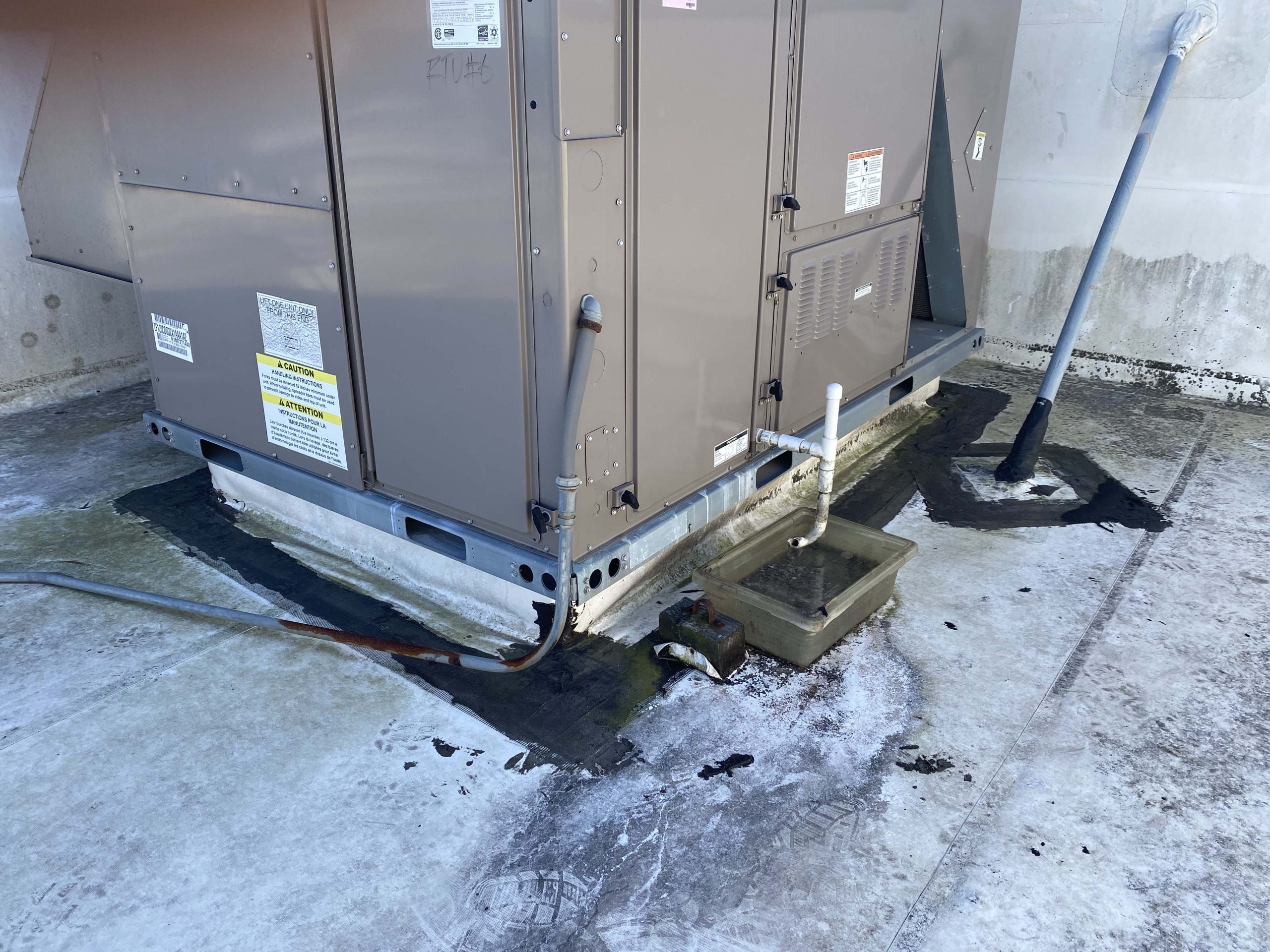
Checking HVAC systems for leaks is crucial for commercial buildings. It is common that a cause for leaks is not directly associated with any roof system but instead with the HVAC system. Certain areas of the HVAC system should be inspected to ensure effective leak detection. These include ductwork, connections and fittings, and condensate drain lines.

How can HVAC System compromise the integrity of my roof?

If the condensate pump in your AC system malfunctions or becomes dirty, it can lead to water leakage, potentially causing flooding in your attic or basement. The persistent presence of water creates a conducive environment for the growth of mold and mildew inside the unit, which can subsequently lead to clogging. By prioritizing HVAC leak detection and maintenance, businesses can enhance energy efficiency, maintain a healthy indoor environment, and prolong the lifespan of their HVAC systems.

Are you having any leaks on your commercial property?

Houston Commercial Roof Replacement TPO

3 Tips To Extend the Lifespan Of A Commercial Roof

As a business owner or facility manager, ensuring the longevity and performance of your commercial roof is essential to protect your investment and maintain a secure working environment.

Want to optimize your commercial roof to the fullest of its lifespan? Well, we got just the tips for you! Your commercial roof is a big investment and responsibility to keep up with. However, it is important to know that regular maintenance can help expand the lifespan of your roof, avoiding the headache of constant repairs or replacements.

So, let’s dive in and discover how you can maximize the lifespan of your commercial roof through effective maintenance strategies.

Table of Contents

1. Keep Regular Maintenance

As simple as it may sound, making sure that you are constantly checking on the maintenance of your roof is an important factor in looking at the longevity of your roof. Regular cleaning will help maintain the appearance of your roof. To put it in simple words, MAKE SURE YOUR ROOF IS CLEAN.

Here are some examples; 

  • Clean all debris such as tree branches or leaves: Many of this debris can accumulate on your roof over time, especially if there are overhanging trees or nearby construction. 
  • Clean all gutters and downspouts: Clogged gutters can lead to water backup, causing leaks and damage to the roof and building structure. Regularly inspect and clean the gutters to remove leaves, debris, and any obstructions.

2. Regularly Inspect your Roof

Getting a roof inspection regularly can help identify minor roof issues early on to help prevent them from becoming major problems. 

A leak on your roof is an early fix if you prioritize it. However, leaving the issue unattended can lead to more headaches in the future which is why it is important to have someone come out to check on the property.

Pro Tip: As soon as you suspect a roof leak call a roofing company. Sometimes it can be a simple repair as welding a seam or patch, but if you leave unattended the matter will get worse.

Commercial Roof Leak

Commercial Roof Leak

Leak Coming from Open Seam

New Patch Welded

3. Hire Carefully NOT Cheaply

As a property owner, it’s essential to understand that making wise hiring decisions for your roofing project goes far beyond cost considerations, it is important to hire carefully and not just “Chuck with the Truck”. 

While the temptation to focus solely on minimizing costs during the hiring process may be present, it is essential to prioritize hiring carefully and valuing quality over cheap labor.

Commercial roofing material takes a trained contractor to navigate where leaks are coming from & how to stop them.

Pro-Tip: Your commercial roofing contractor should be offering a leak warranty!

Need a Commercial Roof estimate

What Is The Best Material For Flat Roofs? Residential Homes in Houston TX

What is the best flat roof material for my home? 

With regards to the intense weather here in Houston Texas, many homeowners ask themselves the question as to what would be the appropriate material for my flat roof? Flat roofs are a different kind of ballgame compared to your traditional roofs, since they require more attention and can be more tedious to work with. 

Down below we will discuss the different options that you as a homeowner have.

Our Disclaimer

There is not one flat roof system that is the “better option” for everyone . Flat roof systems vary and we as a company want to personalize your flat roof system depending on your situation. 

Your decision as to what flat roof material you use is going to be based of these questions.

  • What is your budget?
  • What is the style of your home?
  • What do you like as a homeowner?
  • What does your decking look like?
However down below we want to educate you on the most common flat roofs we see here in Houston Texas.
 
So lets explore our options!

Modified Torch

What is Modified Torch?

  • Modified torch is a rolled membrane roofing system primarily made of asphalt. The construction resembles shingles but in a more flexible form and have an additional waterproof coating applied.
PROS
 
Cost Effective – Modified Torch roofs can come in at a more budget-friendly install
 
Curb Appeal – Easy to match you homes color scheme
 
Waterproofing – Watertight performance even if you experience temporary ponding water
 
 Popularity – Most common flat roof material for residential homes
 
CONS
 
Longevity – Modified Torch roofs can have a shorter lifespan 
 What does the application process look like for Modified Torch? 

There are two different types of applications

  1. OPEN FLAME 

Attached by melting the asphalt onto the roof (most secured option)


 2. PEEL AND STICK

Attached simply the way it hears by peeling and sticking it onto the roof. 

We as a company do not recommend the peel and stick method as it tends to leave many open seams.

TPO

What is TPO?

  • (Thermoplastic Polyolefin) is a single-ply membrane used in both commercial and residential roofing.

PROS

Cost Effective – TPO roofs can come in at a more budget-friendly install

Energy SavingsTPO membrane comes in white, that reflects most of the intense Texas sunlight throughout the day. Keeping your building cooler.

Waterproofing – Watertight performance even if you experience temporary ponding water
 
CONS
 
Stains – It shows dirt and stain pretty quickly
 
Curb Appeal – The white can be an eye soar for some homeowners
 
 
Houston TPO Roof Installation by HHH Roofing & Construction

What does the application process look like for TPO?

There are 2 most common applications 

 1. MECHANICALLY ATTACHED

The TPO material is applied by properly using fasteners to secure it down to the decking.

 2. ADHESIVE

The TPO material is applied by using an adhesive like substance to attach the TPO onto the decking. 

TPO does great with wind ratings.

TPO does very well as it is most found on your hotels, strip centers, office buildings and commercial/ residential buildings.

PVC

What is PVC?

  • (Polyvinyl Chloride) is also a single-ply membrane used in both commercial and residential roofing.
PROS
 
Energy SavingsPVC membrane come in white, that reflects most of the intense Texas sunlight throughout the day. Keeping your building cooler.
 
Longevity – PVC roof are strong and very durable. 
 
Resistance to elements – PVC roofing has a strong fire resistance rating.
 
Waterproofing – watertight performance even if you experience temporary ponding water
 
CONS
 
Cost – PVC membrane can be more expensive than TPO
Stains – It shows dirt and stain pretty quickly
 
Curb Appeal – The white can be an eye sore for some homeowners
 

What does the application process look like for PVC?

PVC has a similar application process to TPO

 1. MECHANICALLY ATTACHED 

The TPO material is applied by properly using fasteners to secure it down to the decking.

 2. ADHESIVE

The TPO material is applied by using an adhesive like substance to attach the TPO onto the decking

A great system, however we most commonly see TPO over PVC in the Houston Area. 

You can see PVC in many office buildings as well as other commercial/residential properties.

Seamless metal

What is seamless metal? 

  • Is a series of metal panels that are locked together at the seams or seamed mechanically.

PROS

Longevity– Seamless Metal can last 50 years
 
Curb Appeal – The Seamless Metal can add to the curb appeal of your home
 
CONS
 
Cost – Seamless Metal can be the most expensive roofing material
 
Waterproofing – Seamless Metal roofs are not watertight they are meant to shed water


What does the application process look like for Seamless Metal?

Seamless metal can only be attached for one way 

Most commonly than not we do not see seamless metal roofs a whole lot in the Houston area. 

Seamless metal roofs are most commonly installed in new construction homes rather than a roof replacement/repair.


What is the biggest problem when it comes to my flat roof having leaks?

INSTALLATION!!!!

Most often that not many flat roofs have leaks or other issues due to poor installation hurting the lifespan of these roofs. 

When looking at hiring a contractor to fix your roof make sure they specialize in flat roofs as they tend to be more difficult, tedious and acquire more experience to work with.

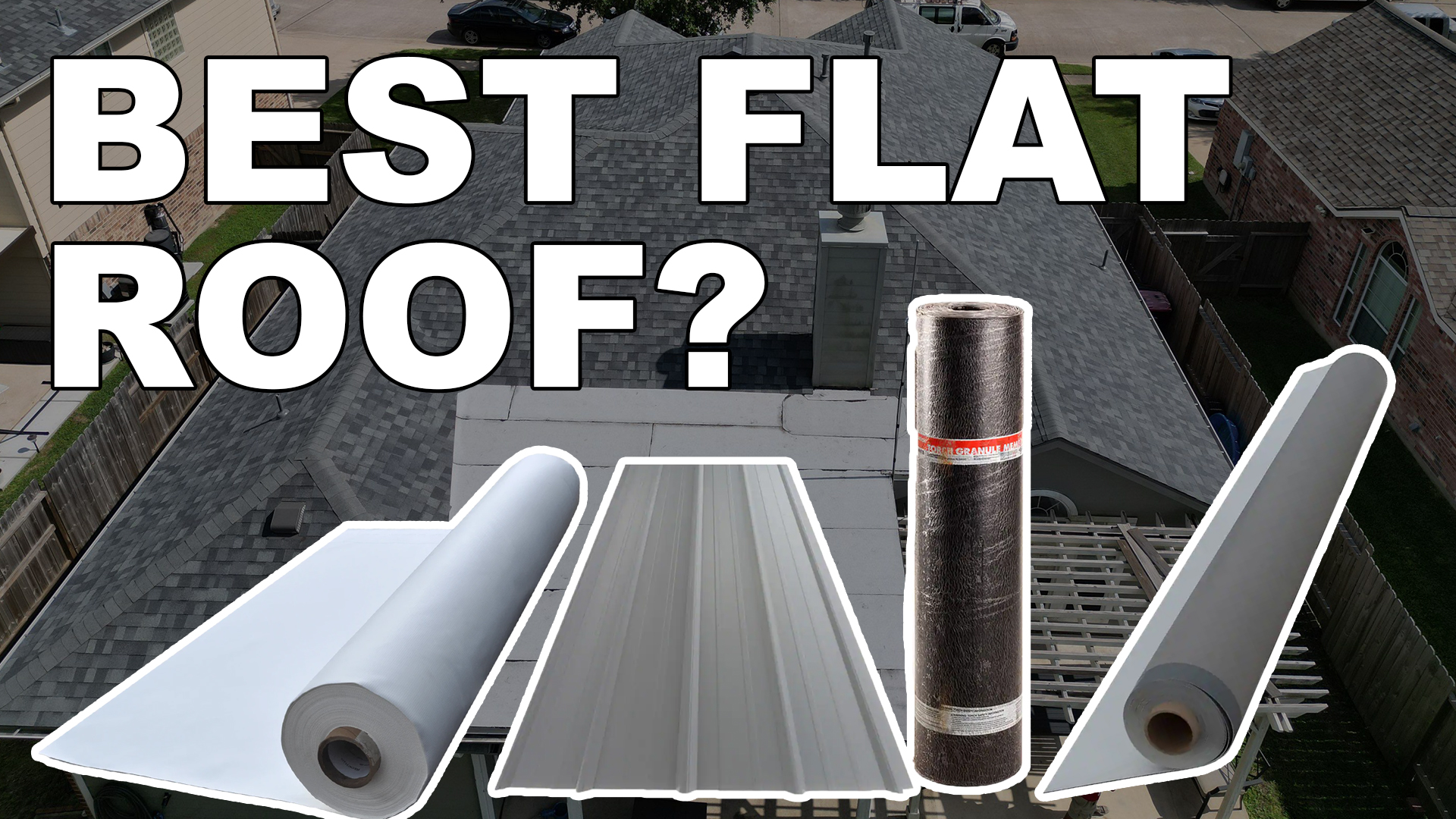
  • Down below is a video of a poorly installed flat roof that leads to more headaches, money and waste of time for you as a homeowner.

Duro-Last vs TPO | Which Is Better?

Is TPO or Duro-Last a better roofing system? Duro-Last is the better roofing system yet will be more expensive. In this blog post, we are going to break it all down for you from a contractor’s perspective that installs and repairs both roofing systems.

Material Differences

Duro-Last and TPO almost look identical both being white single-ply membranes. If you dive deeper into the material, what really sets them apart is their chemical compound. 

Is TPO or Duro-Last a better Material? Duro-Last develops a higher quality material with a better chemical compound making them the better material. Their material is more expensive, and it really shows when we compare material vs. material.

Duro-Last Material Breakdown

duro last logo

Duro-Last is composed of PVC film laminated to both sides of a reinforcement fabric (weft-inserted scrim). 

PVC Film: Proprietary thermoplastic PVC
formulation of resins, plasticizers, stabilizers,
biocides, flame retardants, and U.V. absorbents

Weft-Inserted Scrim: An 18 x 14 polyester fabric construction with weft insertion, composed of 840 x1000 denier threads, provides superior tear and puncture resistance. The polyester thread is treated to prevent wicking.

Duro-Last itself is a type of PVC roofing system and a Brand. Duro-Last carries manufacturing plants all over the United States and the closest one to Houston is located in Dallas.

In order to install a Duro-Last roofing system, you need to directly place an order through their company. This means you have to be certified through them and have an account with them.

Each Duro-Last system is custom fabricated for your roof which is why they can’t sell them at roofing supply stores.

TPO Material Breakdown

TPO (Thermoplastic Polyolefins) compounds are resin blends of polypropylene and un-crosslinked EPDM rubber and polyethylene

TPO is not a brand it is a type of material. There are different brands that create TPO membranes such as:

TPO material can be ordered from your local supplier because they are purchased in rolls. If you are here in Houston, you are able to find most brands at ABC Supply or Commercial Distribution Specialists

How is each material installed?

Duro-Last & TPO are similarly installed most commonly using these methods:

Mechanically Attached

Fully Adhered

Both roofing systems utilize the same roofing accessories and similar Insulation types (Fan-Fold 1/2″ and Polyiso).

The biggest difference between the two is the way they come. TPO is a rolled good that comes in either 6′ x 100′ or 10′ x 100′ while Duro-Last is a prefabricated membrane made specific to the dimensions of your roof that just gets unfolded at the jobsite.

Due to Duro-Last being prefabricated, there are less seams to weld meaning there is a less likelihood for a leak happening in the seams. 

When you are installing TPO you need to have a 6″ overlap between the rolls to go ahead and weld the seams. You have more seams to weld when installing TPO and more of a potential for possible leaks in the future.

That doesn’t mean TPO is hard material to install. It just means that TPO is harder to install when compared to Duro-Last.

Does Duro-Last or TPO cost more?

Duro-Last: They require you to order through the Duro-Last portal and use only Duro-Last accessories. The material itself is more expensive versus TPO membranes. Since you have to order the material to get it prefabricated there is a wait time and more delivery costs fees.

TPO: It is usually readily available at your local roofing supply and the material itself is less. Making it the more affordable option!

WARNING FOR OUR BUSINESS OWNERS

Both materials are great and if they were both installed correctly the Duro-Last system will give you several years more than a TPO system. 

Issues come from the material not being INSTALLED CORRECTLY not from the material itself!

Find a great roofing company that can show you their past jobs and explain to you the breakdown of how they are going to install everything, but most importantly the warranty they are offering as a company not just material warranty.

4 Most Common Causes of TPO Leaks
What are the 4 most common causes of TPO Leaks? As an owner, you find out that your building is having roof leaks & the first thing you want to do is find out what is causing it.

We wanted to create a blog/video to help you understand what we see as a roofer. A TPO roof can be repairable and lasts you for more years to come. 

NOTE: The solutions that are recommended are going to need a professional roofer trained in installing/repairing TPO material. When it comes to TPO roofs it is NOT A DIY PROJECT.

1. Penetrations/Damaged Material

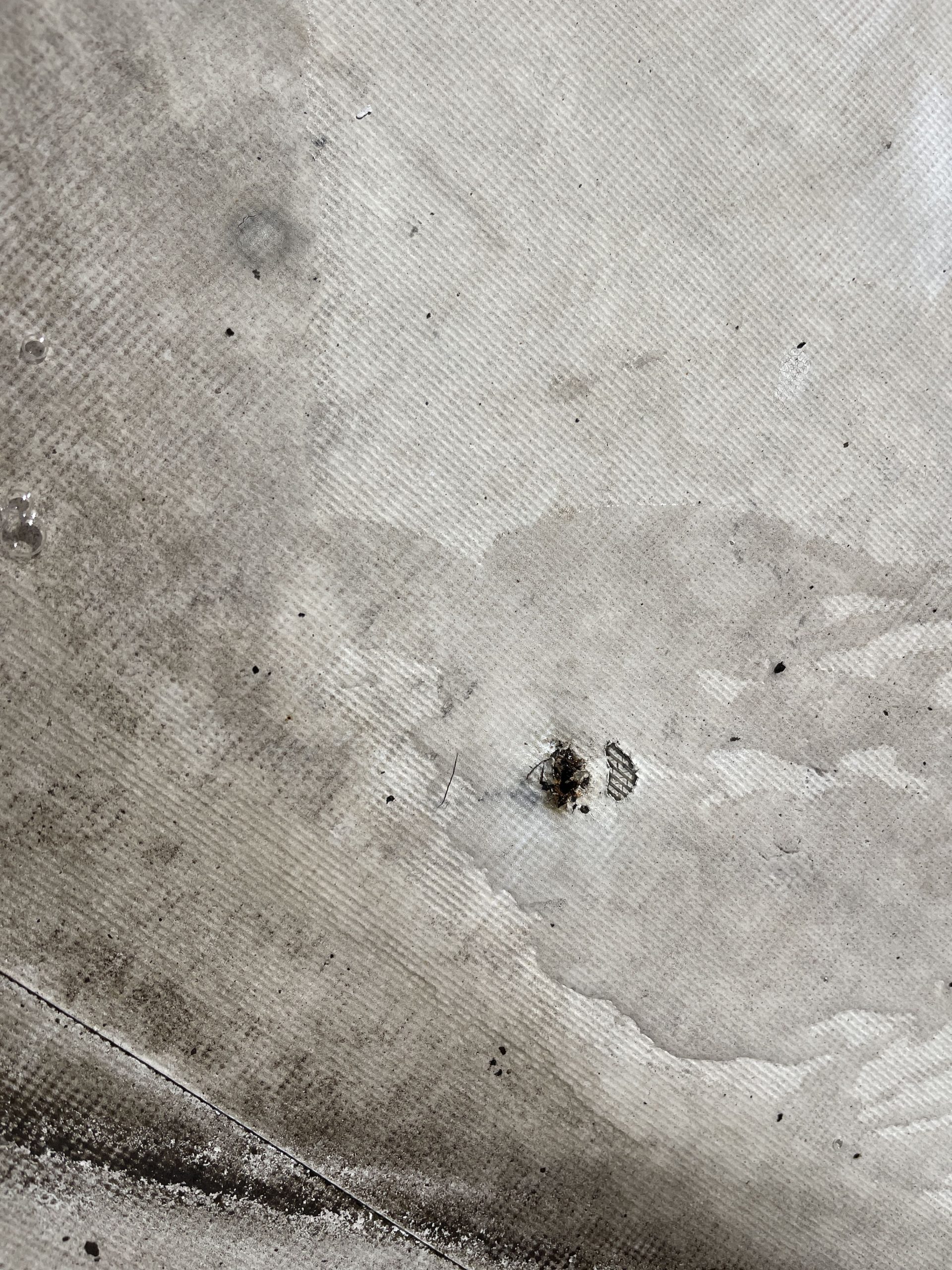
One of the most common TPO roof leak causes is penetration to the membrane. TPO is a membrane and can be easily penetrated with any sharp object such as a nail or knife. 

When it rains, the water will travel inside through the hole and run underneath the membrane until it finds a way through the building inside.

Damaged Flashing

Solutions

Penetration in the TPO membrane is usually the easiest to repair. They are repaired with TPO patches. The breakdown of the process is this:

  1. We clean and prep the area
  2. Find the penetrations
  3. Weld a TPO patch over the penetration

2. Ponding Water

Flat roofs are meant to have ponding water for up to 48 hours. If the water is staying there for more than 48 hours it usually means it is a draining issue. Once the water is staying for too long it will eventually degrade the TPO material and add a significant amount of weight to a roof which can cause structural damage. 

If you have ponding water over penetrations then the water will slowly damage the decking & insulation below leading to a more expensive repair or even a full replacement.

Solutions

The best way to prevent pooling is to ensure proper installation & immediate inspections once you find a possible roof leak. Flat roofing should not be completely level, we install necessary slops to direct water towards the drainage. 

3. Incorrect Installation

Roofing materials must be properly installed to prevent leaks. Any type of roofing requires proper training, but with TPO there is extensive knowledge of installation & roof repair understanding that only an experienced professional would know. TPO is a newer roofing material that calls for specialized expertise during installation. 

There have been many times we come out to inspect a building where the roofer did not install the material according to guidelines. Yes, maybe the owner saved some money at first but now they are dealing with leaks & have to call another roofing company to fix the issues.

Incorrect Installation of Parapet walls

Due to adhesive of parapet wall & not mechanically fastened

Incorrect Installation of Flashing

No termination bar was installed & instead just sealed with caulking
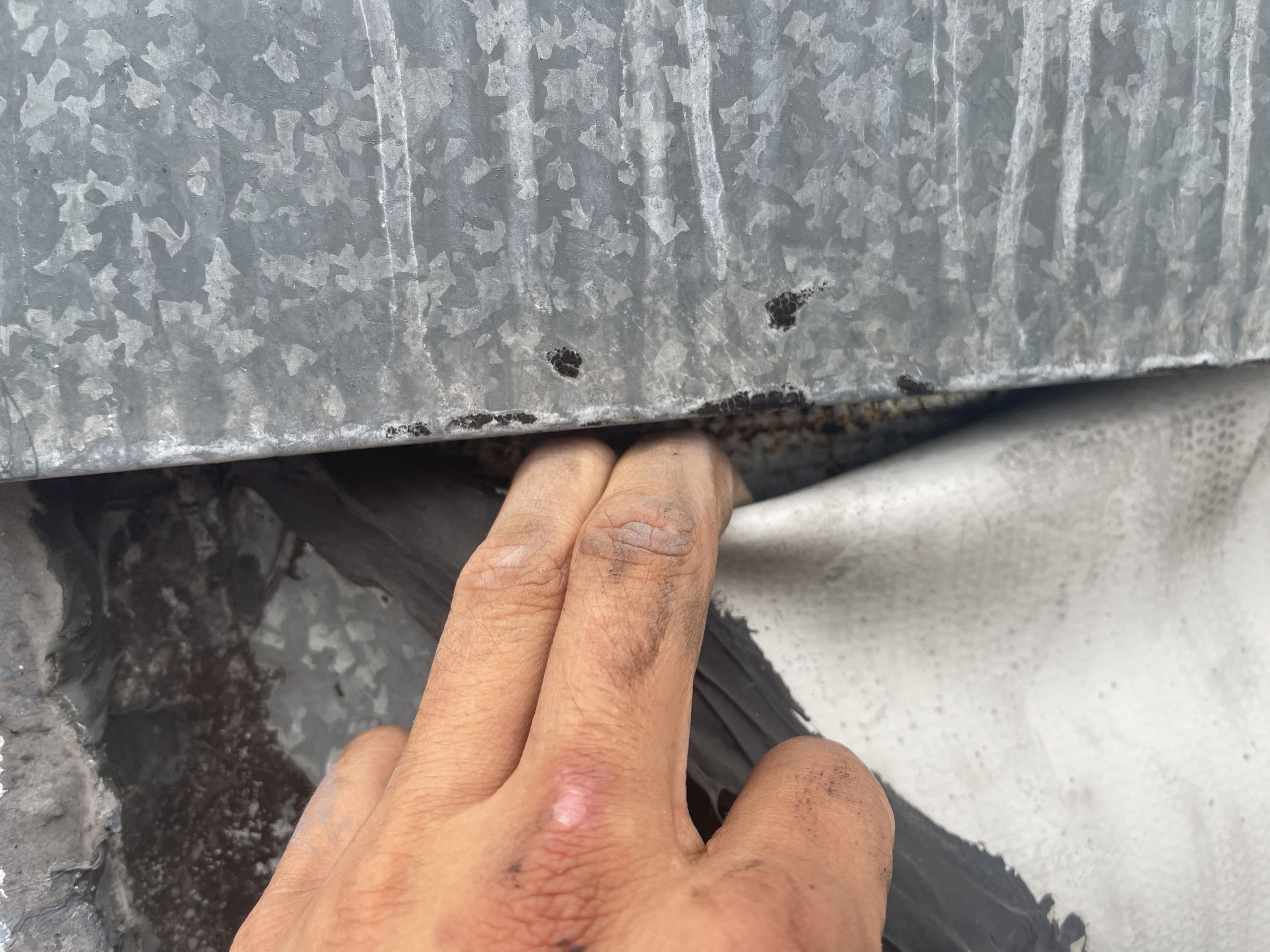
Incorrect Installation of Flashing

Solutions

Correct Installation of Flashing
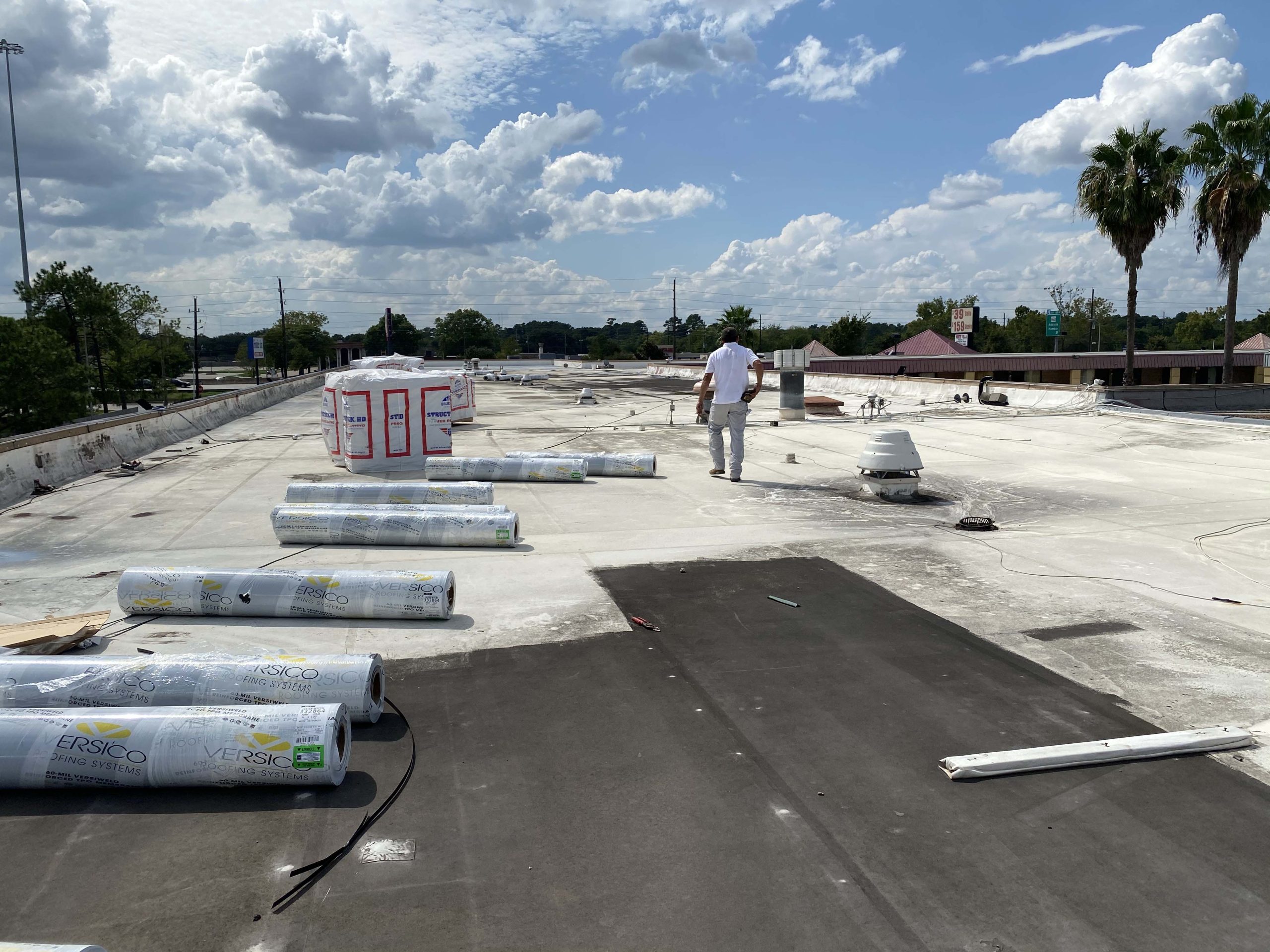
Installation issues can vary from being a small repair to a big repair. For issues like these, you will need to hire a skilled professional to inspect the roof to determine if a repair or replacement is needed.

If you are wondering how much does a TPO Roof costs click here to find out more!

4. Degraded Material

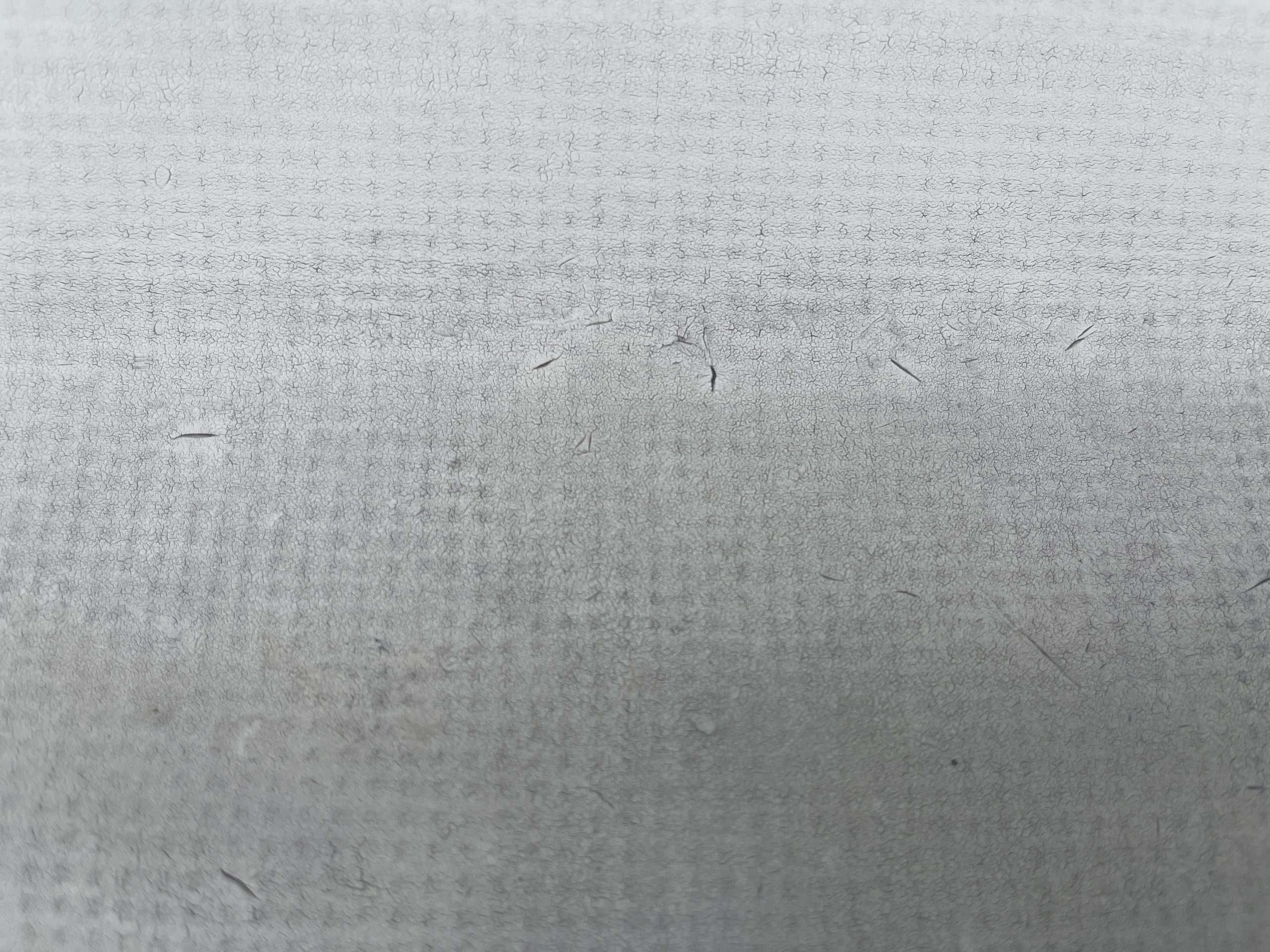
Every roof wears down over time, even with regular maintenance and repairs. The average lifespan of a TPO roof is 20-30 years. Once you hit the 20-year mark, the material will start to degrade.

In the photo below the TPO roofing material is old & has started to crack.

Solutions

There is a chance that all it needs is a simple repair to make your roof last several more years with no issues. Once the whole roof is having multiple leaks and the material is old then it is time to consider a replacement to save you more money in the long run. 

4 Reasons Why You Should Install a TPO Roof

Installing a TPO Roof System can be a great investment for your property

Are you searching for a durable yet cost-effective flat roof system for your commercial building? A TPO(Thermoplastic Polyolefin) is what we would recommend! Not only does it increase the longevity of your roof but can also help make your building more energy efficient. In this blog, we will go over 4 reasons Why you should install a TPO Roof.

  1. Energy Efficient
  2. Cost Efficient
  3. Durability
  4. Multiple Options (Fits Different Budgets)

Do You Need A New Flat Roof System?

Are you a business owner, who has a flat roof? Then you most likely already have a single-ply membrane roofing system or considering one for the future. There are two types of membranes to choose from: TPO and EPDM.

TPO stands for thermoplastic polyolefin. It’s a single-ply roofing membrane that is one of the fastest growing commercial roofing systems on the market. TPO roofing systems are made up of a single layer of synthetics that can be used to cover flat roofs.

How Much Does A TPO Roof Cost?

Based on the Industry standard in the Houston area, you can expect to pay anywhere from $500 and $1,200 per Square for a TPO roof system, this cost does include material, labor and a warranty of some type. At HHH Roofing, we are always ready to provide free and accurate estimates to answer all your TPO roofing questions, and to get a personalized estimate for your flat roof building.

Example:

If you have 50,000/SQ.FT that equals 50 Squares.

A TPO Roof Replacement for 50 squares will cost between $25,000 – $60,000.

NOTE: In 2021, we have seen an unprecedented labor shortage as a side effect of the COVID-19 pandemic. The demand for materials has skyrocketed. As a result, materials prices may be higher (we have been getting a 5-7% almost monthly) than reported in this article and lead times may be longer than usual. 

TPO Roof System

Benefits of TPO Roofs

With all of TPO’s great benefits, it makes sense why so many Houston businesses are choosing this material for their commercial roofing needs. A TPO roof system is primarily used on flat roofs, it is vital to hire a professional TPO roofing contractor to install the roof system to ensure all goes well during heat welding and a successful roofing installation. 

1. Energy Efficient

The most common TPO has a white membrane that reflects the sun’s energy(UV Rays) back to the atmosphere so much so that whenever we install TPO our team has to wear sunglasses. Commercial spaces can be large, requiring several resources to keep it warm in the winter and cool in the summer. With TPO roofing, the TPO material will result in energy and cost savings for your building. 

Before we install the TPO, there is the insulation. When it comes to insulation it comes in all sorts of sizes. For example we have fan fold insulation that is about 1/2″. We can also use ISO insulation that come in 1″, 2″, 3″, etc. The insulation also helps with energy efficiency protecting your building from losing as much heat or cool air. 

2. Cost Effective

Every single roof is an investment! Relative to other commercial roofing options, it is not as expensive as you think yet it will still last you a long time(25-30 Years)

The reason for this is because of the easy installation. The TPO material comes in rolls that are 10 Feet Long and are mechanically attached to the building. This easy installation means savings on labor costs.

Commercial roof Replacement

3. Durability

Because if consists of a rubber compound, TPO has a flexible membrane that is impervious to mold, rot and tear impact. 

Reasons why we like TPO vs. EPDM roofing is because with TPO we weld the seams instead of just using adhesive. Welding the seams together is what also gives TPO that longevity of lasing 25 years.

A TPO roof system is built to drain the water so there is no ponding water unlike a Modified Bitumen Roof. 

4. Multiple Options (Fits Different Budgets)

  • Thickness of TPO
    • 45 Mil
    • 60 Mil
  • Insulation
    • Fanfold Insulation
    • Iso 1″
    • Iso 2″
    • Iso 3″
  • Color Options
    • White
    • Grey
    • Brown
A TPO Roof system can be designed to fit the needs of the business owner with the help of a professional TPO roofing contractor. If you are looking to put on on an affordable flat roof we can design a roof system that has less insulation and thickness but has a price that fits your budget. Or maybe you are looking for a Top-Rated Flat Roof system with the best insulation and TPO. We understand every business is unique, which is why we have our staff ready with free inspections to help discuss your needs!

TPO Roofing Manufacturers

All TPO roofs were not created equal. At HHH Roofing, there are certain producers that stand above the rest. These are the TPO Manufacturers we trust:

Versico

Johns manville

carlisle syntec

Which Company Do I Choose To Install TPO?

Just like the material you go with is important, the company that installs your TPO Roof System is important too. If you are going to invest thousands of dollars into a new roof system the last thing you want is to cut corners on who installs it. Here are some good factors to consider when choosing your company.

  • How long have they been in business?
  • Are they Licensed & Insured?
  • Are they certified?
  • Do you have experience or references?

Questions?

If you have any questions feel free to leave a comment or give us a call. We always get back to all the questions. If you are looking for TPO Roof Estimate in Houston click down below or give us a call at (832) 458 -1602!

How Much Does A TPO Roof Repair Cost?

Do you have a TPO Roof system that is leaking?

A TPO roof system is one of the fastest growing commercial roofing systems on the market. If you have a flat roof then you more than likely have TPO on your roof. In this blog, we will go over how much does a TPO roof repair cost in Houston.

NOTE: In 2021, we have seen an unprecedented labor shortage as a side effect of the COVID-19 pandemic. The demand for materials has skyrocketed. As a result, materials prices may be higher (we have been getting a 5-7% almost monthly) than reported in this article and lead times may be longer than usual. 

Common TPO Roof Repair Issues

Punctures/Holes

Leaks

Installed Incorrectly

How Much Does A Typical TPO Roof Repair Cost?

When it comes to the roof over your business, don’t take any chances.

In Houston, the average cost to repair a TPO roof is $1,000. A minor repair may cost as little as little as $600, while a major repair can cost you several thousand dollars. These numbers are general estimates, but the cost of your roof repair will depend on the details of your project. If you are unsure, call your local roofing company! At HHH Roofing, we are always giving free roof estimates to make sure you can continue running your business!

TPO Roof Leak Cost

A Flat Roof Repair in Houston can be broken down into 3 categories:

  • Minor Roof Repair $600-$1,000
  • Moderate Roof Repair $1,000-$3,000
  • Major Roof Repair $3,000+

TPO Roof System

TPO Roofing Cost Breakdwon

All TPO roofing projects are unique to the plenty of considerations that can increase or decrease the overall price. A TPO roof system is primarily used on flat roofs, it is vital to hire a professional TPO roofing contractor to install the roof system to ensure all goes well during heat welding and a successful roofing installation. 

How does a roofing company price a TPO roof repair? Here are the 3 different price points for TPO repairs:

Minor TPO Roof Repair

Price Point: $600-$1,000

Minor repairs are the most common. This will include punctures to the membrane itself, welding new patches to the TPO, or replacing flashing. It’s usually the small details on a roof system. 

Even though they are minor repairs, we recommend hiring a certified TPO roofing contractor. We cannot tell you enough how many projects we had to fix simply because it was poorly installed. 

Moderate Roof Repair

Price Point: $1,000-$3,000

A moderate repair will typically be fixing either an area that another contractor did incorrectly or fixing multiple punctures. It’s a smaller job that will only take 1 day but it does require a little more work than just fixing welding 1 simple patch.

Take for example the picture below, it was a job where another contractor put cement around the area. The issue is that cement doesn’t work well on a TPO roof system. The owner was having leaks so we had to remove the cement and weld new patches to the area. 

Major Roof Repair

Price Point: $3,000+

A major repair will be replacing an entire section usually also due to incorrect installation. 

When it is a major repair you might consider a full TPO replacement just to save you money in the long run. 

TPO Roofing Manufacturers

All TPO roofs were not created equal. At HHH Roofing, there are certain producers that stand above the rest. These are the TPO Manufacturers we trust:

Versico

Johns manville

carlisle syntec

Which Company Do I Choose For A TPO Roof Repair?

Just like the material you go with is important, the company that installs your TPO Roof System is important too. If you are going to invest thousands of dollars into a new roof system the last thing you want is to cut corners on who installs it. Here are some good factors to consider when choosing your company.

  • How long have they been in business?
  • Are they Licensed & Insured?
  • Are they certified?
  • Do you have experience or references?

Questions?

If you have any questions feel free to leave a comment or give us a call. We always get back to all the questions. If you are looking for TPO Roof Estimate in Houston click down below or give us a call at (832) 458 -1602!

TPO Roof Cost Thumbnail

How Much Does A TPO Roof Cost?

If you’re considering a TPO (thermoplastic olefin) roof for your commercial or industrial building, one of the first questions you’re likely to have is, “how much does a TPO roof cost?” The answer to that question can depend on several factors, including the size of your roof, the complexity of the installation, and the quality of the materials used.

In this blog post, we’ll break down the costs associated with a TPO roof and provide you with the information you need to make an informed decision about your roofing needs. Whether you’re planning a new construction project or replacing an existing roof, understanding the cost of a TPO roof is an important part of the decision-making process.

There are many budget-friendly options for any owner looking for a TPO roof system.

Do You Need A New Roof?

There are several signs that indicate you may need a new commercial roof. Here are some of the most common signs:

Age: If your commercial roof is approaching or has exceeded its expected lifespan, it may be time to consider a replacement. Most commercial roofs last between 15 and 25 years, depending on the type of roofing material used.

Visible Damage: Inspect your roof for any visible damage, such as cracks, holes, or missing shingles. These issues can allow water to penetrate the roof and cause damage to the building’s interior. If the damage is extensive, a roof replacement may be necessary.

Water Leaks: If you notice water stains on your ceiling or walls, this is a sign of a leak in your roof. Even small leaks can cause significant damage over time, so it’s important to address them as soon as possible.

Poor Energy Efficiency: If your energy bills have been steadily increasing, this may be a sign that your commercial roof is not providing adequate insulation. A new roof with proper insulation can help improve energy efficiency and lower utility costs.

Roofing Membrane Damage: If you have a TPO, PVC or EPDM roofing membrane, look for signs of damage, such as cracks, tears, or blisters. These issues can lead to water damage, and if they are extensive, a roof replacement may be necessary.

Sagging or Uneven Roof: If your commercial roof is sagging or appears uneven, this may indicate structural issues or damage that requires a roof replacement.

In conclusion, if you notice any of these signs, it may be time to consider a new commercial roof. Contact a reputable roofing contractor to inspect your roof and provide you with an assessment of its condition. They can recommend the best course of action and help you make an informed decision.

Most Popular Types of Flat Roof Systems

TPO (Thermoplastic polyolefin)

TPO stands for thermoplastic polyolefin. It’s a single-ply roofing membrane that is one of the fastest-growing commercial roofing systems on the market. TPO roofing systems are made up of a single layer of synthetics that can be used to cover flat roofs.

Modified Bitumen Torch Down

Torch down roofing is named because it requires an open-flame propane torch. In this installation method, sheets of modified bitumen are rolled out onto the roof, and a roofing professional uses a hand-held propane torch to heat the material and adhere it to the surface.

How Much Does A TPO Roof Cost?

Based on the Industry standard in the Houston area, you can expect to pay anywhere from $500 and $1,200 per Square for a TPO roof system, this cost does include material, labor and a warranty of some type. At HHH Roofing, we are always ready to provide free and accurate estimates to answer all your TPO roofing questions, and to get a personalized estimate for your flat roof building.

Example:

If you have 5,000/SQ.FT that equals 50 Squares.

A TPO Roof Replacement for 50 squares will cost between $25,000 – $60,000.

“$500 and $1,200 per Square for a TPO roof system, this cost does include material, labor and a warranty of some type.”

TPO Roof System

TPO Roofing Cost Factors

All TPO roofing projects are unique to the plenty of considerations that can increase or decrease the overall price. A TPO roof system is primarily used on flat roofs, it is vital to hire a professional TPO roofing contractor to install the roof system to ensure all goes well during heat welding and a successful roofing installation. 

How does a roofing company price a TPO roof? Here are the 4 factors that affect the price of a TPO roof:

1. Number of Layers on Your Roof

At HHH Roofing, within our 30 years we have seen many commercial projects from only having 1 layer to multiple layers on their flat roofs. We will take a sample of your roof, to completely identify how many layers we are working with. This will determine how many layers we will remove and determine the length of screw we will use to install your new roof system. 

The more layers we remove will increase the total price.

The longer the length of the screw will also increase the total price.

2. Type of Current Roof Decking

Flat roofs have 2 different types of roof decking: Metal and Concrete. If you have concrete decking, a TPO install will require special nails and take longer to complete the job.

3. Extra details and AC Units

With commercial properties that have lots of AC units will require more labor. The more equipment the roofers will have to move will slow down the install of a TPO membrane versus if the roof was clear, thus increasing the overall cost.

A TPO roofing contractor will also take into account how tall the walls are on your roof, thus requiring more square footage of TPO membrane. 

4. Insulation Choice

After the existing substrate is prepared the insulation is installed. 

There a few types of insulation options to choose from:

Polyisocyanurate (Polyiso)

Polyiso is the most commonly used insulation for roofing. It’s a rigid material that can be cut to size for installation. The R-Value is the highest per inch of commercially available insulation products.

Below are the costs for 3 different thicknesses:

  • 1 inch – $1.40 – $1.75 per sq. foot in materials and labor
  • 2 inch – $2.00 – $2.50 per sq. foot in materials and labor
  • 3 inch – $2.80 – $3.15 per sq. foot in materials and labor

When it comes to insulation it comes in all sorts of sizes. For example we have fan fold insulation that is about 1/2″. We can also use ISO insulation that come in 1″, 2″, 3″, etc.

The insulation you go with will depend on the roof you have on right now and how much insulation you already have. For example: if you have a gravel roof we can’t use fan fold insulation. But if you already have a TPO roof we can install fan fold insulation and then a new TPO Roof on top of that.

5. TPO Thickness & Adhesive

Usually, thicker TPO roofs will cost more. When it comes to TPO we can get it in different options. How your roofer connects the TPO to your roof matters. We can not only change the Mil (60Mil, 80Mil, etc), but we can also attach it mechanically or self-adhere

6. Warranty

Warranty will effect the price of your flat roof. There are two types of warranties (Manufacturer & Company). This is best understood by talking to a company.

  • Manufacturer Warranty: Most brands have a basic warranty with the product, you can choose to upgrade but usually it will cost more.
  • Company Warranty: This warranty varies from company to company. A company will at times offer there own warranty on the labor giving you the piece of mind everything was installed correctly.

TPO Roofing Manufacturers

All TPO roofs were not created equal. At HHH Roofing, there are certain producers that stand above the rest. These are the TPO Manufacturers we trust:

Versico

GAF

Johns Manville

Carlisle Syntec

Which Company Do I Choose To Install TPO?

Just like the material you go with is important, the company that installs your TPO Roof System is important too. If you are going to invest thousands of dollars into a new roof system the last thing you want is to cut corners on who installs it. Here are some good factors to consider when choosing your company.

  • How long have they been in business?
  • Are they Licensed & Insured?
  • Are they certified?
  • Do you have experience or references?