Multifamily & Commercial · Houston, TX
HHH Roofing helps property managers across Houston stay ahead of exactly that — with a portfolio-wide free assessment and a written report you can take straight to ownership.
Licensed & Insured • NDL Warranty Certified • Serving Houston Since 2013 • (832) 458-1602
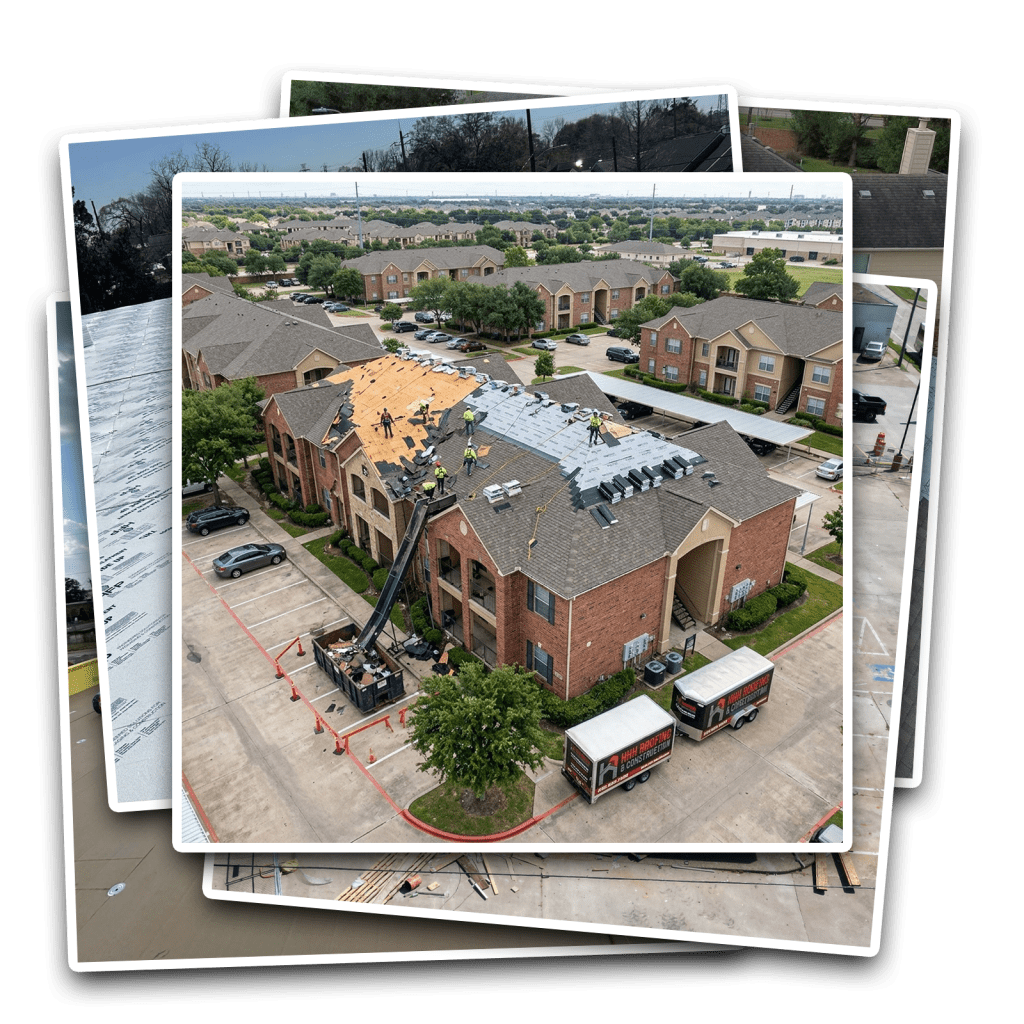
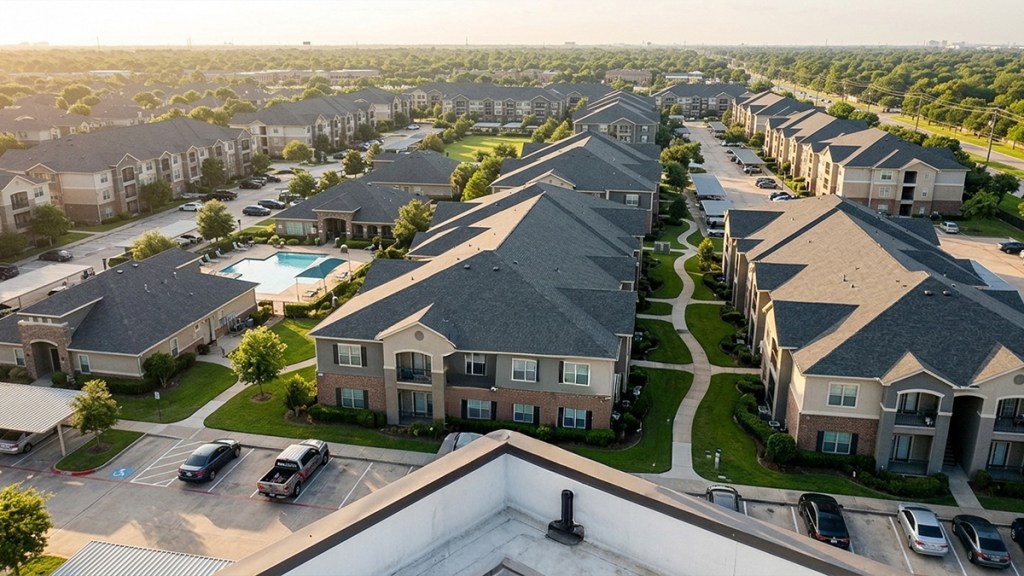
We handle roofing for multifamily properties of every kind — from garden-style walk-ups with pitched shingle roofs to mid-rise buildings under wide low-slope decks. A management company rarely has one roof to worry about; it has a portfolio of them, each a different age, each a different risk.
The Manager’s Reality
Managing a multifamily complex means the roof competes for attention with a hundred other fires, and it usually loses until it leaks. That is the expensive way to run a property. A slow drip behind a unit’s ceiling becomes a mold claim, a displaced tenant, and a turn cost that dwarfs what the original fix would have run.
The managers who keep their maintenance budgets predictable are the ones who get ahead of the roof instead of reacting to it. Across a Houston portfolio, that discipline is the difference between a capital plan you present with confidence and a string of emergency invoices you explain after the fact.
Every apartment roof on your property ages on its own schedule. A real assessment across the Houston area looks at all of them and ranks the risk — what needs attention now, what can wait a year, and what can safely be watched. That ranking is what turns a roof from a surprise into a line item.
Repair or Replace
A leak in an occupied building is a clock. Water travels along the deck and framing and surfaces in a unit far from where it entered — the stain in apartment 214 may trace back to a failed seam above the breezeway. We find the true source, handle the roof repair with the method the material calls for, and document it for your files and any warranty. Fast, correct repairs keep a maintenance issue from becoming a resident-relations problem.
When a building’s roof is genuinely done, we handle full roof replacement — and on multifamily that decision lives with ownership. We give you and the owner honest numbers on repair versus replacement, lay out what each path costs and how many years it buys, and phase the work across buildings and budget cycles so a whole community is never torn up at once. An estimate on any building in the portfolio is one phone call away, with no obligation attached.
Every System
Different buildings call for different systems, and we install and service all of them. Matching the right low-slope roof systems to the right building is what separates a roof that lasts from a warranty that never gets honored.
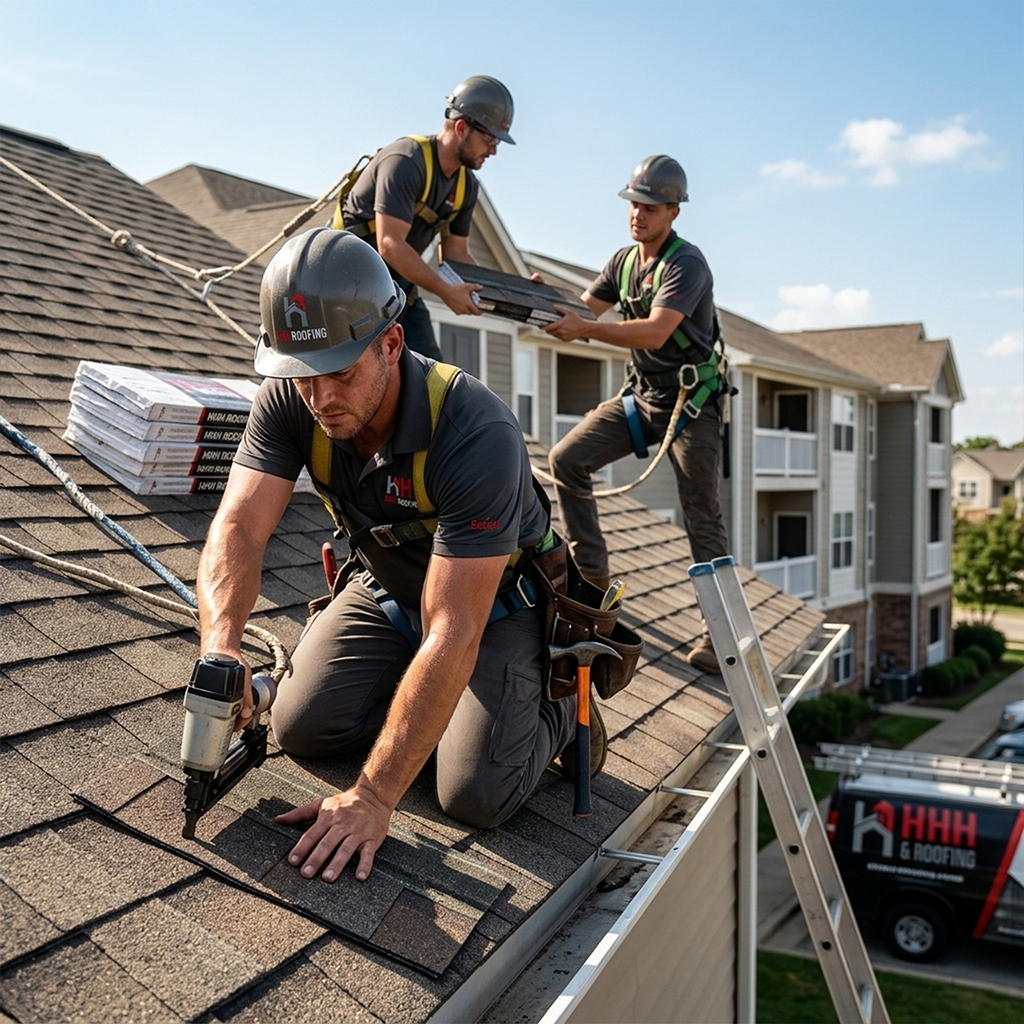
On pitched roofs, architectural shingle and standing-seam metal carry garden-style and townhome-style communities. On a garden community, the pitched buildings and the flat clubhouse roof rarely age together.
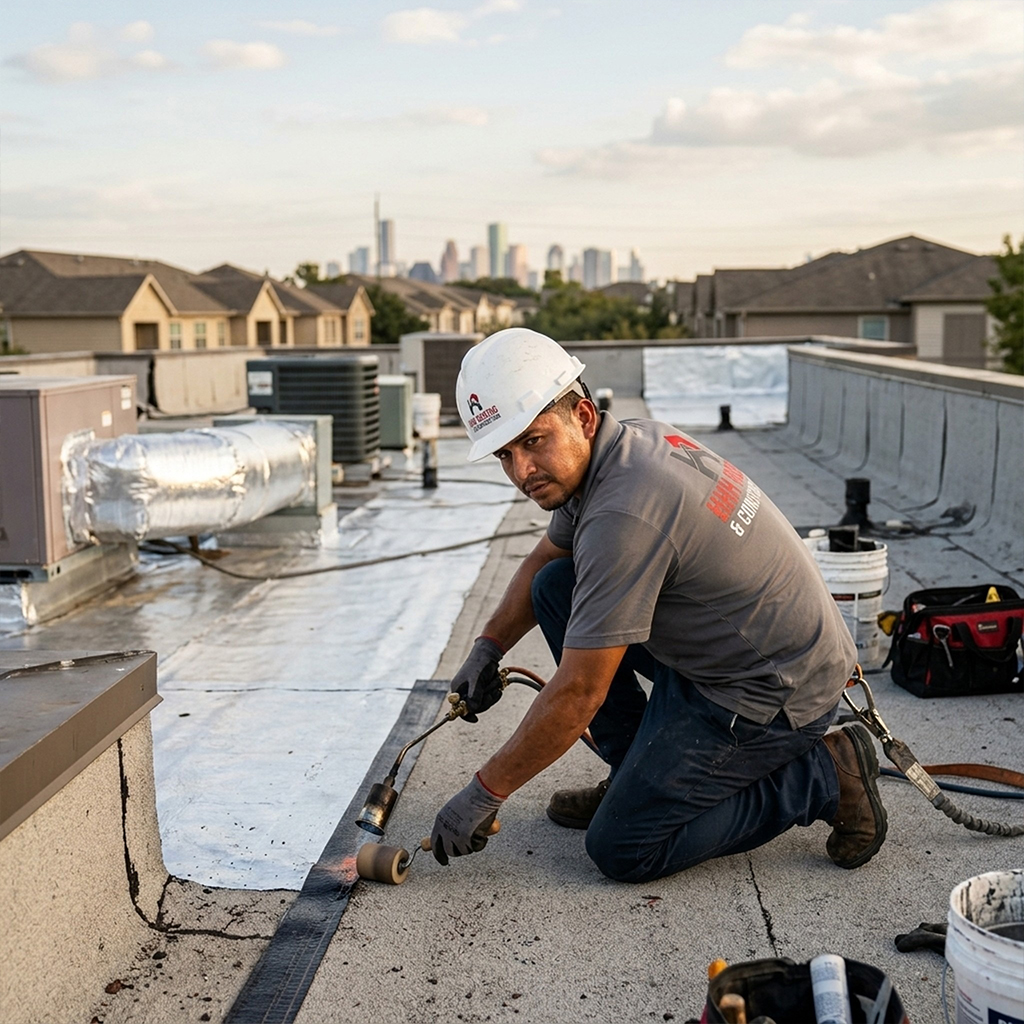
On the flat and low-slope decks common to mid-rise and breezeway buildings, single-ply membrane and modified bitumen do the work, and we detail the seams, drains, and rooftop penetrations that are the usual source of trouble. A flat roof that ponds will almost always be the first to fail.
Multifamily roofing rewards that kind of matching more than almost any other property type — the same portfolio often carries three or four different assemblies that each need their own plan. Whether the job is a new roof installation on a rebuilt building or commercial roofing work across an entire community, the discipline is the same.
Residents Stay Home
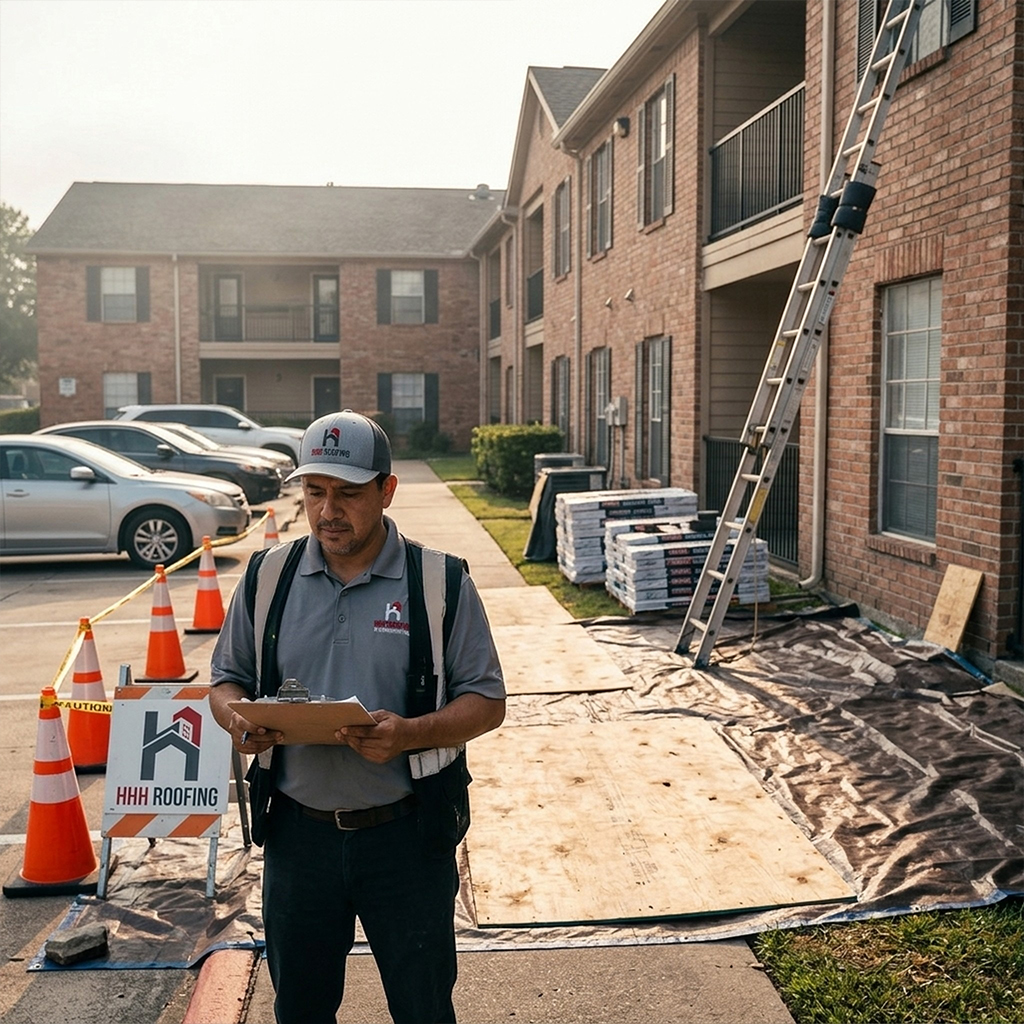
Occupied buildings change how the work gets done. Residents are home, cars are parked below, children play in the courtyard, and none of that stops for a roofing crew. We stage around the community, protect parking and walkways, communicate the schedule so residents know what to expect, and keep every building dry through each phase so a mid-project storm never reaches a single unit.
Protecting residents is as much of the job as the roof itself — and that matters most during turnover season, when timing a building’s work between move-outs and move-ins saves everyone a headache.
Built for Approval
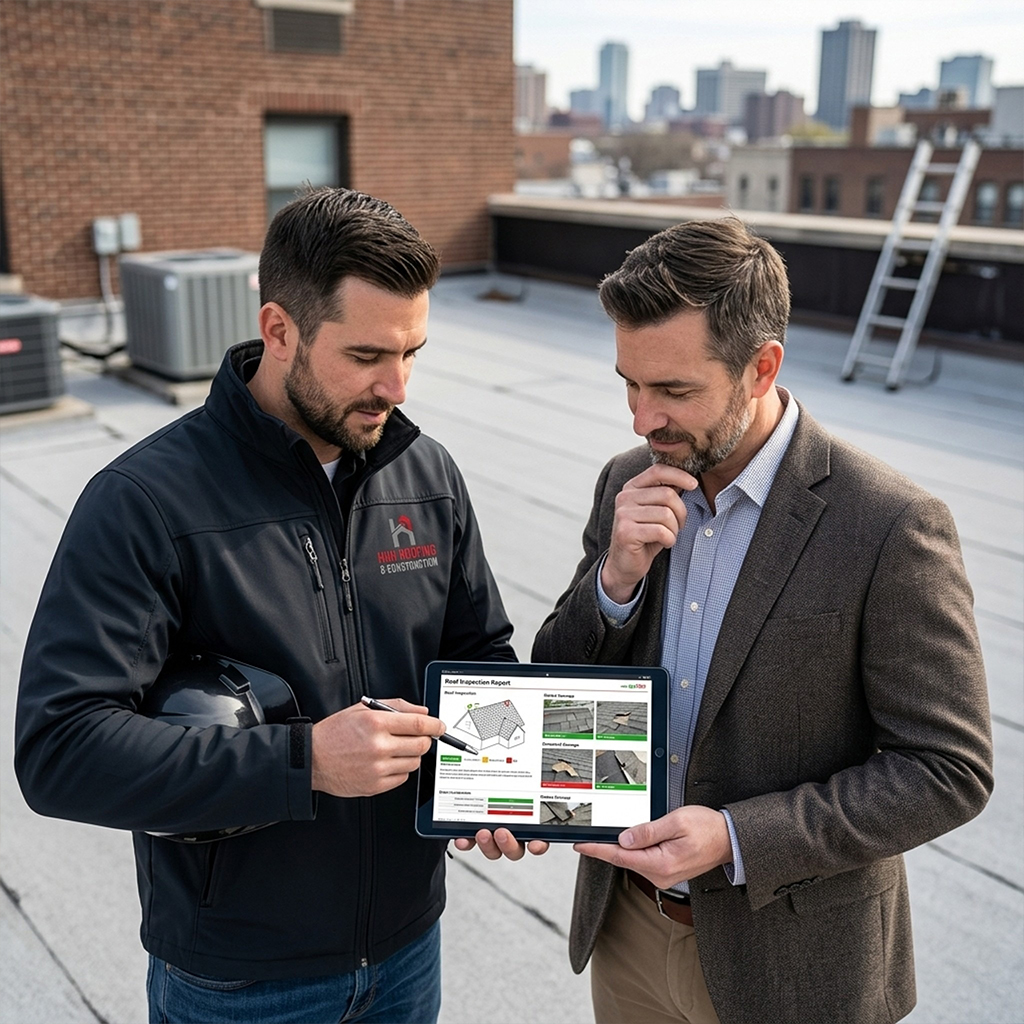
Reporting is where a good roofing partner earns a management contract. You answer to owners and asset managers who want to know what they are spending and why, and a roofing recommendation usually has to be documented and approved before the money moves.
We build our reports for exactly that: clear photos, plain findings, prioritized by building, with real numbers your ownership can approve without a second site visit. When storm damage is in play, we document conditions the way an insurance adjuster needs to see them and walk your team through the claim.
Every roof ranked now / soon / watch, so the capital plan writes itself.
Real figures your ownership can approve without a second site visit.
Storm conditions captured the way an adjuster needs to see them.
Customer reviews
Based on 67+ Google Reviews
Everything from start to finish was great! The quote for my roofing and gutters was very reasonable and the project was executed in a seamless and timely manner...no nail left behind. I would strongly recommend this company!! You won't be disappointed.
Amazing customer service all the way around. Leslie was great on the phone. Cindy and her team were incredibly professional and responsive. She even walked over to the mail carrier and handed me my mail during the installation. I can't recommend them enough.
We believed we would have ongoing issues with our roof indefinitely. This business changed that with a thorough evaluation and perfect repair services. Their staff was pleasant and communicated with me throughout the process. Our roof is now secure, and I finally feel at ease.
I had a leak in our roof, and Cindy from HHH Roofing did an amazing job! Unfortunately, the leak wasn’t fixed after the first repair, so I had to reach out to them on Saturday evening. I emailed them, and they responded within a few minutes—they were incredibly responsive! Cindy came to reinspect our roof on Monday morning and worked for a few hours to repair it. Since it was covered under the one-year warranty they provided, she didn’t charge us anything, even though this repair was more extensive than the last one. We are very grateful and highly recommend them!
Serving The Greater Metro
Houston and the surrounding industrial corridors — from the ship channel and the east-side logistics parks to the northwest distribution belt and the Sugar Land and Katy submarkets. If your building is in the metro, we cover it.
Book a Free Roof Assessment
Our roofers will get on every building, document the condition, and give you a clear written report with honest options and real numbers — prioritized and ready for ownership. For a property manager in Houston TX, the difference between a portfolio that stays on budget and one that surprises you is the plan behind the roofs.
Free portfolio assessment • Owner-ready report • No obligation
Frequently Asked Questions
Common questions Houston property owners and managers ask about commercial roof restoration — answered honestly.
The right way to budget multifamily isn’t per square foot — it’s per building, then summed. A property with multiple buildings, common on garden-style complexes, multiplies the cost by the number of roof structures, not just the total square footage, since each building carries its own tear-off, access, and disposal cost. As planning numbers, garden-style apartments with individual rooflines typically run $2,500 to $4,500 per unit for a complete replacement, while mid-rise buildings with shared flat roof systems range from $1,500 to $3,000 per unit. By system, TPO and other low-slope membranes run about $5 to $10 per square foot installed, and standing-seam metal on pitched buildings runs $10 to $16 but can outlast the building itself. Because a garden community often mixes pitched and flat roofs across buildings of different ages, we price each building separately and hand you a per-building breakdown ownership can actually work from — starting with a free portfolio assessment.
In almost every case, no — the community stays occupied and operating. Many occupied buildings stay operational; the disruption planning around noise, access, and safety is what matters. The real risk isn’t the roof work, it’s the communication: residents react to disruption, not the roofing specification — noise, access, parking, and schedule changes create complaints when they aren’t explained early. That’s why the contractor’s coordination with you is the whole game. The roofing plan and the tenant plan have to support each other, and good crews coordinate notice schedules with the property manager and can draft tenant letters if you don’t have templates. We stage around the community, protect parking and walkways, isolate work zones so the rest of the property keeps moving, and give you the schedule and resident-notice language up front so nobody gets a surprise tear-off over their unit.
Yes — phasing is standard on multifamily, and it’s often the smarter financial move. For large complexes the work is typically phased building-by-building rather than done simultaneously, which minimizes disruption and lets the contractor maintain quality control. Phasing helps align the work with capital planning, so you can move buildings through across budget cycles instead of hitting ownership with one massive number. There’s a real upside beyond cash flow, too: multi-building projects benefit from economies of scale, with lower per-square-foot pricing from larger volume and reduced mobilization costs. One caution we build in — phasing can create a risk of inconsistent materials or appearance if the standards aren’t written down, so we spec the whole portfolio up front and hold every phase to the same system, so building six matches building one.
Multifamily experience matters more than the bid, because occupied buildings add a layer most roofers never deal with. The industry guidance is blunt on this: look for a contractor with specific experience on multifamily properties who understands the coordination, phasing, and tenant interaction these projects require — price should not be the primary deciding factor, because a contractor’s experience with occupied buildings is more important due to the complexity. Before you sign, verify licensing, liability insurance, and workers’ compensation coverage, and ask how they handle unforeseen damage, daily cleanup, access control, and tenant complaints. HHH is licensed and insured, carries $6M in liability, holds NDL warranty certification from four manufacturers, and has run projects across Houston since 2013 — and we’ll hand your team the paperwork to verify all of it, plus multifamily references you can call.
Almost never. A leak on one building is a repair question for that building, not a portfolio-wide replacement — and a good assessment tells you exactly which buildings need what. The value of getting on every roof is that it separates the true emergencies from the ones that can wait: you find out what needs attention now, what can hold a year, and what’s simply worth watching. On the building that leaked, water travels — the stain in a top-floor unit often traces back to a failed seam or flashing detail somewhere else on the roof — so we find the real source and fix that, rather than selling you buildings that still have years left. If storm damage is involved, we document it the way an adjuster needs to see it, since that documentation is often what determines whether the loss is covered or comes out of your operating budget.
Enter your street address to get an accurate estimate instantly