Flat & Low-Slope Systems · Houston, TX
If your building has a flat or low-slope roof, there is a good chance EPDM belongs on the shortlist. HHH Roofing installs, repairs, and restores it across Houston — and this page lays out what it is, where it fits, and what it costs to do right.
Licensed & Insured • NDL Warranty Certified • Serving Houston Since 2013 • (832) 458-1602
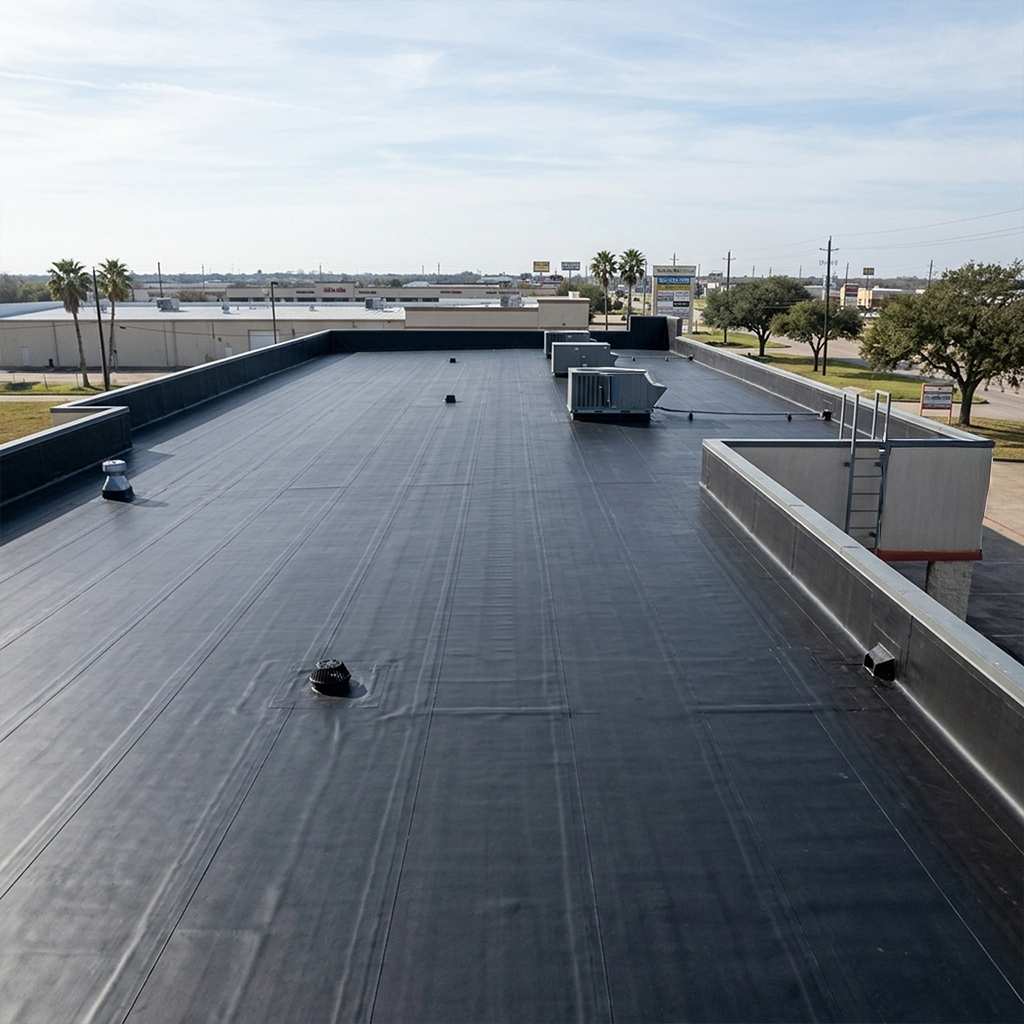
EPDM is an extremely durable synthetic rubber roofing membrane — and that description is the whole story in a sentence. Engineered to flex through decades of thermal movement, shrug off UV, and stay watertight while the building expands and contracts through every Houston summer.
The Material
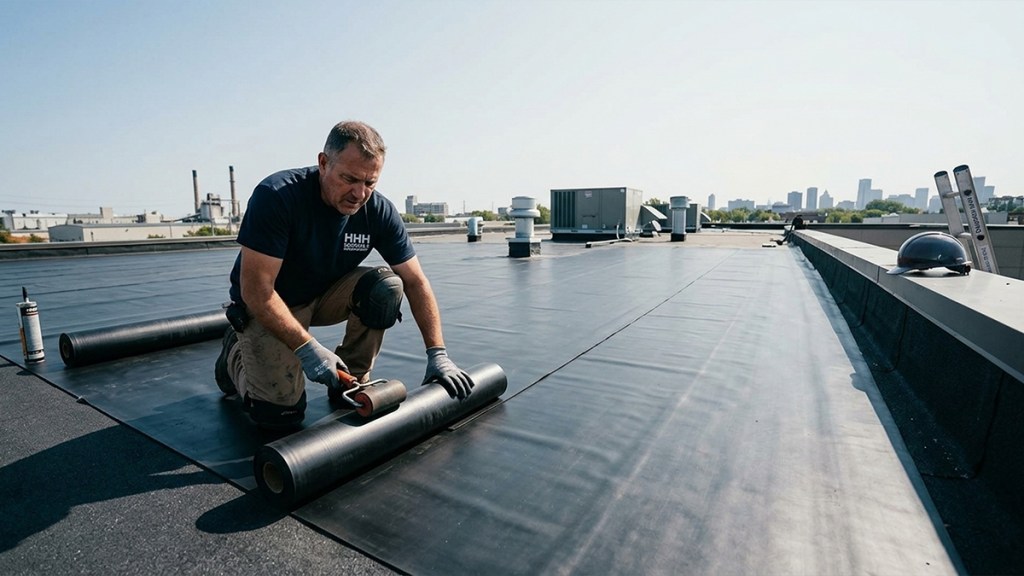
A well-installed EPDM roof routinely delivers thirty years or more of service, which is why it has outlasted trend after trend in the flat-roof category. As a single-ply roofing option, an EPDM membrane keeps the assembly light and simple: one continuous sheet instead of the multiple layers older commercial roofs required.
Why does it last the way it does? Because rubber does what rigid materials cannot. It stretches instead of cracking, unlike a bare metal roof it needs no repainting, and it tolerates ponding better than most surfaces. Its seams, bonded correctly, become part of a single continuous sheet rather than a line of weakness. That is why the system has such a long track record to point to.
Typical Service Life
30+ Yrs
In Commercial Use Since
1960’s
Standard thickness
45 & 60 mil
In Commercial Use Since
Flat & low slope
Where It Fits
Not every roof is a candidate, and part of our job is telling you when EPDM is the right call and when it is not. It shines on flat and low-slope commercial decks: warehouses, offices, retail strip centers, and the flat sections of mixed buildings that carry shingles over the pitched portions. Most of the EPDM roofs we install in Houston sit over exactly these buildings.
Black EPDM absorbs heat, which can be a liability on a cooling-dominated building in this climate, so where energy load matters we will walk you through a reflective coating or a lighter alternative first. Matching the membrane to the building is the difference between a smart roofing solution and a warranty nobody honors.
Installation
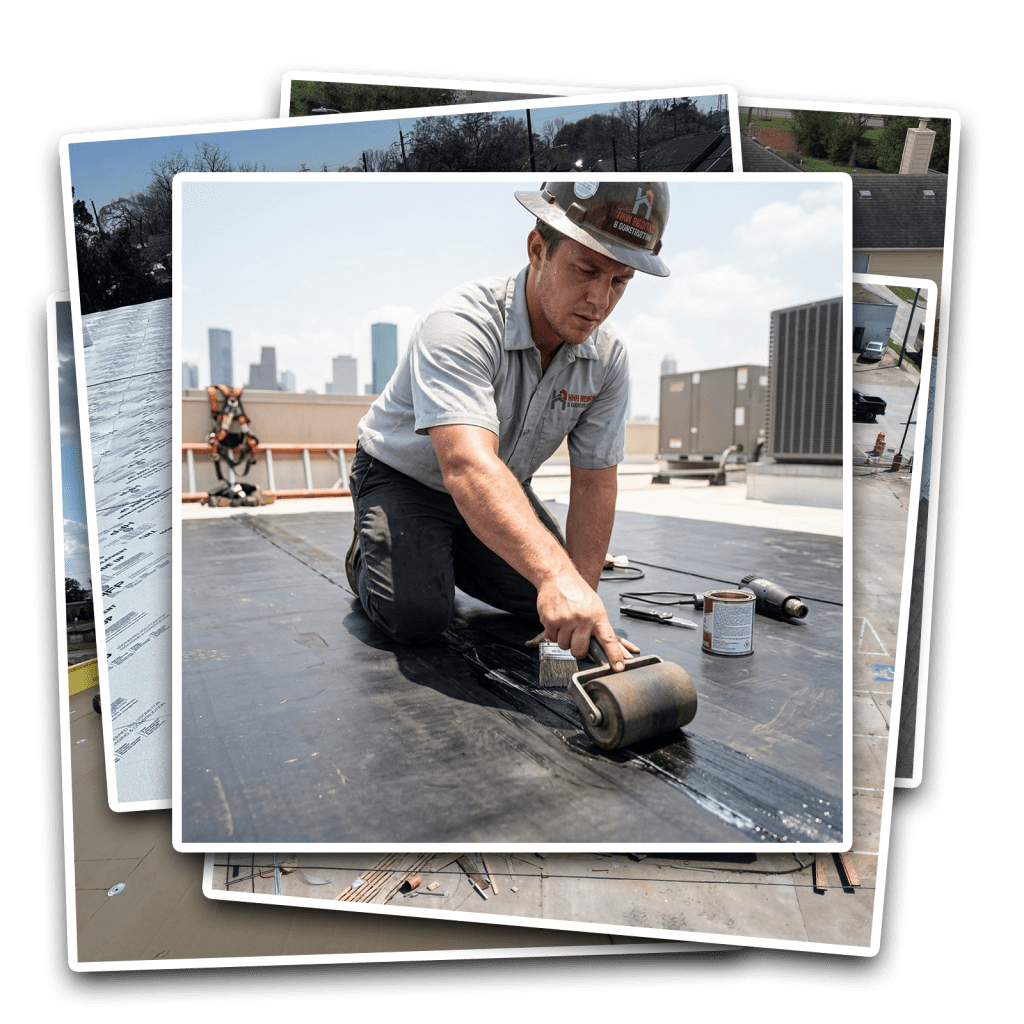
EPDM installs three ways, and the right one depends on the deck, the building height, and the budget.
Adhesive bonds the sheet directly to the insulation board below, giving the cleanest look and the best wind performance.
Fastens the membrane along the seams — fast and economical, and a common choice on larger commercial decks.
Lays the sheet loose and holds it down with stone — the least expensive where the structure can carry the weight.
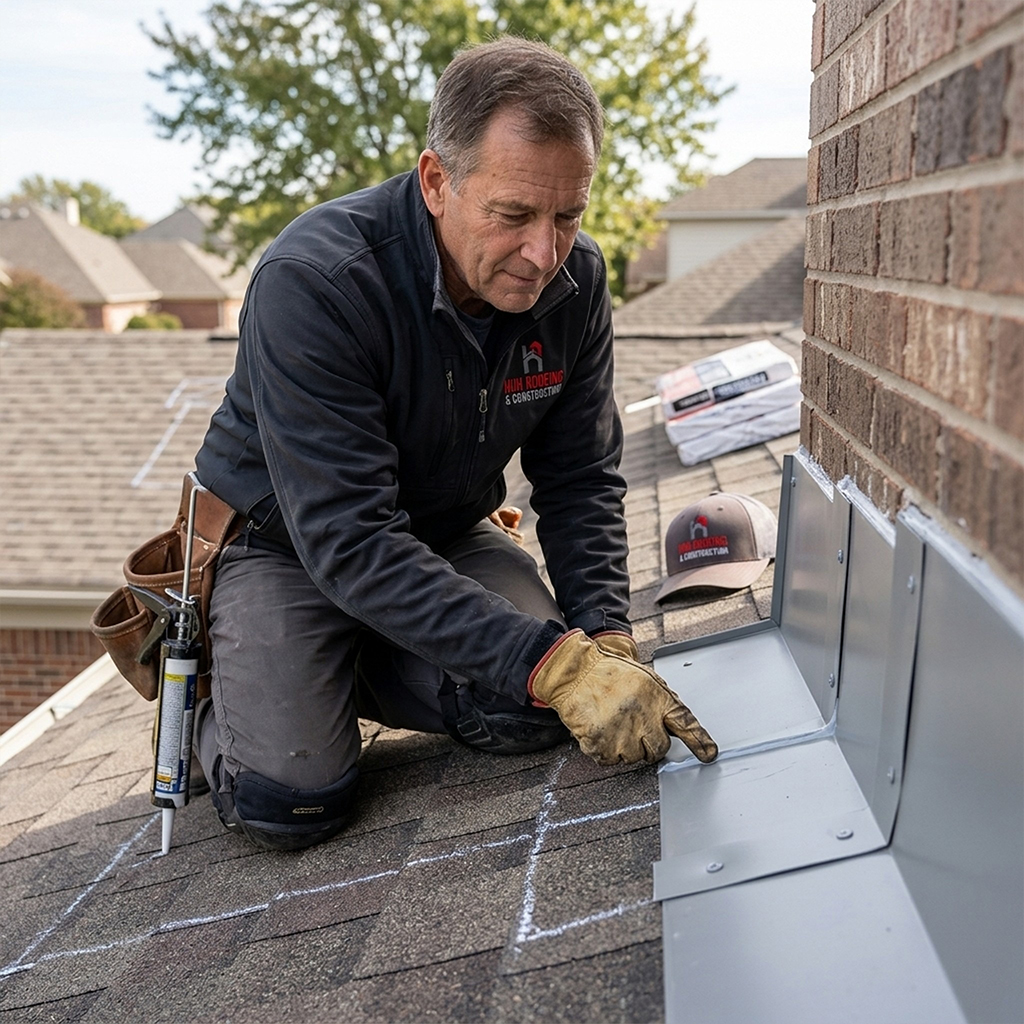
Standard sheets run 45 and 60 mil, and on a building that takes rooftop foot traffic we usually steer toward the heavier 60 mil sheet for the extra puncture resistance. Every penetration, curb, and edge gets detailed with matching flashing so the weak points are as strong as the field.
Honest Comparison
Both are excellent single-ply systems when installed well. TPO offers a reflective white surface out of the box, which matters on a cooling-dominated building, while EPDM offers a longer real-world track record and superior flexibility in temperature swings.
Against metal, modified bitumen, and older asphalt or built-up roofs, EPDM installs faster, weighs less, and avoids the torches and hot asphalt those systems require.
We install more than one kind of roof precisely so we can make this comparison honestly — rather than selling you the only thing we carry.
Restore, Don’t Replace
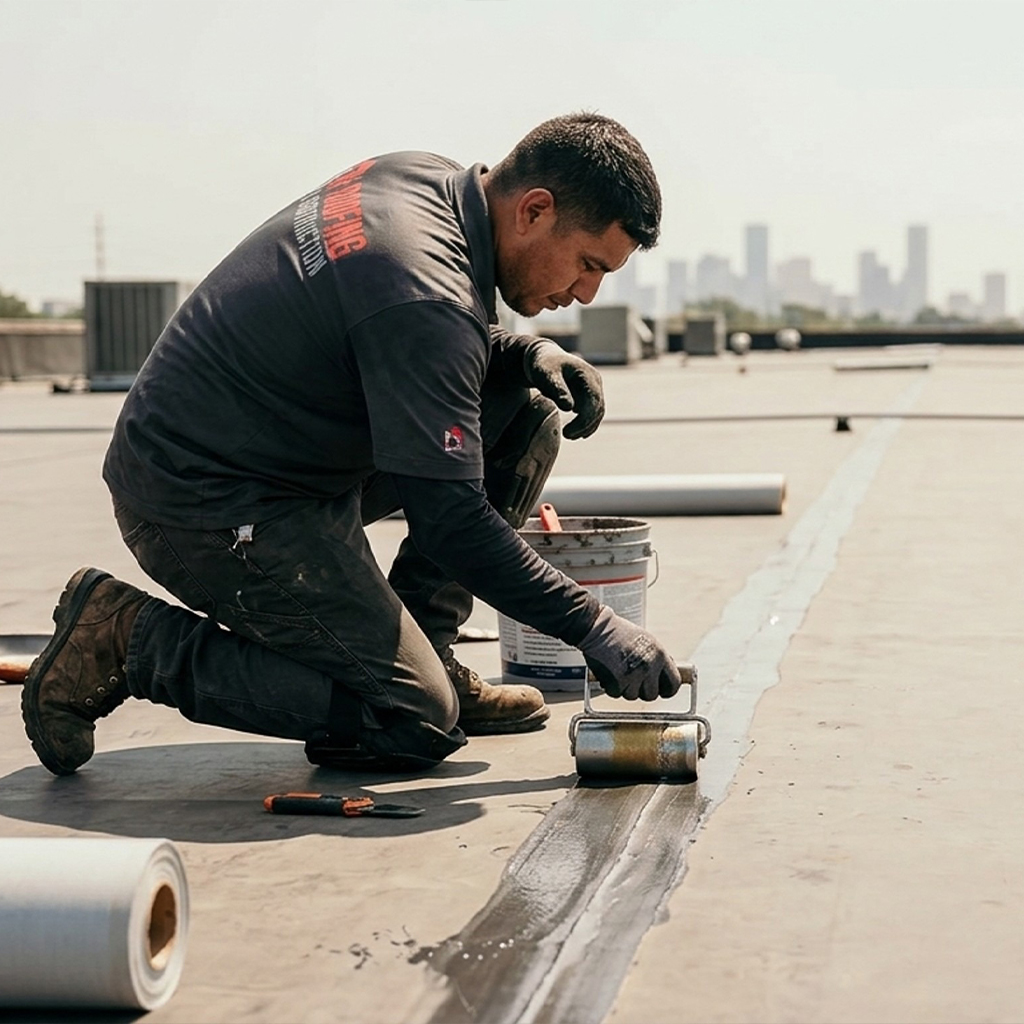
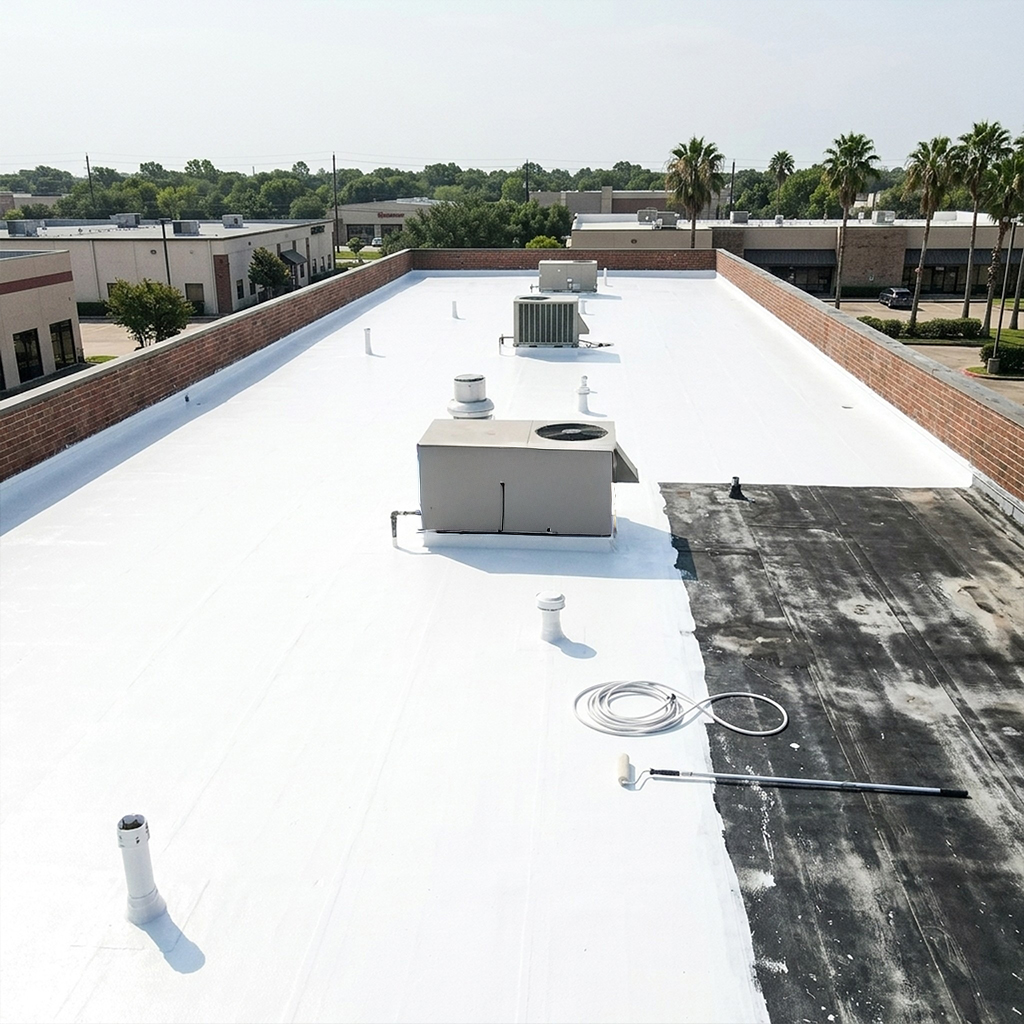
An aging membrane does not always mean a tear-off. Where the existing surface is sound but weathered, EPDM coatings can add years of waterproofing and, in the case of a white coating, solve the heat-absorption issue at the same time. A liquid-applied coating bonds to the cleaned surface and seals the seams and details into one continuous skin, often at a fraction of the cost of replacement.
When a roof still has good structure under a tired surface, restoration is frequently the smartest money on the table. The same coatings that extend aging EPDM membranes also cut rooftop temperature, so a restoration can pay for part of itself in lower cooling load over the years that follow.
Customer reviews
Based on 67+ Google Reviews
Everything from start to finish was great! The quote for my roofing and gutters was very reasonable and the project was executed in a seamless and timely manner...no nail left behind. I would strongly recommend this company!! You won't be disappointed.
Amazing customer service all the way around. Leslie was great on the phone. Cindy and her team were incredibly professional and responsive. She even walked over to the mail carrier and handed me my mail during the installation. I can't recommend them enough.
We believed we would have ongoing issues with our roof indefinitely. This business changed that with a thorough evaluation and perfect repair services. Their staff was pleasant and communicated with me throughout the process. Our roof is now secure, and I finally feel at ease.
I had a leak in our roof, and Cindy from HHH Roofing did an amazing job! Unfortunately, the leak wasn’t fixed after the first repair, so I had to reach out to them on Saturday evening. I emailed them, and they responded within a few minutes—they were incredibly responsive! Cindy came to reinspect our roof on Monday morning and worked for a few hours to repair it. Since it was covered under the one-year warranty they provided, she didn’t charge us anything, even though this repair was more extensive than the last one. We are very grateful and highly recommend them!
Serving The Greater Metro
Houston and the surrounding industrial corridors — from the ship channel and the east-side logistics parks to the northwest distribution belt and the Sugar Land and Katy submarkets. If your building is in the metro, we cover it.
Get a Free EPDM Quote
We’ll assess the deck, talk through your options honestly, and give you real numbers — no pressure, no obligation. For Houston property owners weighing a flat-roof investment, the difference between a membrane that lasts thirty years and one that leaks in five is the company that installs it.
Free quote • Honest options • No obligation
Frequently Asked Questions
Common questions Houston property owners and managers ask about commercial roof restoration — answered honestly.
For planning purposes, EPDM runs about $4 to $12 per square foot installed in 2026, with material at roughly $1.50 to $5 and labor adding $2.50 to $7 per square foot. On a commercial building that adds up fast — a standard 10,000-square-foot roof typically runs $40,000 to $120,000 for a complete installation, and larger roofs earn economies of scale at a lower per-square-foot rate. The spread is wide because the membrane is only part of the job: a complete EPDM system may include insulation, a cover board, adhesive or fasteners, seam materials, flashing, drains, edge metal, disposal, and warranty costs. That’s also why a low quote based on square footage alone deserves a closer look — it may cover the new membrane without accounting for the roof underneath it. We price section by section after we’ve actually been on the deck, so the number you get is real.
Longer than almost any other single-ply option. EPDM is the longest-lasting commercial single-ply membrane — 25 to 40 years standard, with well-maintained installations exceeding 50 years. It has earned that reputation over time: it’s been the workhorse of commercial flat-roof construction since the 1970s, which is a longer real-world track record than any newer membrane can point to. The catch is that the range is set by installation and upkeep, not just the material — the roofs that reach the top of that range are the ones detailed correctly at the seams and penetrations and then actually maintained. That’s the part we control, and it’s the difference between a membrane that hits 40 years and one that leaks in five.
It’s the right question to ask in this climate, and the honest answer is that standard black EPDM does absorb heat. A black rubber membrane absorbs heat, which can drive up cooling costs in a warm region, whereas a reflective white surface can cut cooling costs by 10 to 30% by bouncing solar radiation away from the building. That doesn’t rule EPDM out — it just means the color and coating decision matters here more than it would up north. Two fixes work: a reflective coating over the EPDM knocks down the heat gain, or white EPDM is available and reflects more sunlight, though it costs more than the standard sheet. On a cooling-dominated Houston building we’ll walk you through those options honestly — and if reflectivity is your top priority, we’ll tell you when TPO is the better call instead.
Both are excellent when installed well, and the right answer depends on your building rather than which one is “better.” The short version: TPO offers superior energy efficiency and heat reflection, while EPDM delivers a longer lifespan and better flexibility. In practice, the deciding factors are heat and foot traffic. A building in a hot climate with high cooling costs benefits more from TPO’s reflective surface, while a building with heavy rooftop equipment and frequent foot traffic puts more stress on seams, which favors TPO’s welded seam system. EPDM’s counter-strengths are real too: it handles standing water somewhat better over time, it flexes through big temperature swings, and it usually costs less per square foot. Because we install both, we can make that call based on your roof instead of steering you toward the only thing we carry.
Sometimes it can go over the top, which saves the cost and mess of a tear-off — but only if the roof underneath qualifies. EPDM can be installed over certain existing roof systems if the deck structure remains sound and local building codes permit it, and the existing roof must be dry, flat, and free from significant damage. That word “dry” is the whole ballgame: covering a roof with trapped moisture underneath seals the problem in and rots the deck from below. A commercial roof inspection can uncover these problems before the replacement is priced, and core samples or moisture testing may be appropriate on larger buildings. We check for that before recommending a recover — if it’s a candidate, you save real money; if it isn’t, we’ll tell you straight rather than burying a wet deck under a new membrane.
Enter your street address to get an accurate estimate instantly