








Serving Houston and Surrounding Areas

Houston Commercial Roofing · Since 2013

Commercial Roof inspection Houston

You can’t manage what you can’t see. A professional roof inspection tells you exactly what’s happening above your building before it shows up inside it.

Most commercial roof damage goes unreported until water shows up inside the building. By then, insulation, decking, and interior finishes are already affected — and insurance claims filed without documented prior conditions are routinely reduced or denied. The building owner ends up paying for a problem that was visible from above long before it was visible from below.

HHH Roofing offers free roof inspections for property owners and managers across Houston. Every visit is thorough, fully documented, and delivered in writing, with honest findings and no sales pressure attached. If your building is sound, we will tell you so and leave. If it isn’t, you will have a written record of exactly what needs attention and in what order.

Commercial Roof Inspection Pros

Commercial Roofers Trusted By

When To Schedule

When Does a Commercial Roof Need an Inspection?

Assessments aren’t only for when something goes wrong. The most valuable ones catch problems before they cause damage, which is why several situations warrant scheduling proactively rather than reactively. The building owners who avoid emergency repair bills are almost always the ones who scheduled a look before there was anything obviously wrong.

If you’re unsure whether your situation qualifies, schedule anyway. There is no charge and no obligation.

After a Storm or Weather Event

Hail, high winds, and heavy rainfall cause the majority of commercial roof damage in Houston. A post-storm visit documents damage before it worsens and produces the written evidence insurers require. Waiting until the next rainfall to find out whether a storm caused harm is the most expensive way to answer the question.

When You Notice an Active Leak

Water appearing inside a building is almost never coming from directly above where it lands. It travels along decking, follows structural members, and surfaces wherever gravity finally wins. A thorough evaluation traces the actual source, not the symptom, so repairs address the real failure point rather than the ceiling tile that happened to get wet.

As Part of a Maintenance Schedule

Most manufacturer warranties require documented maintenance. Scheduling an evaluation at least once a year, and twice for older or high-traffic buildings, keeps warranty coverage valid. Skipping it gives a manufacturer grounds to deny a claim on a system that still had coverage remaining.

Before Purchasing a Building

Any commercial property evaluation should include the roof. Roofing condition is one of the largest variables in a real estate transaction and one of the most frequently overlooked. A membrane nearing the end of its service life can swing the economics of a deal by six figures.

If the Roof Is Past Its First Decade

Roofing systems age faster in this market thanks to UV exposure, humidity, and storm frequency. A roof approaching the decade mark deserves a current condition review regardless of visible symptoms. Age alone is not a failure, but it is a reason to establish a documented baseline.

What We Examine

What a Comprehensive Roof Inspection Covers

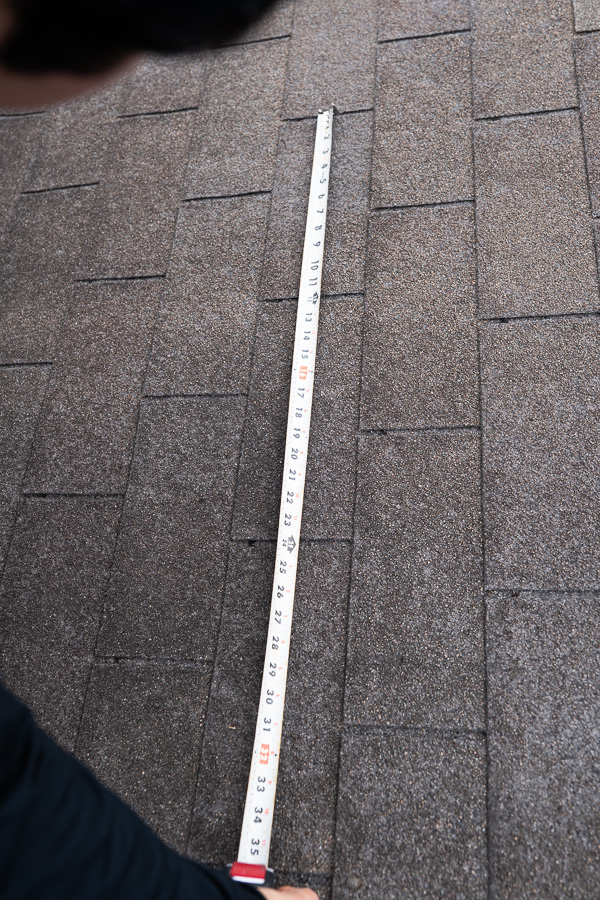
HHH Roofing’s inspection professionals assess every component that affects roofing system performance, not only the areas showing visible failure. Findings are documented with detailed photos and included in the written report. A comprehensive roof review looks past the obvious and examines the places where water actually enters.

Membrane Condition

Blistering, cracking, shrinkage, UV degradation, and surface erosion across the full membrane. We look for early-stage deterioration that a walk-and-look pass will miss entirely, because the failures that matter most rarely announce themselves.

Flashings & Transitions

Failures at walls, curbs, drains, and penetrations account for the majority of leaks on flat systems. Every transition point is probed and assessed for seal integrity and material condition. These are the joints where two materials meet, and they fail before the field does.

Seams & Laps

Open or lifting seams are a leading entry point for water. We probe all field seams and lap joints, a step many contractors skip in favor of visual-only assessment. A seam can look perfectly intact from three feet away and separate under thumb pressure.

Drainage & Ponding

Blocked drains and standing water accelerate membrane failure and void most warranties. We assess all drains, scuppers, and downspouts and identify any areas of chronic ponding. Standing water is the single most reliable predictor of premature membrane failure we encounter.

HVAC & Penetrations

Rooftop equipment, pipe boots, and curb flashings are among the most common sources of undetected leaks. Every penetration is evaluated as part of the standard scope. Mechanical work performed by other trades is a frequent culprit and rarely gets reported.

Previous Repairs

Prior repair areas are checked for compatibility, workmanship quality, and long-term adhesion. Poorly executed patchwork is among the most frequent contributors to recurring leaks, and incompatible materials often accelerate the failure they were meant to stop.

For suspected moisture infiltration, we also use infrared scanning to detect wet insulation not visible from the surface.

What You Receive

Your Written Report — And What You’ll Pay

Every commercial roof inspection closes with a written condition report delivered before we leave the site. Not a verbal summary, not a checkbox form, but a documented assessment you can act on, file for warranty compliance, or submit with an insurance claim.

The report includes findings by roof zone, condition ratings for major components, next steps ranked by priority, and a repair estimate where warranted. Nothing is omitted because it’s inconvenient to report. If a finding is minor, we say it’s minor. If we don’t think work is needed yet, we write that down too.

There is no cost. HHH Roofing does not charge property owners or managers, not for storm evaluations, not for annual check-ins, not for pre-purchase due diligence. Some providers bill $200 to $500 for the same service. We would rather earn the repair work by being right about what your building needs than bill you for the privilege of finding out.

HHH assessment

FREE

Typical market rate

$200 – $500

Write Report & Photo Documentation

Included

Obligation to hire us

None

Who We Serve

Inspections for Every Houston Building Type

HHH Roofing assesses commercial roofing systems across every building type in the market, from small retail buildings to large industrial facilities. The same standard applies regardless of square footage, and the same written report is delivered whether the structure is five thousand square feet or five hundred thousand.

Warehouses & Industrial

Large-span metal and membrane systems on industrial facilities. We accommodate tight operational windows and strict site safety requirements, and we work around production schedules rather than through them.

Retail & Strip Malls

Flat TPO and modified bitumen surfaces demand attention to parapet walls, multiple HVAC penetrations, and drainage patterns across large uninterrupted spans. Multi-tenant properties add the complication of divided responsibility, which documentation resolves.

Restaurants & Food Service

Grease exposure and rooftop exhaust equipment create unique failure conditions. We check membrane compatibility with kitchen exhaust and identify grease-related degradation, which behaves differently from ordinary weathering.

Office Buildings

Multi-story structures require careful attention to rooftop access, mechanical equipment curbs, and the interior impact of any leak, particularly over occupied floors where a small failure becomes a tenant relations problem overnight.

Hospitality & Hotels

Guest experience depends on a watertight building. We schedule around operations and provide documentation for property management and ownership groups, who often need the same findings presented for two different audiences.

Churches & Institutions

Non-profit and institutional owners benefit from documented reports for budget planning, board reporting, and insurance renewals. A written condition record turns a difficult capital conversation into a straightforward one.

Customer reviews

What Our Clients say

5.0 ★

Based on 67+ Google Reviews

Everything from start to finish was great! The quote for my roofing and gutters was very reasonable and the project was executed in a seamless and timely manner...no nail left behind. I would strongly recommend this company!! You won't be disappointed.

Mary Maurer Avatar Mary M.

Amazing customer service all the way around. Leslie was great on the phone. Cindy and her team were incredibly professional and responsive. She even walked over to the mail carrier and handed me my mail during the installation. I can't recommend them enough.

Paul Nunn Avatar Paul N.

We believed we would have ongoing issues with our roof indefinitely. This business changed that with a thorough evaluation and perfect repair services. Their staff was pleasant and communicated with me throughout the process. Our roof is now secure, and I finally feel at ease.

Genesis Dariela Jovel Castellanos Avatar Genesis D.

I had a leak in our roof, and Cindy from HHH Roofing did an amazing job! Unfortunately, the leak wasn’t fixed after the first repair, so I had to reach out to them on Saturday evening. I emailed them, and they responded within a few minutes—they were incredibly responsive! Cindy came to reinspect our roof on Monday morning and worked for a few hours to repair it. Since it was covered under the one-year warranty they provided, she didn’t charge us anything, even though this repair was more extensive than the last one. We are very grateful and highly recommend them!

Miyu Avatar Miyu

Related Commercial Roofing Services

More From HHH Roofing

Full roof inspection. Written condition report. CompanyCam documentation. Scheduled within 48 hours. No charge for owners and managers.

Itemized replacement scope, system options, cost breakdown, and warranty comparison. Delivered within 3–5 business days with full written explanation.

Full roof inspection. Written condition report. CompanyCam documentation. Scheduled within 48 hours. No charge for owners and managers.

Tear-off, deck inspection, insulation installation, new roofing system — installed to manufacturer spec with CompanyCam documentation at every phase.

Get Started Today

Schedule Your Free Commercial Roof Inspection

We schedule within 48 hours, deliver a full written report, and give you an honest picture of your building’s condition, whether the news is good or bad. No pressure, no obligation, one follow-up. You decide what happens next, and you decide it with a document in hand rather than a sales pitch in your ear.

Schedule your free inspeciton

Fill out the form below to get started

Or call our roofing team directly:

Frequently Asked Questions

Professional Roof Inspection FAQs

Common questions Houston property owners and managers ask about commercial roof inspections — answered honestly.

How often does a commercial roof actually need to be inspected?

Twice a year is the standard, and it’s usually a warranty requirement rather than a suggestion. This question generates a lot of conflicting advice — answers on Quora range from every two years to every three to five years — but those are residential-flavored answers. For commercial systems, most roofing manufacturers require a minimum of two documented inspections per year to keep warranties valid. Properties with roofs over 15 years old often benefit from stepping up to semi-annual inspections, and buildings with heavy rooftop foot traffic — HVAC technicians, telecom workers, maintenance staff — need more frequent attention because that activity creates wear and damage points that accumulate over time. Post-storm assessments should happen within 48 to 72 hours of a severe weather event. In Houston, that means at minimum one visit before storm season and one after.

Yes, and it happens routinely. Insurers commonly argue that damage was preventable due to neglect — clogged drains, unrepaired minor leaks — and proactive maintenance records are the primary defense against that argument. If a roof is over 20 years old, insurers may treat it as past its lifespan and deny outright or offer only actual cash value rather than replacement cost. Insurers also deny claims by attributing damage to pre-existing conditions rather than a sudden covered event, and detailed maintenance logs plus contractor inspection reports are what establish that the roof was in sound condition beforehand. A pro tip that comes up repeatedly: keep a simple folder, physical or digital, of roof records — even minor service receipts help demonstrate upkeep and weaken the neglect argument. This is the single most underrated reason to get a documented inspection before you need one.

Both — and the difference matters more than most building owners realize. Infrared scanning detects temperature differences caused by trapped moisture beneath the membrane without cutting into anything, while a visual walkthrough can only catch what’s visible on the surface. Industry guidance is direct about this: ask your inspector whether infrared scanning is part of their standard process, because if they only offer a visual walkthrough on a flat or low-slope commercial roof, you’re getting an incomplete picture. The most effective sequence is non-destructive infrared scanning first to identify zones where moisture may be trapped, then targeted core sampling to confirm what the scan flagged — locate first, confirm second. Saturated insulation is invisible from above. A membrane can look sound while the layer beneath it has been wet for two seasons.

We can give you a defensible estimate, and it belongs in the report. This is one of the most consistently recommended questions to ask an inspector, because knowing how much life your current system has left is essential for planning ahead — the estimate should be based on roof type, current wear, and past maintenance history, and if the roof is approaching the end of its life cycle, it’s time to start budgeting for replacement rather than being surprised by it. One signal worth understanding: if the same type of repair has been performed on your roof repeatedly, that often indicates the system was improperly installed in the first place, or that the building has structural problems — either way it points toward replacement sooner rather than later. That’s why prior repair areas are part of our standard scope. Patchwork history tells a story that surface condition alone won’t.

A free inspection should cost you nothing and obligate you to nothing. The reason people ask is legitimate: BBB Scam Tracker regularly receives reports of shady “free” roof inspections, typically after big storms. The pattern is an unsolicited contractor who shows up unannounced, then creates damage or shows photos of someone else’s roof. The distinction is simple: a legitimate free inspection is one you requested, from a licensed and insured contractor with a verifiable address and a real review history, and it ends with a written report you keep whether or not you hire them. Paid professional inspections generally run $75 to $850, averaging around $220 — so if a company offers one at no charge, ask what they expect in return. At HHH, the answer is a fair shot at the repair work if repairs are warranted. Nothing more.

Get Started Today

Protect Your Commercial Property

Contact ourcommercial roofing experts for a free consultation. Same-day responses, transparent proposals, and roofing solutions built to last in the Texas climate.

Licensed · Insured · BBB A+ Rated · Serving Houston Since 2013

What Will My Roof Cost?

Enter your street address to get an accurate estimate instantly