
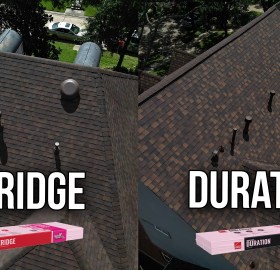
Owens Corning Oakridge vs. Duration Shingles | Which Is Best?
When it’s time to replace your roof, choosing the right shingle matters. Two of the most popular options on the market are Owens Corning Oakridge® and Duration® shingles—both known for their durability, style, and trusted performance. But what’s the difference, and which one is the best fit for your home? In this guide, we break down Oakridge vs Duration in simple terms so you can confidently choose the best roofing system for your needs and budget.
Key Differences Between Oakridge and Duration Shingles
To help you quickly understand the main differences between Owens Corning Oakridge and Duration shingles, we’ve created a side-by-side comparison chart. This breakdown highlights key factors like price, warranty, wind resistance, color options, and impact ratings—so you can make a confident decision based on what matters most for your home. Whether you’re focused on budget, performance, or curb appeal, this table makes it easy to compare both products at a glance.
| Feature | Owens Corning Oakridge | Owens Corning Duration |
|---|---|---|
| Price | More budget-friendly; lower cost per square. | Premium pricing (about 10–20% higher). Offers advanced features like SureNail® and higher wind rating. |
| Warranty | Limited Lifetime Warranty (for as long as you own your home). 10-year Tru PROtection℠ non-prorated coverage. | Also Limited Lifetime Warranty, with the same 10-year Tru PROtection℠ period. Transferable if you sell the home. |
| Wind Resistance | 110 MPH standard, 130 MPH with 6 nails and starter strips. | 130 MPH wind warranty out of the box (4 nails), thanks to SureNail® strip. |
| Impact Rating | No special hail impact rating (standard architectural). | Class 3 (UL 2218), may qualify for insurance discounts in hail-prone areas. |
| Colors & Appearance | Wide range of popular colors; a subtle dimensional look. | Larger color selection with more choices overall. Thanks to the TruDefinition® color platform, Duration shingles often look brighter and more vibrant, giving a bolder, high-contrast appearance. |
| Nailing Zone | Standard laminated nailing zone (double-layer). | Patented SureNail® Technology (triple-layer reinforced strip for nails). |
| Ideal Use Case | Value-focused homeowners, rentals, or properties on a tighter budget. | Long-term homeowners, storm-prone areas, or those seeking premium curb appeal. |

Price & Budget
Owens Corning Oakridge shingles are a great option for homeowners looking for a budget-friendly roof without sacrificing quality. They come in at a lower price point per square, making them ideal for short-term properties, rentals, or anyone looking to save upfront. On the other hand, Duration shingles are considered a premium option, typically priced about 10–20% higher. The added cost reflects advanced features like SureNail® Technology and higher wind ratings, which can offer greater long-term value and protection.
Check out our How Much Does A New Roof Cost Blog to read more on pricing
Warranty Coverage
Both Oakridge and Duration shingles are backed by a Limited Lifetime Warranty and a 10-year Tru PROtection® period, which covers labor and materials without proration. However, Duration shingles have the added advantage of being transferable if you sell your home, which can add resale appeal. This makes Duration a better long-term investment for homeowners planning to stay in their home for many years or looking to enhance property value.
Wind Resistance
If you live in an area prone to storms or high winds—like Houston or coastal Texas—wind resistance matters. Oakridge shingles offer wind protection up to 110 MPH, but can be rated up to 130 MPH with the use of 6 nails and starter shingles. Duration shingles come with a 130 MPH wind warranty right out of the box using only 4 nails, thanks to Owens Corning’s patented SureNail® strip, which reinforces the nailing zone for stronger holding power.
Impact Resistance & Insurance Discounts
If you live in a hail-prone area, your shingle’s impact rating can directly affect insurance premiums. Oakridge shingles do not have a special impact rating. Duration shingles, however, carry a Class 3 UL 2218 Impact Rating, which may qualify homeowners for insurance discounts and offers better protection from hail and debris.
Why Insurance Companies Offer Discounts for Class 3 & Class 4 Roofs in Houston
High Risk of Hail Storms in Texas
Houston and surrounding regions frequently experience severe hailstorms, especially in spring and early summer. Hail causes billions in roof damage each year, making Texas one of the most hail-prone states.
UL 2218 Impact Rating System
The Underwriters Laboratories (UL) developed the UL 2218 standard to test and classify roofing materials based on their resistance to hail damage. The test involves dropping steel balls from set heights and checking if the material cracks or breaks.
- Class 3: Withstands a 1.75″ steel ball dropped from 17 feet
- Class 4: Withstands a 2″ steel ball dropped from 20 feet (highest rating)
Lower Risk = Lower Premiums
Insurance companies reward homeowners who install higher-rated roofing (Class 3 or 4) because it reduces the chance they’ll have to pay out hail damage claims. These shingles often resist cracking, splitting, and granule loss better than standard shingles.
Texas Department of Insurance (TDI) Incentives
The Texas Department of Insurance allows carriers to offer discounts for homes using qualified impact-resistant roofing materials — especially Class 4. These discounts vary by provider but can range from 5% to 35% on the wind/hail portion of your premium.

This is a sample form from State Farm that we were required to complete to apply for a reduction in residential insurance premiums after installing impact-resistant shingles.
Disclaimer: This form is provided for informational purposes only. Do not use this exact form for your own submission. Insurance providers like State Farm may update their forms and requirements at any time.
Always contact your insurance company directly to get the most current and approved form before submitting.
Color Options & Appearance
Both shingle lines are designed to enhance your home’s curb appeal with an architectural, dimensional look. Oakridge shingles have a softer, more traditional style with a range of popular colors. Duration shingles offer a larger selection of vibrant, bold colors through Owens Corning’s TruDefinition® color platform. Thanks to their deeper contrast and brighter appearance, Duration shingles stand out more dramatically and provide a high-end finish.
Side-by-side of Oakridge vs Duration in Driftwood Color
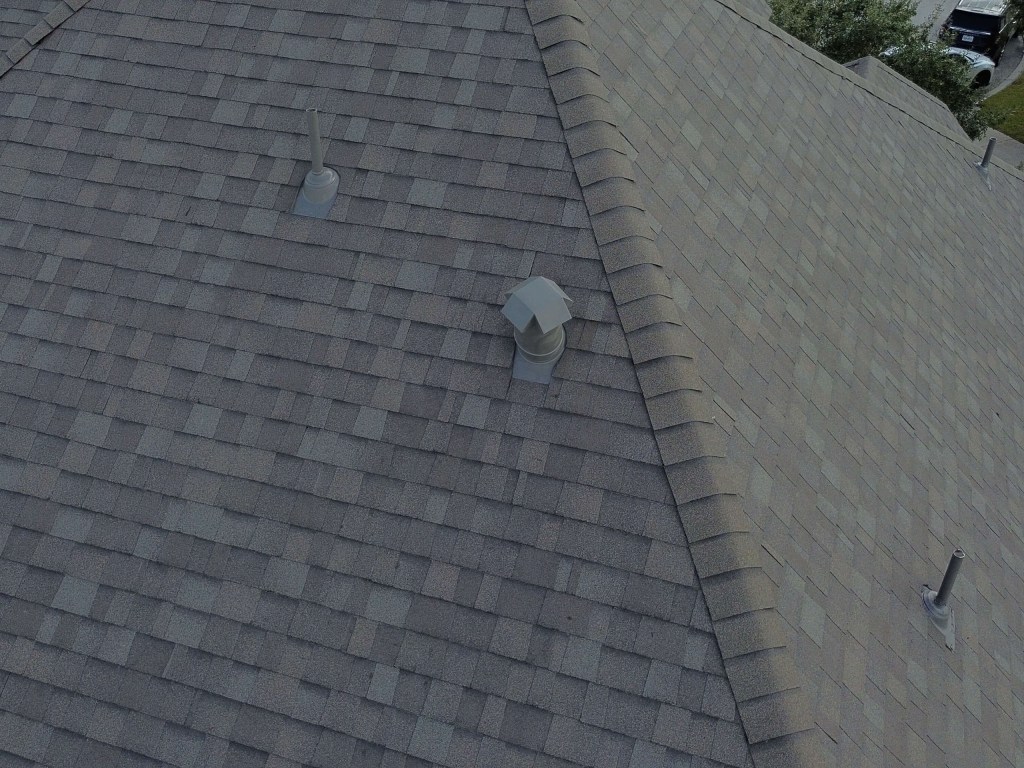
Oakridge Shingle in Color Driftwood
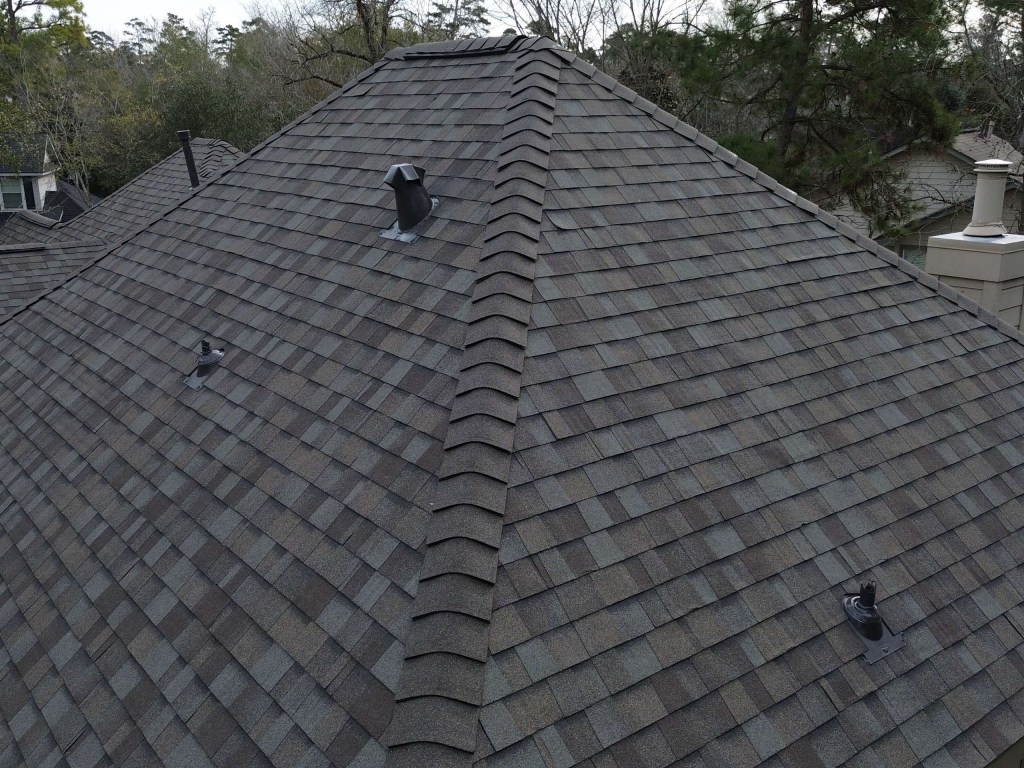
Duration Shingle in Color Driftwood
Nailing Zone & Installation
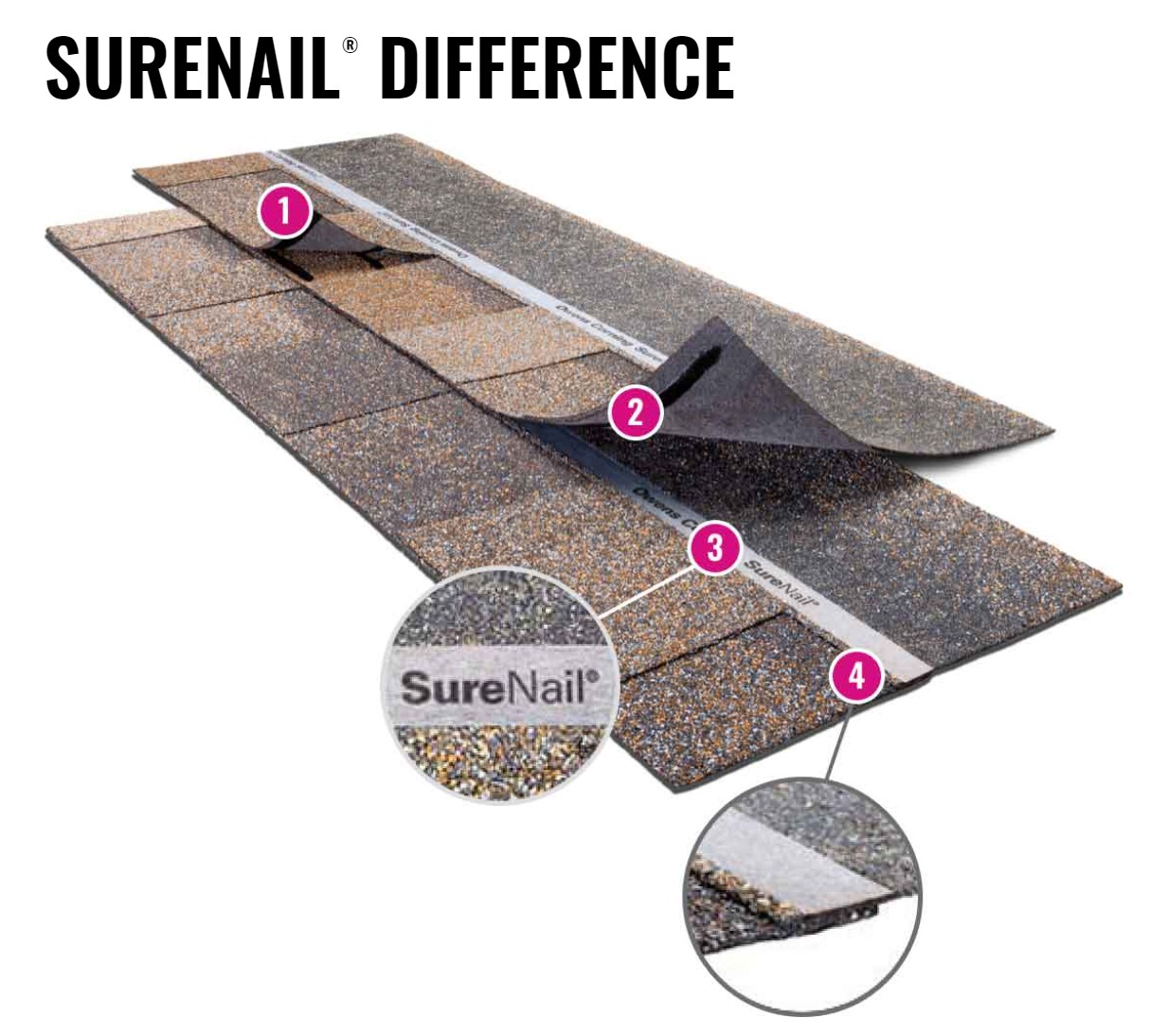
Oakridge shingles feature a standard double-layer nailing zone that requires 4 to 6 nails depending on your desired wind rating. Duration shingles include the patented SureNail® Technology—a reinforced fabric strip embedded into the nailing area that provides a triple-layer strength. This makes them easier and faster to install while ensuring a more secure hold, especially during storms.
Oakridge Shingles
-
Uses a standard double-layer nailing zone
-
Requires 4–6 nails depending on wind resistance needed
Duration Shingles
-
Features SureNail® Technology, a reinforced triple-layer nailing strip
-
Easier and faster for roofers to install with consistent fastening
Which Shingle is Best for You?
Both Owens Corning Oakridge and Duration shingles are excellent roofing choices—but the best one depends on your goals. Oakridge offers dependable quality at a great value. Duration delivers top-tier performance and visual impact for long-term peace of mind. Either way, make sure your roof is installed by a trusted local contractor.
Choose Oakridge If:
- You’re on a tighter budget
- It’s a rental property or short-term home
- You want solid protection with traditional colors
Choose Duration If:
- You’re in your forever home
- You live in a high-wind or hail-prone area
- You want the boldest colors and highest performance
TruDefinition Duration Installations
Oakridge Installations

The Best Roofing System for Restaurants: Duro-Last PVC
When it comes to choosing the best roofing system for restaurant owners, having a reliable, high-performing roof is critical to the long-term protection of your business. That’s why our team of roofing experts recommend the Duro-Last roofing system as the ideal roofing solution for restaurants.
In this blog post, we’ll explain what is Duro-Last PVC (Polyvinyl Chloride), the features that come along with this roof system, and why it’s the best choice for your restaurant.
Let’s get started!
What is Duro-Last PVC Roofing?

The Duro-Last PVC roofing system is a custom fabricated system consisting of a flexible, single-ply thermoplastic membrane optimal for flat or low slope roofs.
The Components of PVC
Roof Decking
A roof deck is the foundation for your roof. Deck material is the important structural element that helps support the insulation and waterproofing (membrane layers). Whether the project is a membrane tear-off, complete reroof or new construction the roof deck will be visually inspected before the application of the roof system.
Main Types of Commercial Roof Decking:
- Plywood or Oriented Strand Board (OSB)
- Steel – cold-rolled, corrugated
- Structural Concrete
- Lightweight Insulating Concrete
- Gypsum
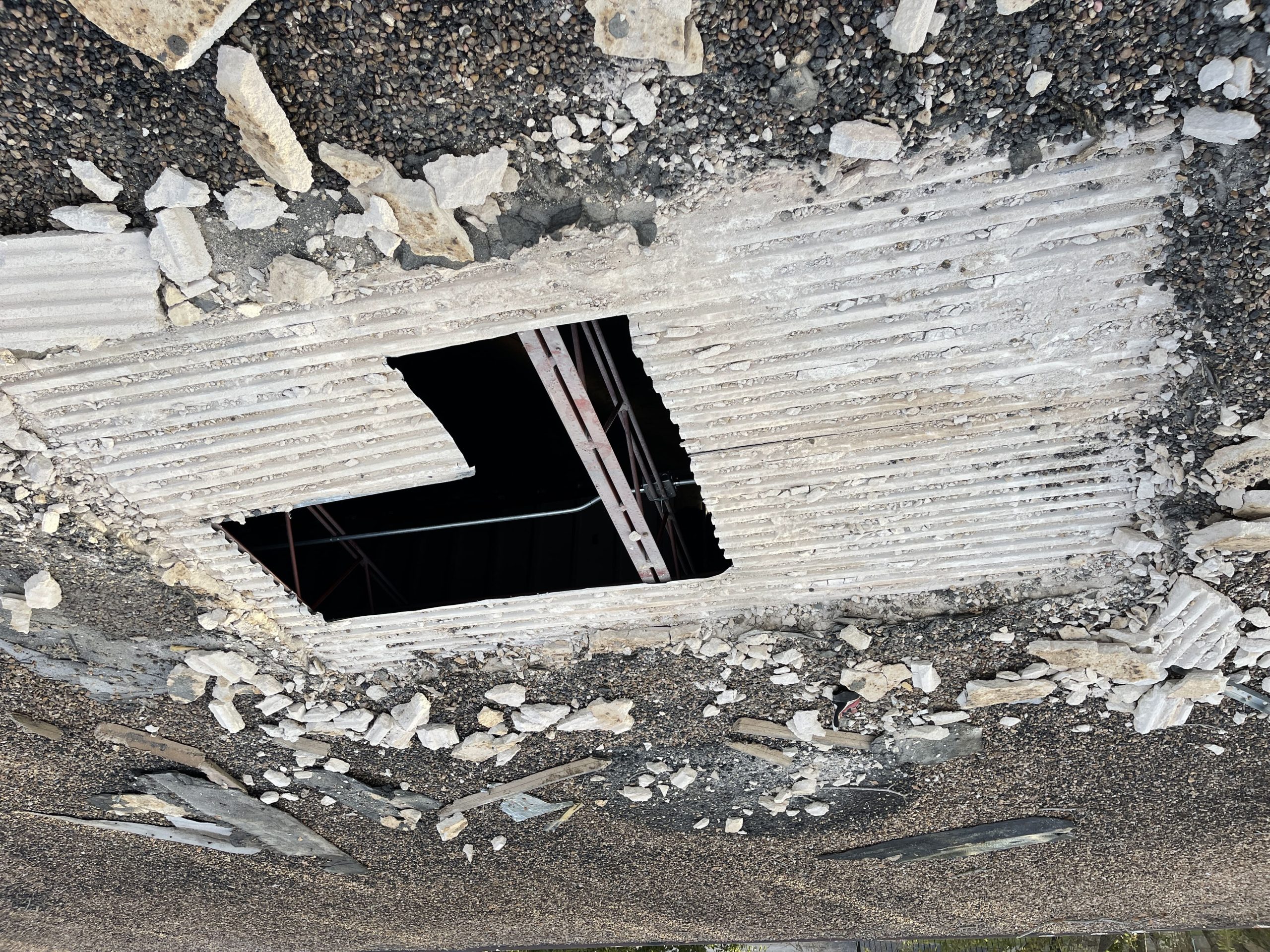
Base Layer is Metal Panel Decking, Repaired Section of Decking

Complete Tear-Off
Insulation
This is the key to energy efficiency. Polyiso (polyisocyanurate) is the most commonly used type of insulation. It offers the highest R-value of any rigid insulation. R-value measures the insulation’s resistance to heat flow. It’s important to note that for commercial buildings, there are minimum insulation R-value requirements that vary from state.
Popular Types of Roof Insulation Available:
- Duro-Guard ISO
- Duro-Guard EPS Fan-Fold
- DensDeck

Duro-Guard EPS Fan Fold

Duro-Guard ISO
Find the minimum insulation R-value requirements for commercial buildings here
Roof Membrane
Duro-Last’s roof membranes come in varying thicknesses, measured in mils. The membranes are available in custom-fit, prefabricated sections. This membrane is custom-fabricated in sections up to 2,500 square feet, fitting each roof precisely to its unique specifications. Instead of in the field, up to 85 percent of the seams are completed under ideal, factory-controlled conditions – reducing waste, saving on labor and preventing leaks.
Membrane Thickness Options:
- 40 mil
- 50 mil
- 60 mil

Installation Process
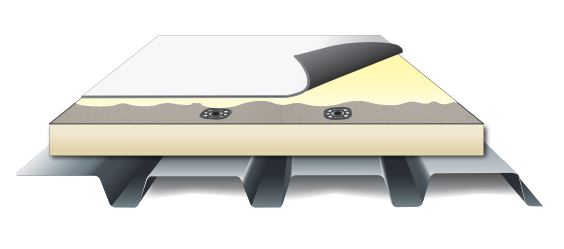
Mechanically attached: The membrane is securely attached to the underlying roof deck using plates and fasteners along the seams, then the overlapping seams are heat welded using a heat gun or welding machine.

Fully adhered: The membrane is bonded directly to the insulation or roof deck using a bonding adhesive or low rise spray foam, typically the low rise spray foam sticks better. Then the overlapping seams are heat welded using a heat gun or welding machine.
Accessories
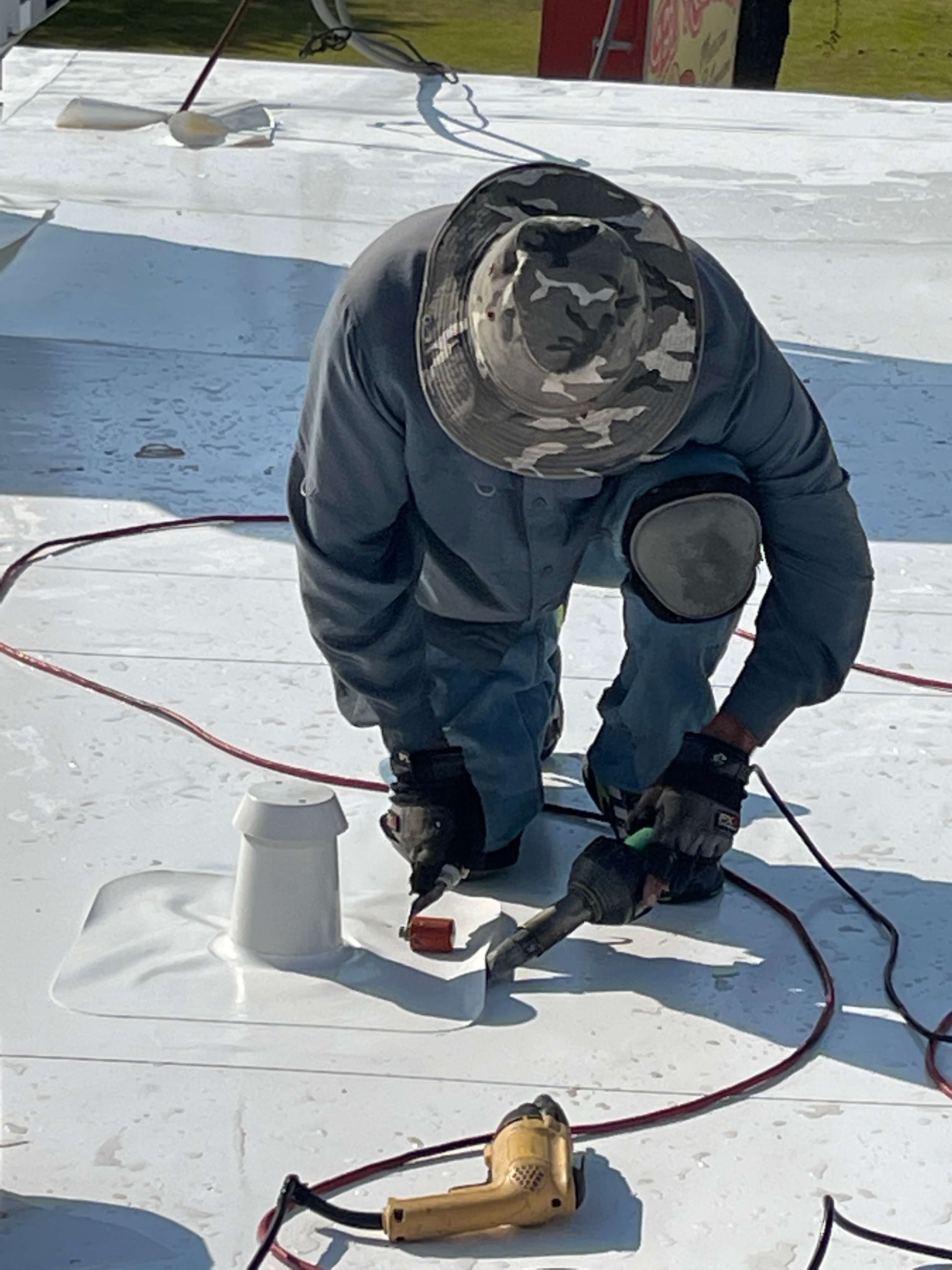
The Duro-Last system also includes prefabricated flashing, boots for pipes, and vents, ensuring a perfect fit for each roof. Custom-fabricated flashings are manufactured with Duro-Last membrane material and feature a weft-inserted scrim which provides puncture and tear resistance along with tensile strength at transitions – the most critical areas of any roof installation.
Why PVC Duro-Last Is Ideal for Restaurants
Durability
Duro-Last roofs are recognized as the best roofing system for their excellent durability and long-term performance. Here are a few features that contribute to the durability of a Duro-Last roofing system:
- Various membrane thicknesses based on specific needs, with thicker membranes offering better resistance to wear and tear.
- Resistance to chemicals, oils, and grease—critical for restaurant kitchen exhausts that can cause buildup on the roof.
- The ability to withstand high winds and extreme weather conditions.
- Reduced on-site installation errors and minimized seam completion thanks to each roof’s prefabrication at a Duro-Last manufacturing plant.
- Resistance to punctures and tears from foot traffic, debris, or maintenance equipment.
- Heat-welded seams provide a watertight bond that protects against leaks and weather damage.
This positions Duro-Last as the best roofing system for commercial and restaurant environments.
Longevity
A typical Duro-Last roof has an impressive lifespan of about 20-30 years. This longevity is primarily determined by two key factors: the thickness (mil) of the membrane and the quality of the installation.
Thicker membranes offer increased durability, providing better protection against the wear and tear common in commercial settings, particularly restaurants. Proper installation is also critical, as Duro-Last roofs are prefabricated in a controlled environment to ensure precision and reduce on-site errors, further enhancing their lifespan. With the combination of high-quality materials and expert installation, Duro-Last is consistently the top choice available, offering restaurant owners a reliable, long-lasting solution that can withstand the demands of their environment, from heavy foot traffic to harsh weather conditions.
Energy Efficiency
The Duro-Last PVC roofing system is engineered for energy efficiency, significantly reducing your restaurant’s HVAC expenses. Its white, reflective membrane deflects the sun’s heat, helping your HVAC system operate more efficiently and lowering energy consumption. Additionally, the insulation’s high R-value enhances temperature control by reducing heat transfer, keeping your restaurant cool during hot weather and warm during colder months.
Fire-Resistance
The PVC formulation incorporates fire-retardant chemicals that enhance its resistance to combustion, prevent the spread of flames and also makes it self-extinguishing, adding an extra layer of protection to your roof. Duro-Last roofing membranes meet or exceed major national fire and wind code requirements, as well as most required regional approvals throughout the country.
Low Maintenance
Duro-Last roofs require minimal maintenance however, it is still important to keep your roof maintained and clean to maximize the roof’s lifespan. Here are a few maintenance tips to do so :
- Inspect for leaks in the building after severe weather storms
- Minimize foot traffic as much as possible
- Conduct a roof cleaning 1-2 times per year, checking for screws, nails, sharp objects, or outside debris (especially if building is surrounded by a lot of trees/vegetation)
- Schedule roof inspection at 15 years mark
You can find Duro-Last’s Care and Maintenance Guide & Owner Checklist here
What is the Cost of a Duro-Last Roof System?
The average Duro-Last roofing cost per square foot is approximately $7.50 with a varying range of $6-$12+ per square foot. The pricing for your roof system can depend on these following factors:
- Size of your roof (square footage)
- Current roof system (one layer, two layer application process)
- Insulation requirements
- Thickness of Membrane Choice
- Installation Choice
- Roof pitch
- Warranty
Types of Warranty Offered for the Duro-Last Roofing System
Unique in the industry, Duro-Last offers a 15-Year Supreme Warranty with consequential damage coverage for commercial applications of the Duro-Last Roofing System. Additional Supreme warranties, as well as our Basic, Ultra and Residential warranties are also available. Hail and high-wind warranties can also be obtained for Duro-Last installations.
Additionally you will receive our own Company 10 Year Material and Labor Workmanship Warranty with every job completion.
Restaurants that use Duro-Last Roofing
Several well-known names in the fast food industry including, Chick-fil-A, Jack in the Box, Wendy’s, and Sonic, have chosen the Duro-Last roofing system for their locations. Here are a few Duro-Last commercial projects we’ve completed, highlighting some restaurants.
Conclusion
Ultimately, Duro-Last PVC roofing stands out as the top choice for restaurant owners due to its optimal performance features. Its custom fabrication, tailored specifically to each individual roof, combined with a controlled manufacturing process that ensures a precise fit, sets it apart from the competition. Whether you’re launching a new restaurant or upgrading an existing roof, Duro-Last provides the reliability and durability your business needs to operate smoothly for years to come. One final important note: selecting a certified and experienced roofing contractor is crucial to ensuring proper installation, helping you avoid unnecessary and costly repairs down the road caused by negligence or inexperience.

What Is TPO Roofing? The Ultimate Guide To TPO
Discover The Benefits & Disadvantages of TPO Roofs
TPO roofing, short for Thermoplastic Olefin, is a versatile, durable, and energy-efficient option for flat roofs in various climates. Comprising rubber, plastic, and reinforcing materials, it resists UV rays, chemicals, and the elements. Ideal for energy-efficient buildings, it’s a preferred choice for residential and commercial properties due to its ease of installation and low maintenance.
According to reports and data, it stands out as one of the most rapidly expanding roofing systems in the industry.
Benefits of TPO Roofing for Houston Commercial Properties
UV Resistance and Durability: TPO roofing stands strong against UV rays and harsh weather conditions, extending its lifespan.
Energy Efficiency: Its reflective properties deflect sunlight, reducing cooling costs, and contributing to energy-efficient buildings.
Leak Prevention: TPO’s flexibility and strong seams help prevent leaks, ensuring reliable protection for flat roofs.
Cost-Effectiveness: TPO roofing is a budget-friendly option compared to some alternatives, offering long-term savings.
Low Maintenance: Requiring minimal upkeep, TPO roofing remains a hassle-free choice for property owners.
Variety of Colors: With a range of color options, TPO roofing can complement a building’s aesthetic while maintaining its functionality.
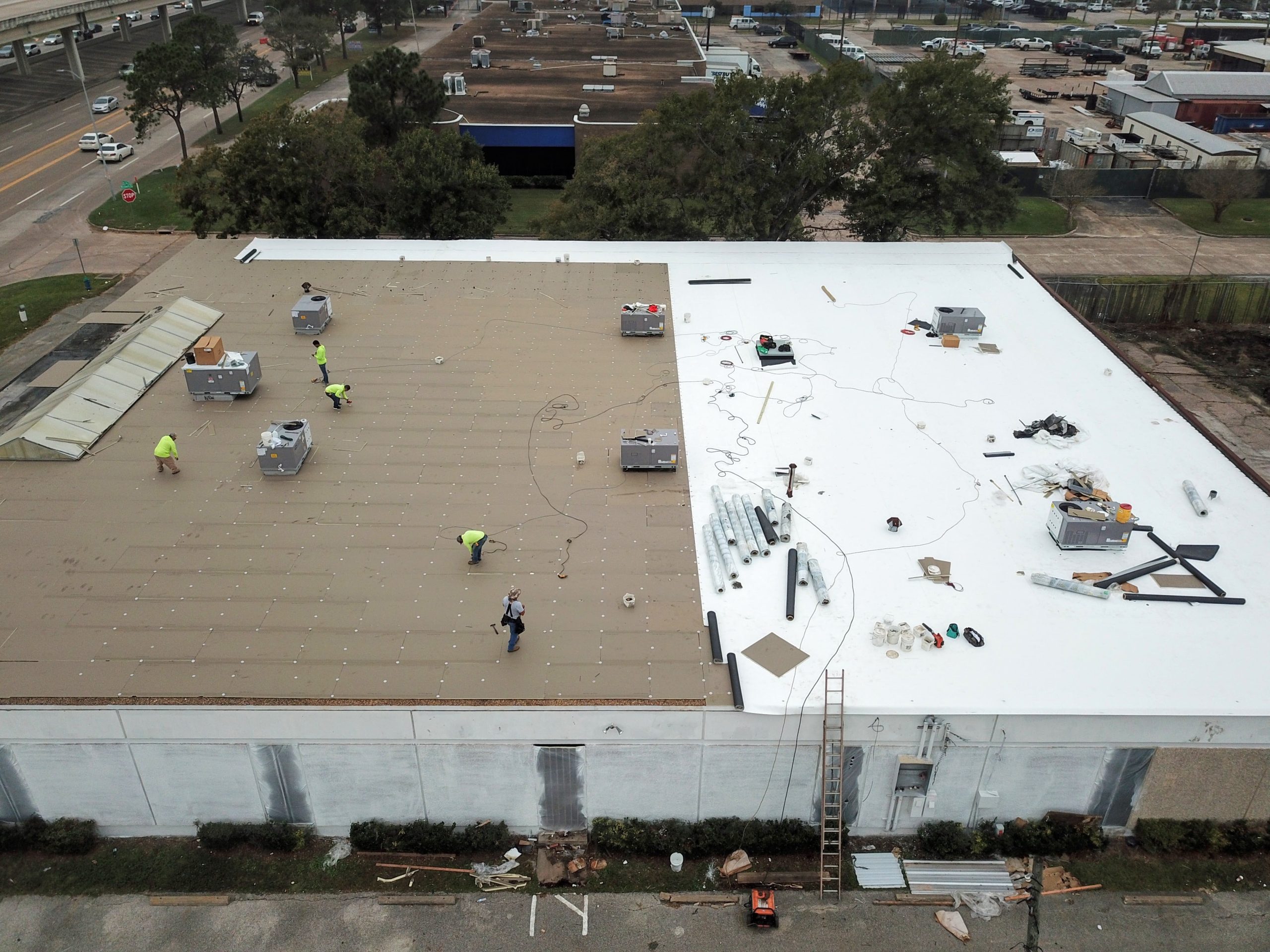
How Do You Install TPO?
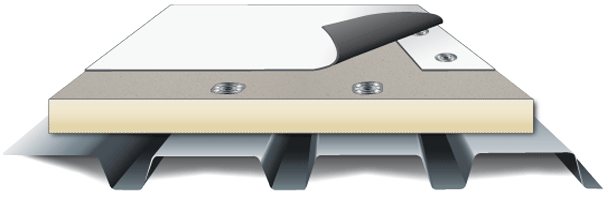
Mechanically Attached
Mechanically attaching TPO roofing involves securing the membrane with fasteners and plates, providing stability and efficiency in flat roof installations.
Fully Adhered
Adhering TPO roofing means bonding the membrane with adhesive directly to the substrate, offering a seamless appearance and strong protection against leaks and elements.

Induction Welding
Induction welding TPO roofing uses electromagnetic energy and specially designed plates to melt and fuse the membrane with the substrate, creating secure and durable seams without open flames or adhesives. This method is efficient, safe, and known for its reliability in roofing applications.

How long does TPO Roofs Last?
TPO roofing is renowned for its durability, making it a solid choice for homes and businesses alike. Generally, a well-installed TPO roof can last anywhere from 20 to 30 years or more. This resilience is due to TPO’s resistance to UV rays, weather, and its ability to reflect heat. Regular maintenance, including inspections and debris removal, can help extend its lifespan. Manufacturer warranties often provide insight into the expected longevity, usually ranging from 15 to 30 years based on various factors. In essence, TPO roofing offers a long-lasting solution with proper care, ensuring reliable protection for decades.


What insulation is needed for a tpo roof?
When considering insulation for a TPO roof system, the approach is tailored to the specific building. Each building and TPO roof configuration is unique, influenced by factors like:
- The existing roof on the building
- The number of insulation layers already in place
- The required R-value for the building
- Warranty specifications stipulated by TPO manufacturers
Below, we outline typical insulation options commonly encountered:
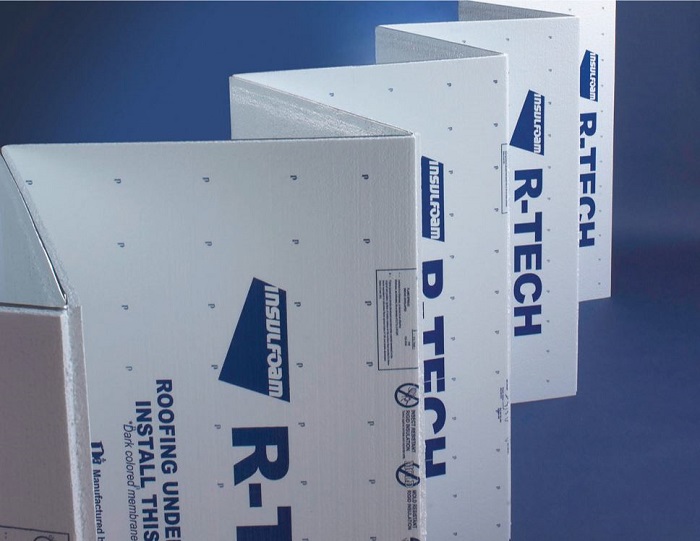
EPS Fan fold
EPS Fan Fold Insulation stands as a prevalent and cost-effective insulating option. While it offers a relatively low R-Value of approximately 2.27, its popularity is driven by its affordability. This type of insulation is frequently chosen when installing a TPO Roof over existing surfaces like an old TPO Roof, modified torch roof, or coatings.
Poly Iso
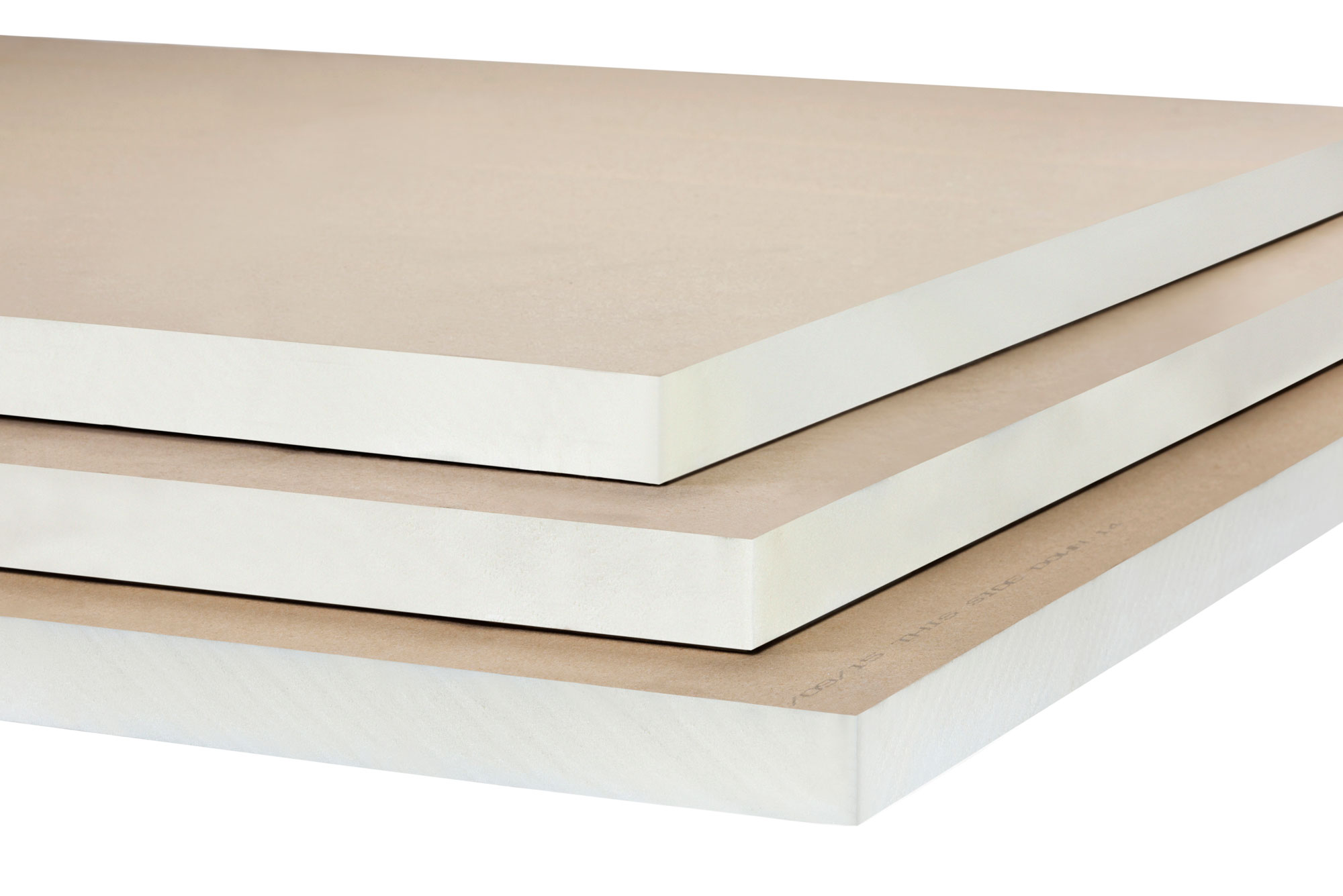
Another prevalent insulation choice is POLY ISO, frequently available in sheets of 4×8 or 4×4. Its R-Value is contingent on the thickness chosen, ranging from 1″ to 2.2″, 3″, and more. On average, it offers an R-Value of approximately 6.5 per inch. This insulation finds common application in new constructions, over graveled roofs, modified torch roofs, or when increasing the building’s R-Value to comply with codes. Pricing fluctuates based on the chosen thickness.
TPO Roofing Installation for Houston Commercial Roofs
Installing TPO roofing on commercial properties in Houston demands a meticulous process to ensure longevity and performance. Below is an outline of the essential steps involved in the installation:
1. Surface Preparation:
- Thoroughly clean and inspect the roof surface, ensuring it is free of debris, dirt, and damage.
- Repair any existing issues, such as leaks or structural damage.
- Properly prepare the substrate to ensure a solid foundation for the TPO membrane.
2. Insulation Application:
- Depending on the building’s needs and energy efficiency goals, install appropriate insulation materials.
- Ensure proper insulation thickness and type to meet Houston’s climate demands.
3. TPO Membrane Installation:
- Unroll the TPO membrane across the roof, ensuring proper positioning and alignment.
- Secure the membrane using the chosen installation method: mechanically attached, fully adhered, or ballasted.
- Pay special attention to seams, ensuring they are tightly sealed for water resistance.
4. Heat Welding Seams:
- In the case of mechanically attached or fully adhered installations, employ heat welding to fuse the seams of the TPO membrane.
- This process creates strong, watertight connections that prevent leaks and enhance durability.
5. Flashing and Edge Details:
- Install flashing components around roof penetrations, edges, and corners for added protection.
- Proper flashing ensures water doesn’t infiltrate vulnerable areas of the roof.
6. Quality Assurance:
- Thoroughly inspect the entire TPO roofing system to identify any imperfections or defects.
- Address any issues promptly to ensure a flawless installation.
Conclusion: TPO roofing installation for Houston commercial roofs is a comprehensive process that requires attention to detail and expertise. From preparing the substrate to fusing seams and applying proper insulation, each step contributes to a reliable and long-lasting roofing system. By enlisting the skills of seasoned professionals, businesses can ensure their TPO roof is effectively installed to withstand Houston’s weather while providing energy efficiency and protection for years to come.

What Materials Are Used in a Roof Replacement? (Houston Homeowners Guide)
When replacing your roof, it’s important to understand every material involved—not just the shingles you see on top. Each layer plays a crucial role in protecting your Houston home from wind, rain, heat, and humidity. At HHH Roofing & Construction, we believe educated homeowners make better roofing decisions. This guide walks you through all the essential components of a quality roof replacement.
Why It's Important to Know What's On Your Roof
Roofing isn’t just shingles. A complete roofing system includes decking, underlayment, ventilation, and more—each working together to protect your home. In Houston, where intense heat, heavy storms, and hurricanes are common, the right materials can extend your roof’s lifespan and even lower your insurance premiums. Knowing what’s on your roof helps you make informed choices when comparing quotes.

Essential Roof Replacement Materials (With Photos)
Every layer matters in a roof replacement. Below are the key materials we install on every project.
Roof Decking (Sheathing)
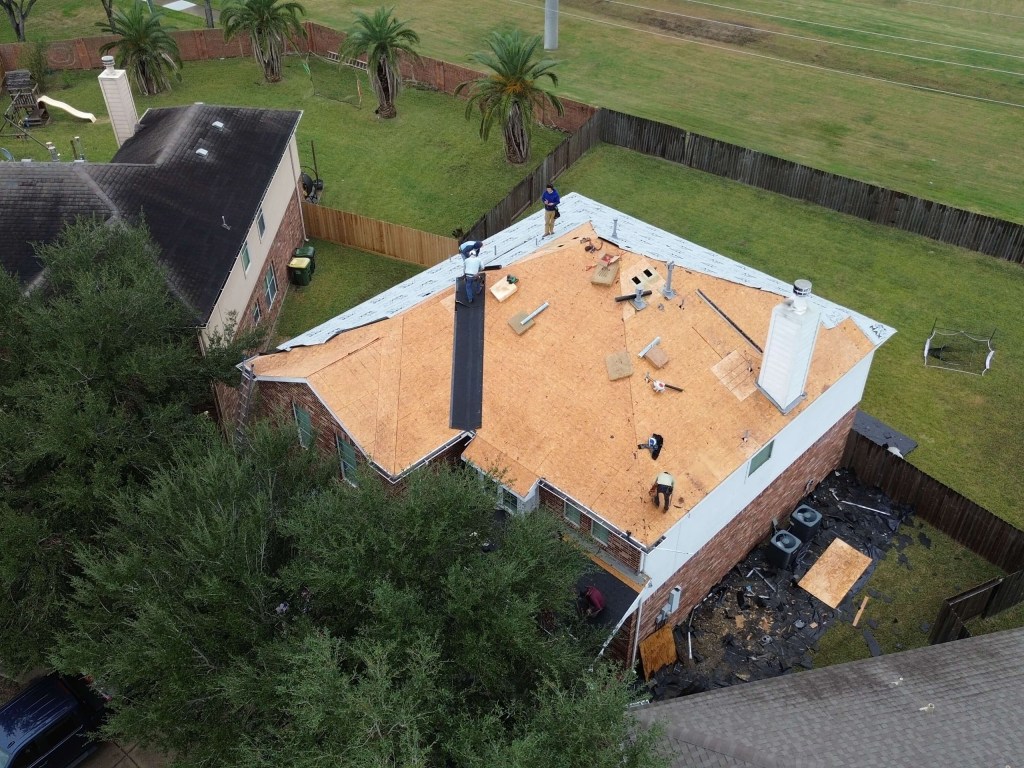
Roof decking is the wood layer that forms the base of your roof. It’s typically made from OSB (Oriented Strand Board) or plywood. During replacement, we inspect for water damage or rot and replace any compromised sheets.


When you have a roof that has been leaking for awhile it can eventually damage your plywood. If you are getting a roof replacement, you might have to replaced some of your roof’s decking. On average, most contractors will provide 2-4 sheets to repair any rotten plywood found during the tear-off.
Your roofing contractor won’t know exactly how many sheets will need to be replaced until they tear off all your roofing materials. This is why a roofing company will include in their estimate how many sheets they are going to provide and the cost for each additional sheet after tear-off.
Ice and Water Shield/Leak Barrier
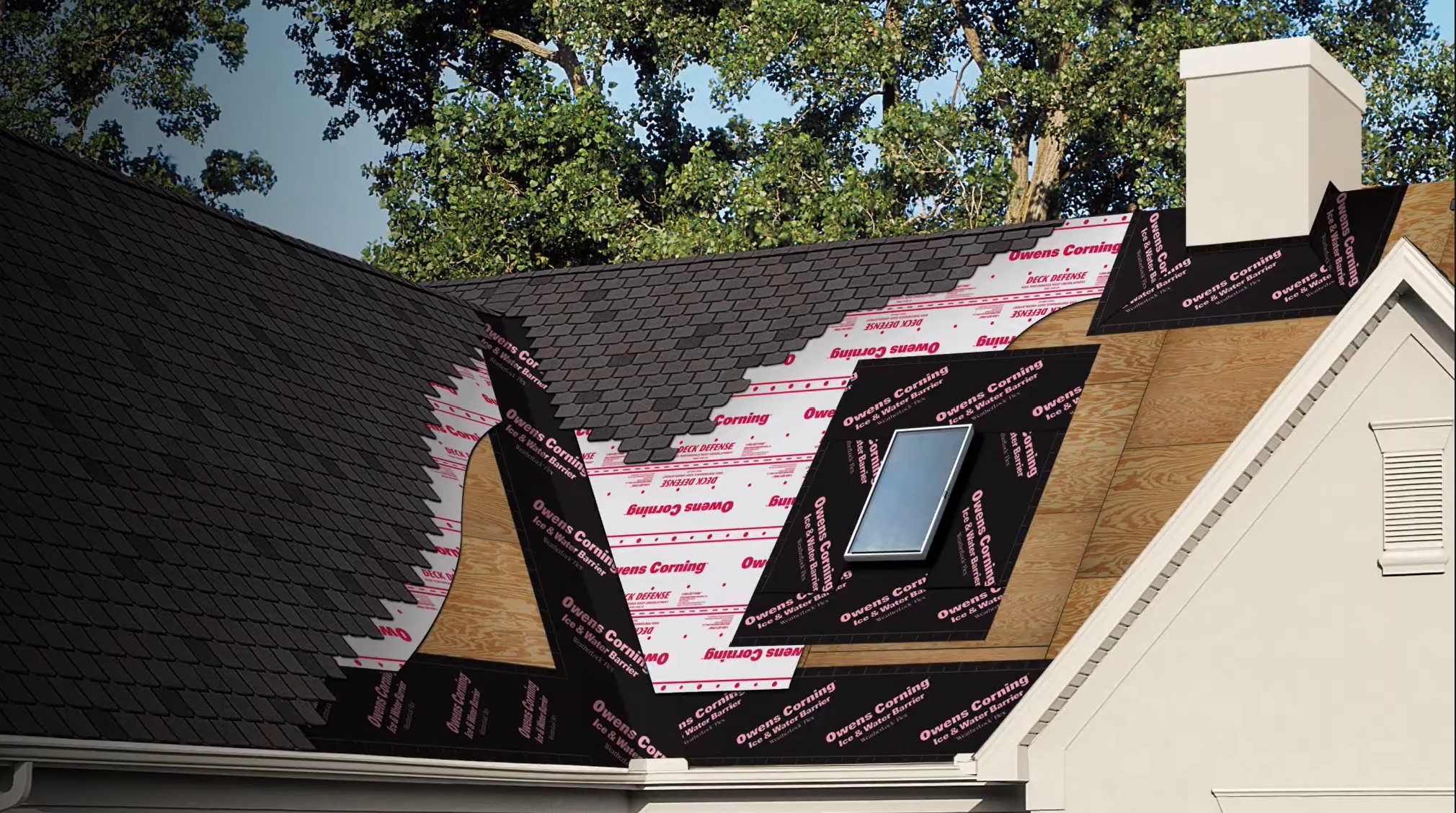
This waterproof membrane is installed in the most vulnerable areas of your roof, such as valleys and around roof penetrations like vents and chimneys. Where two roof faces meet to form a valley, it’s crucial to guide water in the right direction and prevent pooling. Roof valleys experience constant water flow every time it rains, which increases the risk of leaks.
That’s why the ice and water shield is essential—it’s a self-adhering membrane specifically designed to create a watertight seal in high-risk areas. In Houston’s heavy rainstorms, this added protection is key to keeping your home dry.

Ice and Water Shield vs. Metal in Roof Valleys
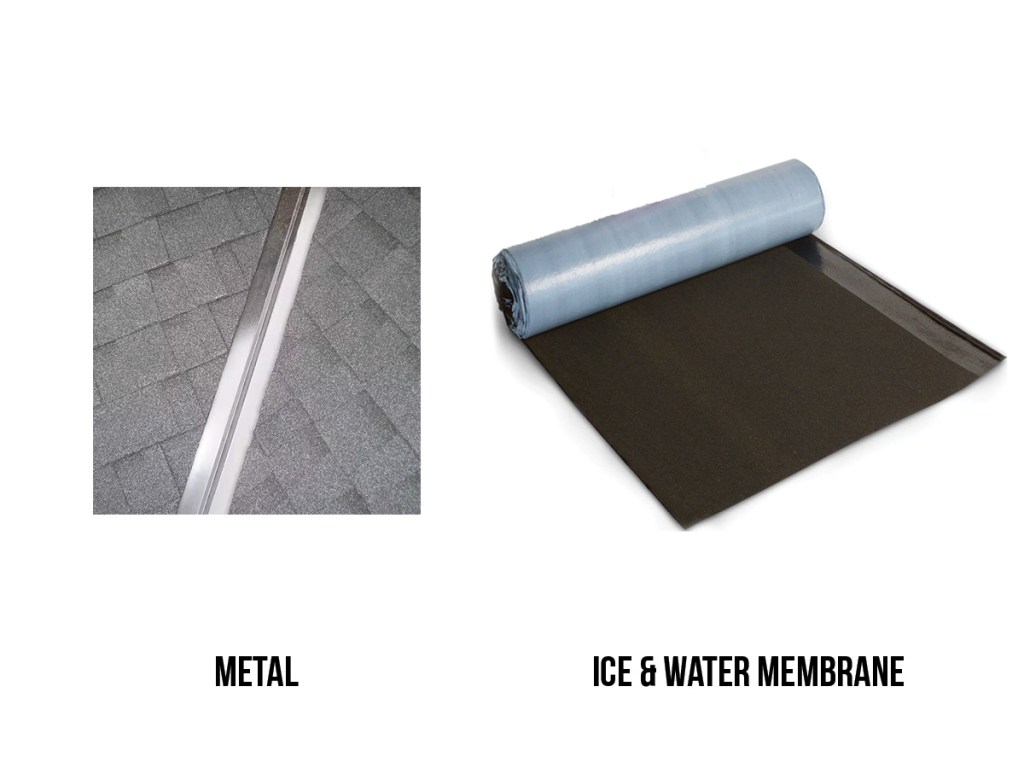
When it comes to protecting roof valleys, homeowners often ask whether metal or an ice and water shield membrane is better. While both methods serve to direct water away from these critical areas, we typically do not recommend using metal valleys in Houston due to the extreme heat.
Metal in the valleys can expand and contract with temperature swings, which over time may cause warping, oil-canning, or even loosening of fasteners. This can create weak spots and lead to potential leaks, especially during Houston’s heavy rainstorms.
In contrast, an ice and water shield membrane self-adheres directly to the decking, creating a seamless, watertight barrier that adjusts to your roof’s movement without cracking or shifting. It’s designed to handle constant water flow—especially in roof valleys where two slopes meet—and provides long-term, low-maintenance protection ideal for Houston’s hot and humid climate.
Synthetic Underlayment
Synthetic underlayment sits on top of the decking and below the shingles. It adds an extra moisture barrier and protects your roof during Houston’s unpredictable weather. We use high-quality synthetic felt that’s more durable than traditional tar paper.


Drip Edge
It is code to have Drip Edge installed on the perimeter of your roof (Eaves & Rakes). Here is the following code on Drip Edge according to the International Residential Code 2015 (IRC 2015):
R905.2.8.5 Drip Edge
A drip edge shall be provided at eaves and rake edges of shingle roofs. Adjacent segments of drip edge shall be overlapped not less than 2 inches (51 mm). Drip edges shall extend not less than 1/4 inch (6.4 mm) below the roof sheathing and extend up back onto the roof deck not less than 2 inches (51 mm). Drip edges shall be mechanically fastened to the roof deck at not more than 12 inches (305 mm) o.c. with fasteners as specified in Section R905.2.5. Underlayment shall be installed over the drip edge along eaves and under the drip edge along rake edges.

Starter Strip Shingles
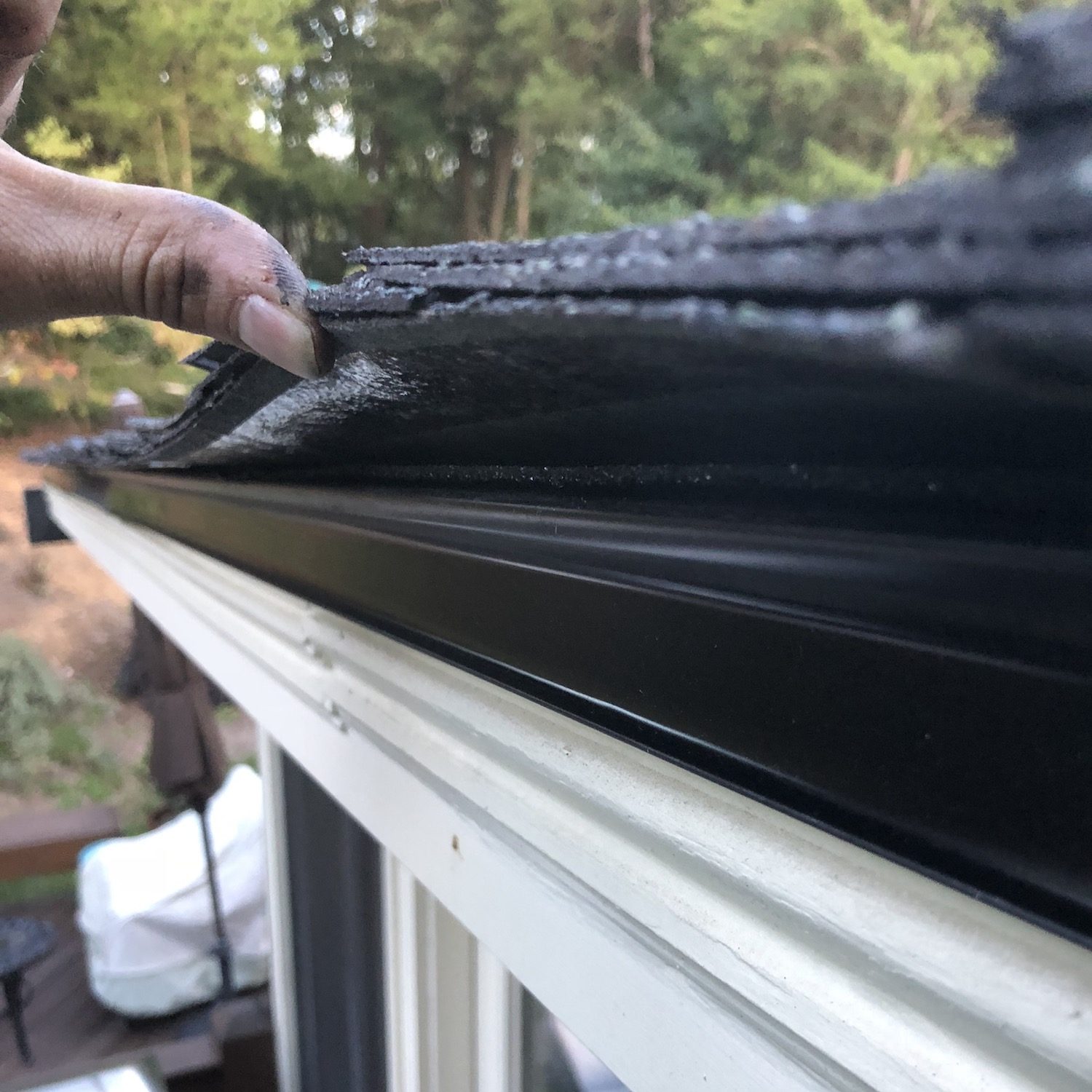
Starter shingles are installed along the edges of your roof to prevent wind uplift. They provide the foundation for your shingle rows and seal down the first course to avoid leaks.
Architectural Shingles (Main Roofing Material)
Architectural asphalt shingles are the most visible part of your roof. We install Owens Corning Oakridge® or Duration® shingles for superior performance and curb appeal. These shingles offer excellent wind resistance, vibrant color options, and long-lasting protection.
Check out our Blog for a Full Comparison on Owens Corning Oakridge Vs. Duration shingles

Hip & Ridge Shingles
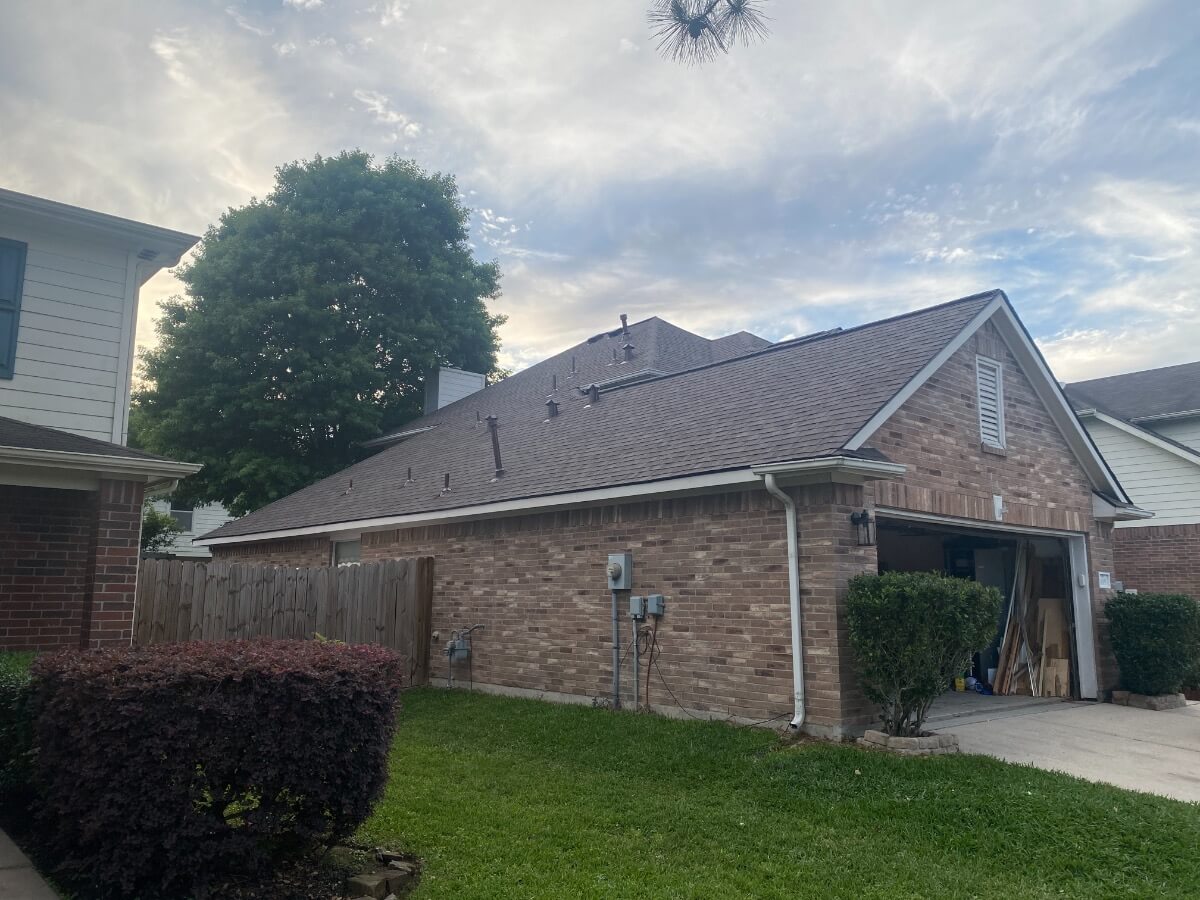
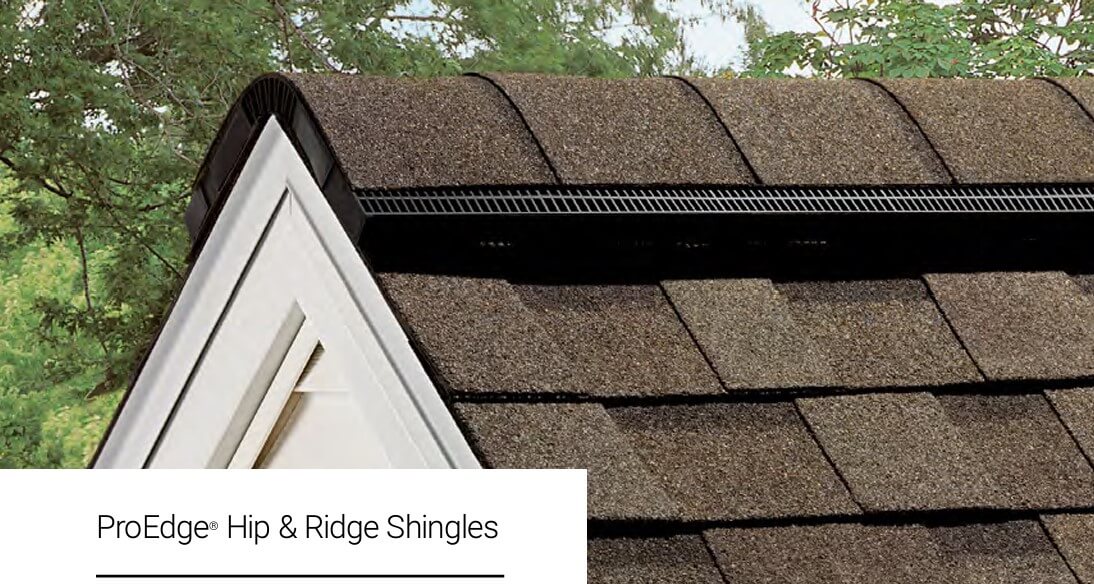
These specialized shingles cover the peak and ridges of your roof. They’re designed to bend and protect the most vulnerable seams where roof planes meet. We install matching Owens Corning ProEdge® Hip & Ridge and Owens Corning RIZERidge® Hip & Ridge

Ventilation (Ridge Vents or Static Dome Vents)
Proper roof ventilation is one of the most overlooked—but most important—parts of a complete roofing system. In Houston’s hot and humid climate, good ventilation helps keep your attic cooler, reduces moisture buildup, and extends the life of your roof. Without proper airflow, heat and humidity can get trapped in the attic, leading to mold, wood rot, and higher energy bills.
There are three common types of attic ventilation used in residential roofing:
Ridge Vents
Ridge vents run along the peak of your roof and allow hot air to escape evenly across the entire attic. Because they sit at the highest point of your home, ridge vents are highly effective when paired with proper intake vents (like soffit vents). They also maintain a clean, low-profile appearance.
Static Roof Vents
Also called box vents or turtle vents, these are small, fixed vents installed near the roof ridge. They allow hot air to exit but do not actively move air. Multiple units are usually installed based on the size of the attic. They’re simple and effective but can be less efficient than ridge vents when not paired properly with intake ventilation.
Whirlybird / Turbine Vents
Turbine vents spin when the wind blows, creating a suction effect that pulls hot air from the attic. They don’t require electricity, and when installed correctly, they can move large volumes of air. However, they rely on wind to function and can wear out over time in Houston’s weather.
No matter which system you choose, ventilation must be balanced—with both exhaust vents (at the top of the roof) and intake vents (typically at the eaves or soffits). This balance allows for continuous airflow, which is essential for energy efficiency and roof performance.
| Feature | Ridge Vents | Static Vents (Box/Turtle) | Turbine Vents (Whirlybird) |
|---|---|---|---|
| Appearance | Low-profile, blends into roofline | Small square vents, visible on roof | Dome-shaped, noticeable on roof |
| Air Movement Type | Passive (constant airflow) | Passive | Passive with wind-powered suction |
| Effectiveness | High (when paired with intake vents) | Moderate (requires multiple vents) | High (with consistent wind) |
| Energy Use | None | None | None |
| Wind Dependency | No | No | Yes (works best in windy areas) |
| Maintenance | Minimal | Minimal | Moving parts may wear over time |
| Durability in Houston Heat | Excellent (no moving parts) | Excellent | Good (can wear faster under sun/heat) |
| Installation Cost | Moderate | Low | Low to Moderate |
| Best For | New roofs, clean aesthetic, max airflow | Simple roof replacements | Budget-friendly airflow boost |
Flashing (Pipe Boots, Chimney Flashing, etc.)
Chimney flashing is the metal installed where the chimney meets the roof, sealing the joint to prevent water intrusion. It’s usually composed of step flashing along the sides and counter flashing embedded into the chimney masonry. In Houston, with frequent rain and high humidity, poorly installed or aging chimney flashing is a common cause of leaks.
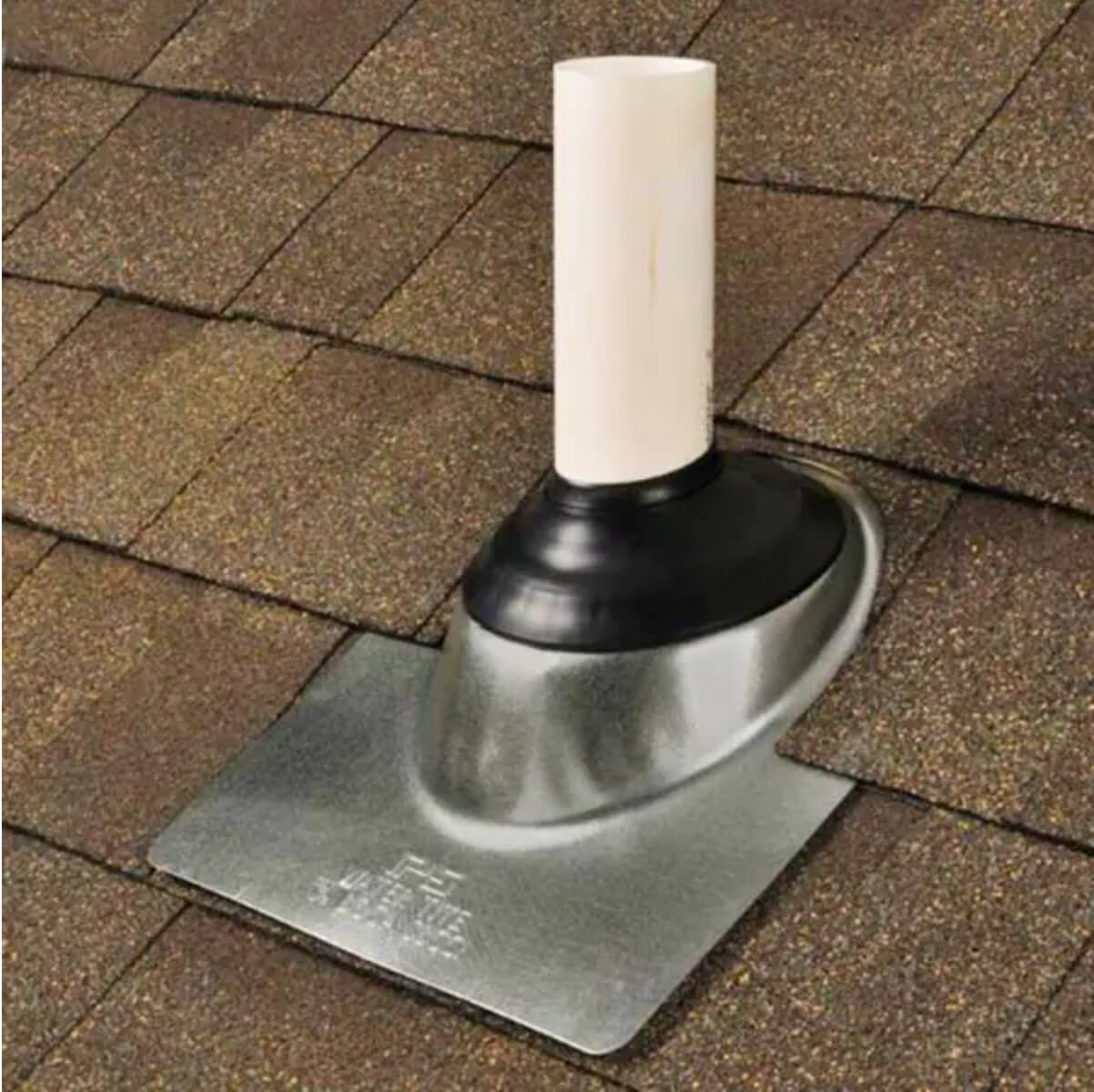
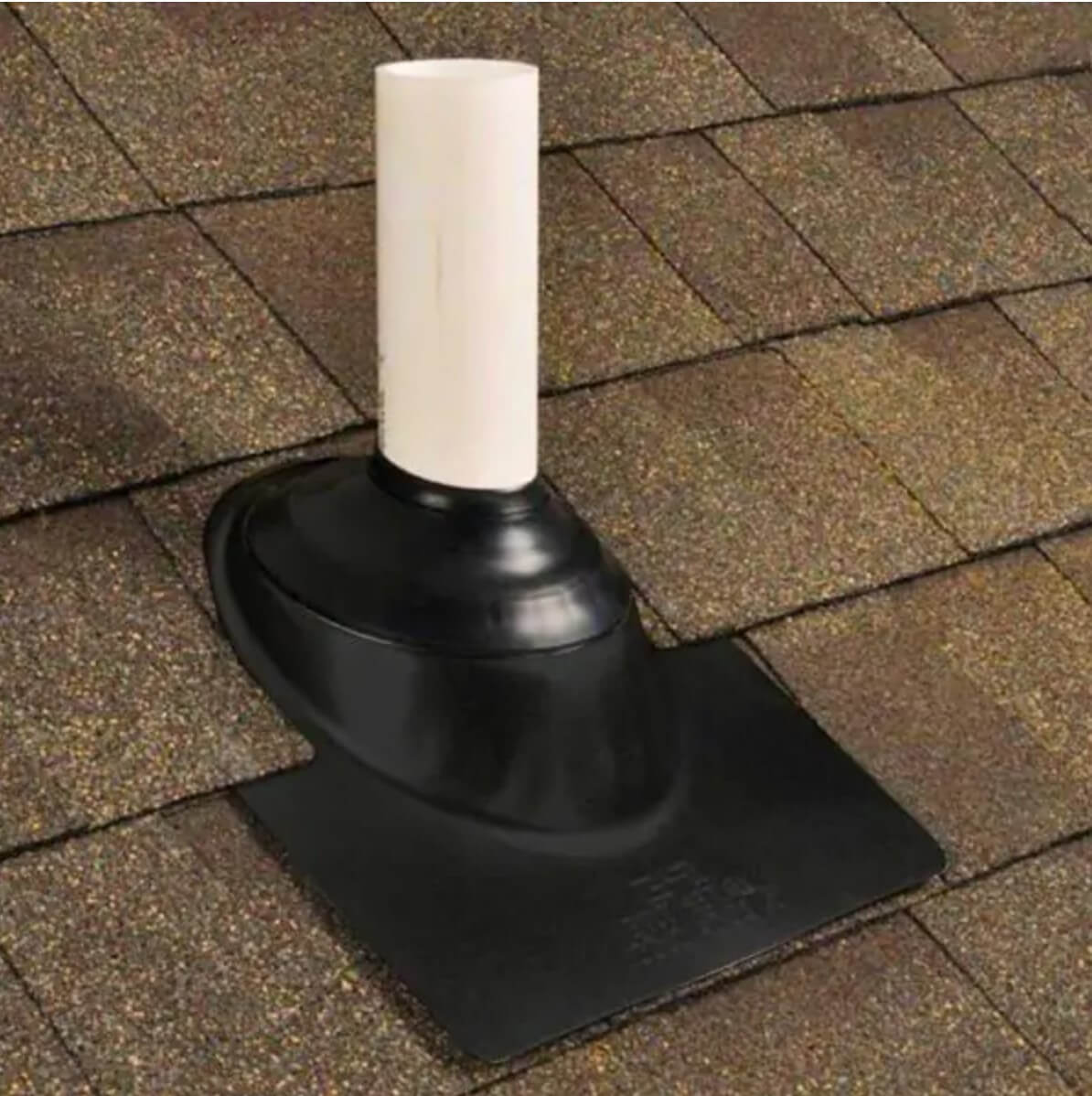
A pipe boot is a flashing device that seals around plumbing vent pipes to prevent water from leaking into your home. These penetrations are one of the most common sources of roof leaks if not sealed properly. There are several types of pipe boots, each with different materials and lifespans.
Metal Pipe Boots
Metal boots, often made of aluminum, are durable and resistant to UV rays. However, they typically rely on a rubber gasket around the pipe, which can dry out and crack over time—especially in Houston’s intense sun and heat. Regular inspection is important with metal boots.
Plastic Pipe Boots
Plastic boots are lightweight and cost-effective but tend to degrade faster under prolonged UV exposure. In Houston, where temperatures get extreme, plastic boots are more likely to crack and are not typically recommended for long-term performance.
Lead Pipe Boots
Lead boots are considered the most long-lasting option. The lead is flexible enough to form a tight seal around the pipe and is resistant to UV damage. Over time, the lead conforms to the shape of the pipe, creating a watertight bond that can last decades. These are ideal for Houston’s harsh climate.

Choosing the Right Roofing System in Houston
Houston’s intense UV rays, humidity, and hurricane threats require roofing materials that go beyond the basics. At HHH Roofing, we use the Owens Corning Total Protection Roofing System® to ensure every layer of your roof works together to protect your home and maximize longevity.
If you’re considering a new roof, let us walk you through your options and help you understand what goes into your estimate. As a local, family-owned roofing company in Spring, TX, we’re proud to serve Greater Houston with honesty, craftsmanship, and Owens Corning certified quality.

Duro-Last vs TPO | Which Is Better?
Is TPO or Duro-Last a better roofing system? Duro-Last is the better roofing system yet will be more expensive. In this blog post, we are going to break it all down for you from a contractor’s perspective that installs and repairs both roofing systems.
Material Differences
Duro-Last and TPO almost look identical both being white single-ply membranes. If you dive deeper into the material, what really sets them apart is their chemical compound.
Is TPO or Duro-Last a better Material? Duro-Last develops a higher quality material with a better chemical compound making them the better material. Their material is more expensive, and it really shows when we compare material vs. material.
Duro-Last Material Breakdown
Duro-Last is composed of PVC film laminated to both sides of a reinforcement fabric (weft-inserted scrim).
PVC Film: Proprietary thermoplastic PVC
formulation of resins, plasticizers, stabilizers,
biocides, flame retardants, and U.V. absorbents
Weft-Inserted Scrim: An 18 x 14 polyester fabric construction with weft insertion, composed of 840 x1000 denier threads, provides superior tear and puncture resistance. The polyester thread is treated to prevent wicking.
Duro-Last itself is a type of PVC roofing system and a Brand. Duro-Last carries manufacturing plants all over the United States and the closest one to Houston is located in Dallas.
In order to install a Duro-Last roofing system, you need to directly place an order through their company. This means you have to be certified through them and have an account with them.
Each Duro-Last system is custom fabricated for your roof which is why they can’t sell them at roofing supply stores.
TPO Material Breakdown
TPO (Thermoplastic Polyolefins) compounds are resin blends of polypropylene and un-crosslinked EPDM rubber and polyethylene
TPO is not a brand it is a type of material. There are different brands that create TPO membranes such as:
TPO material can be ordered from your local supplier because they are purchased in rolls. If you are here in Houston, you are able to find most brands at ABC Supply or Commercial Distribution Specialists.
How is each material installed?
Duro-Last & TPO are similarly installed most commonly using these methods:
Mechanically Attached
Fully Adhered
Both roofing systems utilize the same roofing accessories and similar Insulation types (Fan-Fold 1/2″ and Polyiso).
The biggest difference between the two is the way they come. TPO is a rolled good that comes in either 6′ x 100′ or 10′ x 100′ while Duro-Last is a prefabricated membrane made specific to the dimensions of your roof that just gets unfolded at the jobsite.

Due to Duro-Last being prefabricated, there are less seams to weld meaning there is a less likelihood for a leak happening in the seams.
When you are installing TPO you need to have a 6″ overlap between the rolls to go ahead and weld the seams. You have more seams to weld when installing TPO and more of a potential for possible leaks in the future.
That doesn’t mean TPO is hard material to install. It just means that TPO is harder to install when compared to Duro-Last.

Does Duro-Last or TPO cost more?
Duro-Last: They require you to order through the Duro-Last portal and use only Duro-Last accessories. The material itself is more expensive versus TPO membranes. Since you have to order the material to get it prefabricated there is a wait time and more delivery costs fees.
TPO: It is usually readily available at your local roofing supply and the material itself is less. Making it the more affordable option!
WARNING FOR OUR BUSINESS OWNERS
Both materials are great and if they were both installed correctly the Duro-Last system will give you several years more than a TPO system.
Issues come from the material not being INSTALLED CORRECTLY not from the material itself!
Find a great roofing company that can show you their past jobs and explain to you the breakdown of how they are going to install everything, but most importantly the warranty they are offering as a company not just material warranty.