
9 Signs Your Commercial Roof Needs Repair Before It Starts Leaking
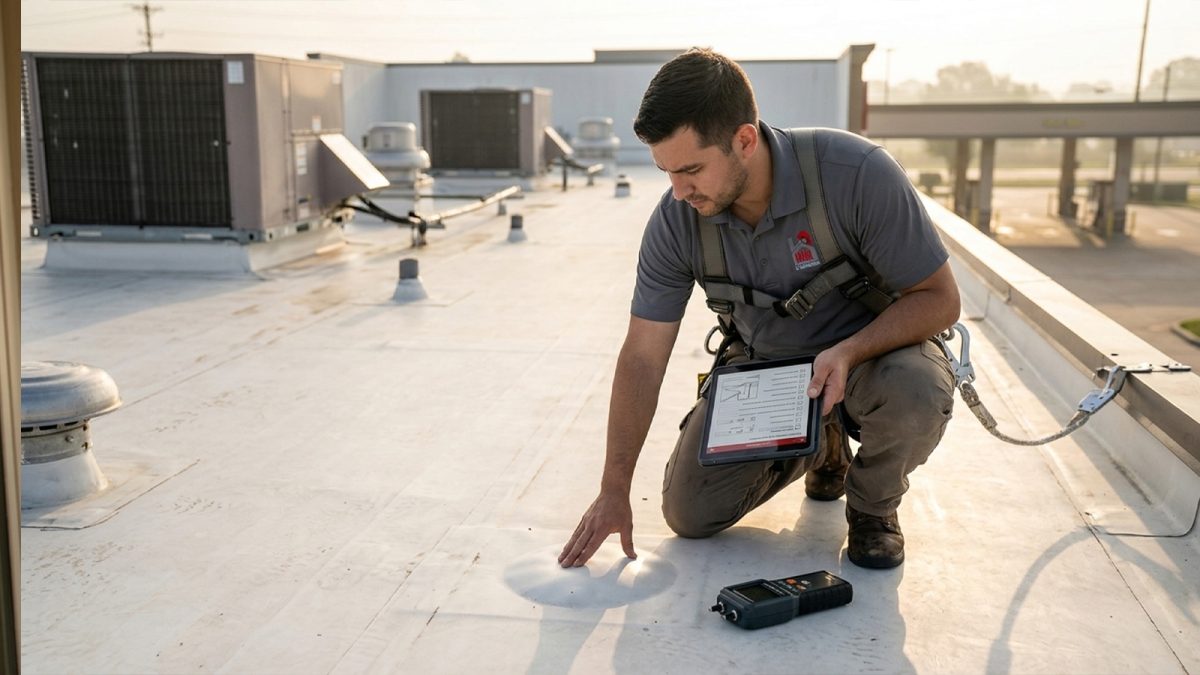
You’re walking the roof or prepping for a budget meeting, and something looks off, but you don’t yet know if it’s a next-quarter fix or a call-today problem. Here’s the reassurance: a commercial roof leak almost never happens without warning. The warning signs that commercial roof problems needs repair before it leaks include ponding water lasting 48+ hours, blistering membrane, cracked seams and flashing, granule loss, interior stains, rising energy bills, corroded metal, membrane shrinkage, and blocked drains.
For a facilities manager overseeing a QSR franchise, catching these early is everything, since every hour a location closes for an emergency leak can cost $300 to $500 or more in lost drive-through and dine-in revenue.
Scheduling commercial roof repair the moment you spot these signs is what keeps a $600 fix from becoming an $80,000 replacement.
Key Takeaways
- Ponding water, cracked flashing, and membrane shrinkage are high-urgency signs. Get a contractor out within days, not weeks.
- Interior stains and musty odors mean water has already gotten past the membrane. This isn’t a wait-and-see item.
- NRCA recommends inspecting commercial roofs twice a year, in spring and fall, plus after every significant storm.
- We run repairs after hours and on weekends so QSR locations don’t lose a single operating hour.
- Houston’s 90+ days above 90°F, frequent hail, and a hurricane season that runs May through November accelerate nearly every sign on this list.
Why Do Commercial Roofs Fail Differently Than Residential Roofs?
A pitched shingle roof sheds water by design, and gravity does most of the work. A commercial roof doesn’t get that luxury. Most flat-roofed restaurants, strip centers, and multi-unit properties across Houston and Spring rely on low-slope systems, where water has nowhere to go but toward a drain, and if that drain is compromised, the water just sits there.
Flat and Low-Slope Roof Systems Explained
On a low-slope roof, standing water and membrane seams are where problems begin. A one-eighth-inch-per-foot slope is common on commercial builds. That sounds fine on paper, until debris, structural settling, or age flattens it out. That’s when ponding starts, and ponding is patient. It will find the smallest seam separation or a pinhole at a fastener and turn it into an active roof issue in weeks, not years.
Common Membrane Types and What Causes Them to Leak
The membrane itself matters too. TPO (Thermoplastic Polyolefin), EPDM (Ethylene Propylene Diene Monomer), Modified Bitumen, and Built-Up Roofing (BUR) each age and fail on their own timeline, with different seam types, UV tolerances, and repair methods.
| Membrane Type | Common Failure Point | Typical Repair Method |
| TPO | Heat-welded seam separation | Re-weld or patch |
| EPDM | Shrinkage at edges/walls, adhesive failure | Seam sealant, mechanical fastening |
| Modified Bitumen | Granule loss, surface cracking | Torch-applied or cold patch |
| BUR | Ply separation, surface wear | Recoat or section replacement |
Nearly every leak traces back to one of four sources: flashing and penetration failures, seam separation, prolonged ponding, or an aging membrane that has lost its flexibility. Manufacturers including GAF and Firestone Building Products design flashing systems to exacting tolerances specifically because penetration points, not the flat field of the roof, are where most leaks start. Contractors verify system performance against the ASTM E1105 water infiltration standard, and an infrared moisture scan can confirm whether moisture has already worked into the insulation layer before any interior sign appears.
The 9 Warning Signs Your Commercial Roof Needs Repair, Ranked by Urgency
These nine signs are ordered from most urgent to least, so you can size up what you’re seeing on a walkthrough and decide, on the spot, whether it’s a same-week call or a note for the next scheduled inspection.
High-Urgency Signs: Call Within Days
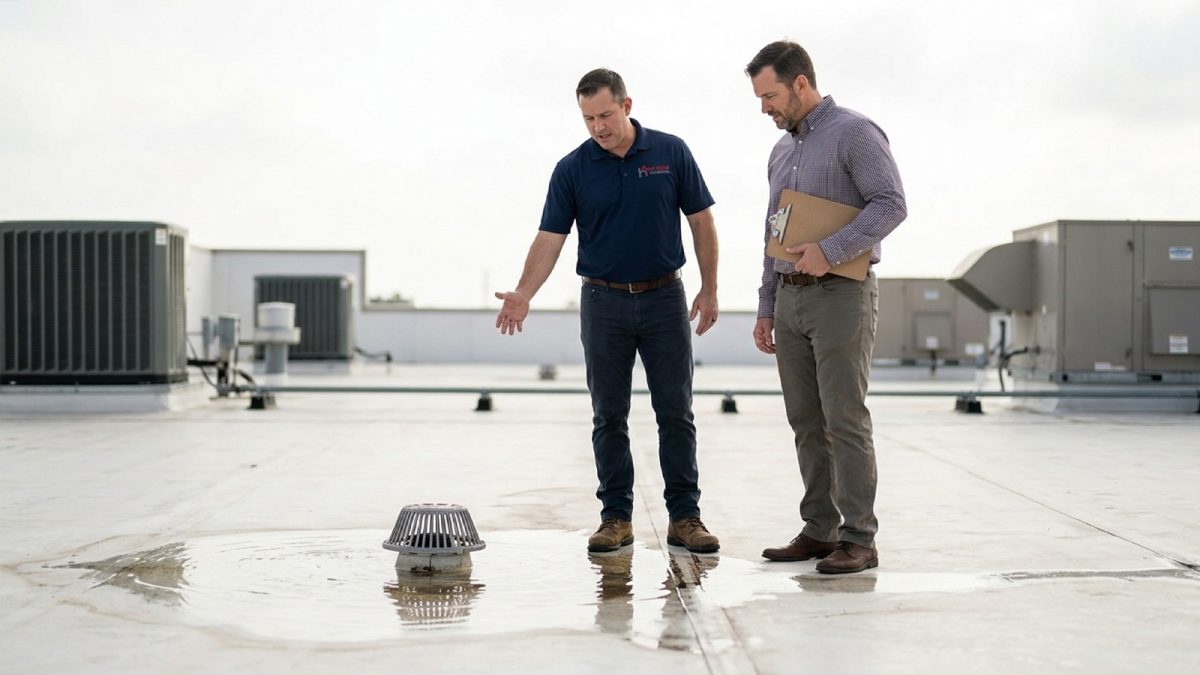
- Ponding water lasting 48+ hours. Standing water that hasn’t drained two days after rainfall is the clearest sign of a drainage or slope failure. Under the ASTM E1105 water infiltration standard, prolonged ponding is treated as an active risk factor, not a cosmetic issue, because sustained weight and UV exposure break down membrane fibers from below. Left alone, it speeds up every other failure on this list.
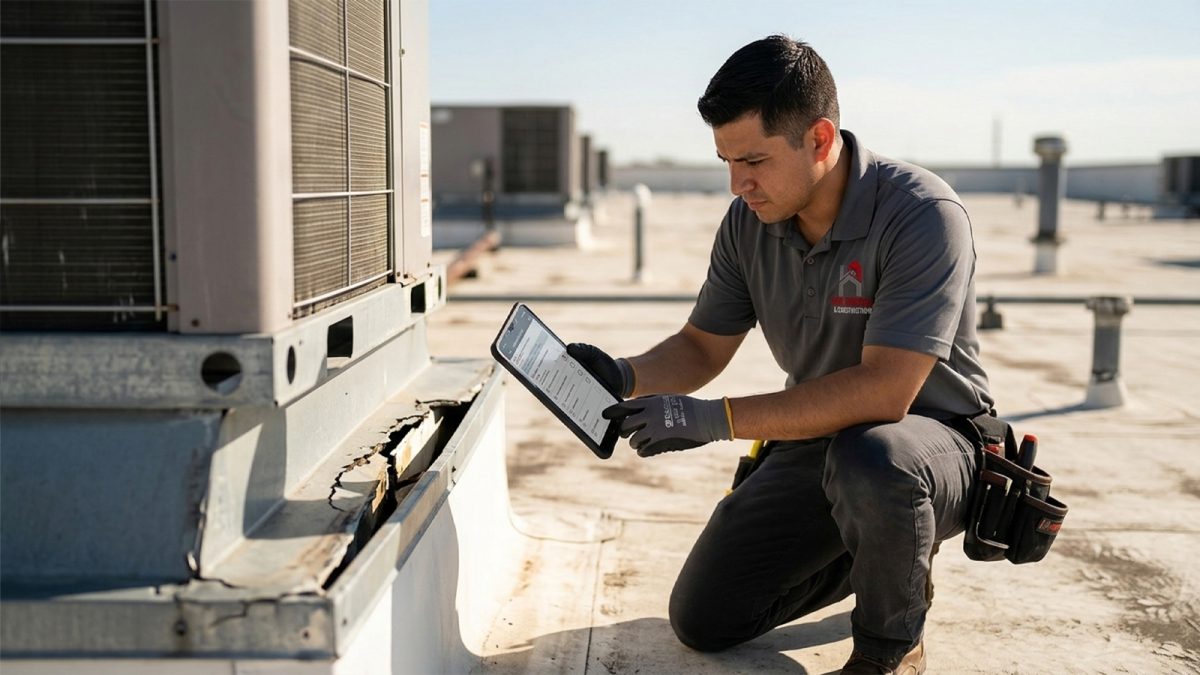
- Cracked or open seams and flashing. Seams and flashing, especially around HVAC penetration flashing, rooftop units, and vent stacks, are where the vast majority of leaks originate. A visible gap or lifted seam means water already has a path inside. This is the single most common repair call we get from QSR clients across Houston, and it’s rarely a coincidence that it clusters near rooftop equipment.
- Membrane shrinkage pulling away from walls or edges. This is especially common on aging EPDM systems, where the membrane physically contracts over time and pulls away from parapet walls or roof edges. It opens a gap right where flashing depends on a tight seal, and it can signal early sagging in the deck below if left unaddressed.
Medium-Urgency Signs: Schedule Within the Month
- Blistering or bubbling membrane. Trapped moisture or gas beneath the surface pushes the membrane up into visible bubbles. Not always an active leak yet, but it’s a sign the membrane has lost adhesion in that spot. Foot traffic or hail impact can rupture it fast, and left untreated, blistering often leads to soft spots and eventual sagging across that section.
- Visible rust or deterioration at metal flashing and drains. Corroded metal at drains, scuppers, and edge flashing means the watertight seal at those transitions is compromised. Rust physically thins the metal until it can no longer hold a seal, and a $400 flashing repair becomes a bigger membrane repair if it’s ignored through another storm season.
- Rising energy bills or HVAC strain. Wet insulation loses its R-value fast, and when that happens, ventilation and HVAC systems work harder to hold temperature, especially in a Houston kitchen running exhaust fans all day. If utility costs are climbing without an obvious cause, check whether insulation under the membrane has taken on moisture.
- Granule loss or surface wear on BUR or Modified Bitumen roofs. Granule loss exposes the asphalt layer underneath to direct UV, and algae staining often shows up in the same worn patches. Slower-moving than the others, but surface wear is often the first visible sign that a mod-bit roof is aging out of its effective lifespan.
Low-Urgency Signs: Monitor at Next Inspection
- Debris buildup blocking drains or scuppers. Leaves, pollen, and construction debris collecting at drains and in gutters is common, and it’s the easiest sign to fix. But blocked drainage is also the fastest route back to sign #1. This one deserves a five-minute check every time staff are on the roof, not just at scheduled inspections.
- Interior stains or musty odor. For many facilities teams, water stains on a ceiling tile are the first indoor sign anything is wrong. By the time staff notice it, the membrane has usually been compromised for a while. Ceilings signal moisture intrusion well after the roof itself failed, and walls are often the next area affected once a stain appears, especially near exterior corners. An infrared moisture scan can confirm how far moisture has already traveled under the deck before it shows up as visible water damage indoors. Treat any interior spots or a musty smell as confirmation that this list needs immediate action, not routine monitoring.
If you’re seeing any of the high-urgency items above during a walkthrough, our commercial roof inspection checklist is a useful next step for documenting exactly what you found before you call.
How Often Should an Aging Roof Be Inspected?
The National Roofing Contractors Association recommends inspecting commercial roofs at minimum twice a year, once in spring and once in fall, to catch seasonal wear before it becomes a bigger repair [1]. That roof inspections cadence assumes normal conditions. Any property that just weathered hail, straight-line winds, or a tropical system needs an additional inspection immediately after, regardless of where it falls on the calendar.
Seasonal Roof Inspections Schedule
A spring inspection catches winter thermal cycling damage and clears debris before summer storm season. A fall inspection checks for UV wear from summer heat and confirms drains and gutters are clear before hurricane season winds down. Keeping a dated log with photos from each walkthrough gives you documentation ready-made for a franchise HQ budget request.
Post-Storm Inspection Triggers
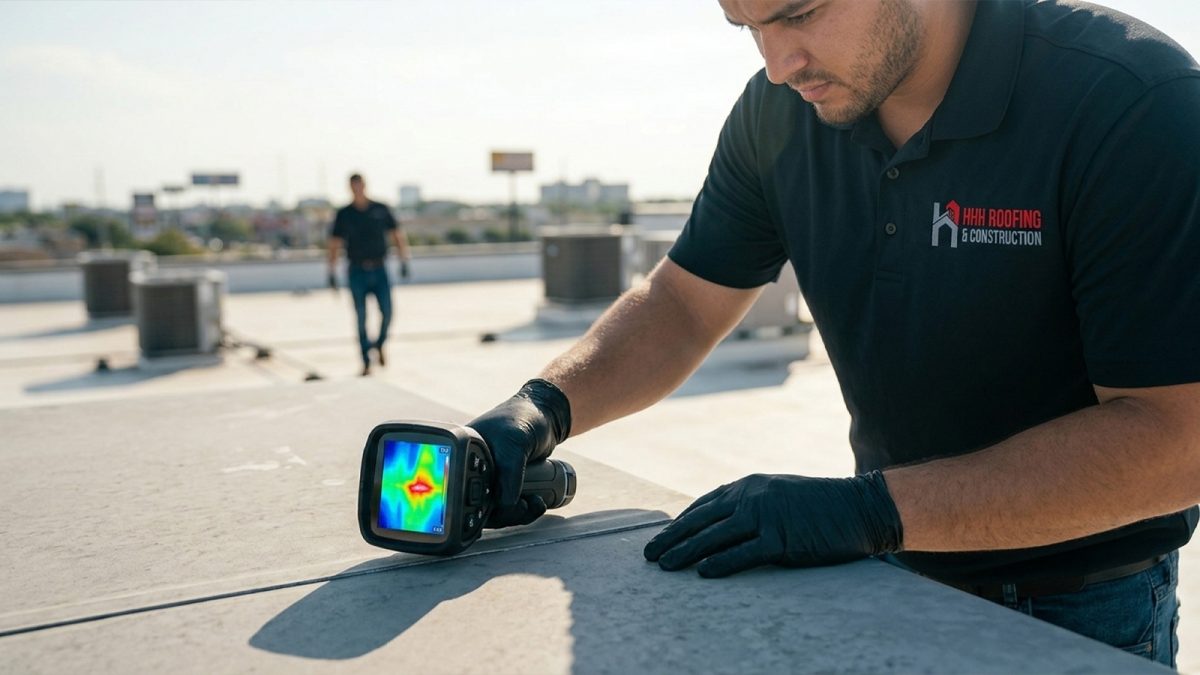
Any hailstorm, sustained wind event, or heavy rainfall above what your drainage was designed for should trigger a walkthrough within 48 hours. For buildings where hidden moisture is suspected but not visible yet, an infrared moisture scan can locate trapped water under the membrane before it ever reaches a ceiling. A free drone inspection is an easy way to get an outside read without anyone stepping foot on the roof.
Can a Commercial Roof Be Repaired Without Closing the Business?
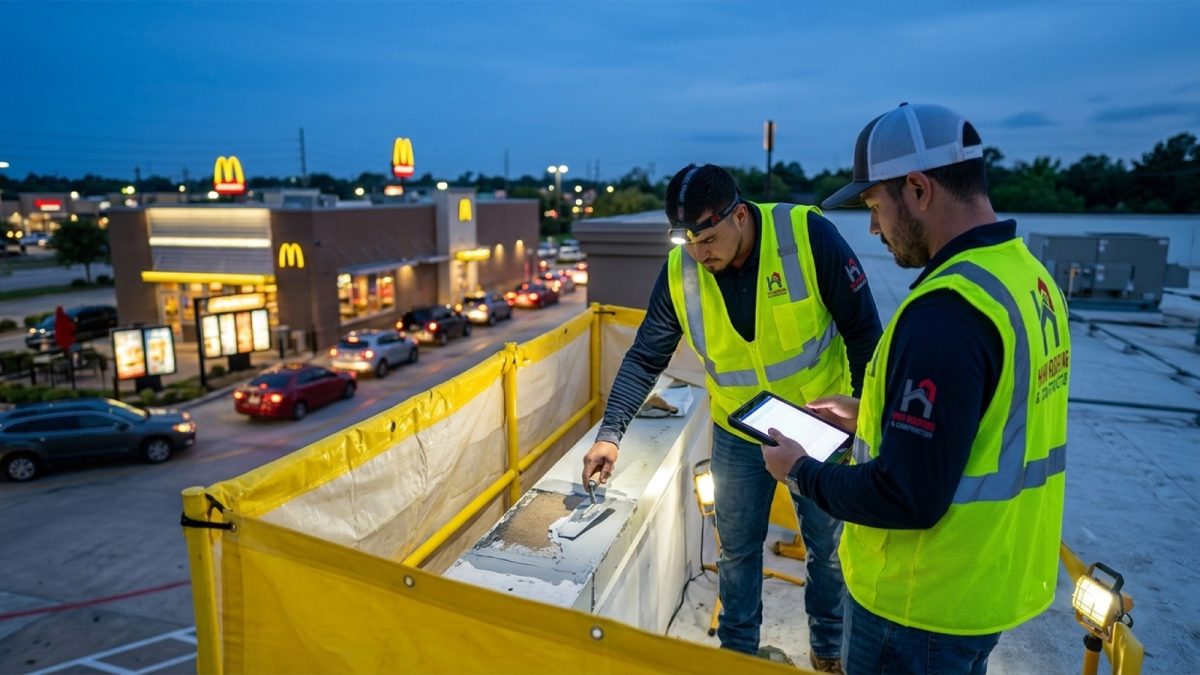
Yes. Most commercial roof services, including seam repair, flashing replacement, and section patching, can be completed during off-hours, overnight, or on weekends without closing the store or interrupting drive-through service.
Off-Hours and Weekend Crew Scheduling
We schedule crews around your operating hours, not the other way around. For a QSR location generating meaningful revenue during every open hour, having a contractor on the roof at 2 a.m. or on a Sunday morning is the difference between a routine repair and a lost shift’s worth of sales. One multi-unit QSR operator in the Houston area flagged a cracked seam near a rooftop HVAC unit during a routine walkthrough. Because the location couldn’t afford a daytime closure during lunch rush, our crew completed the seam repair overnight, and the store opened on schedule the next morning with zero lost revenue.
Phased Sectional Repair Strategy
On multi-unit properties or larger roofs, we divide the work into sections so HVAC access, kitchen exhaust, and drive-through equipment stay clear at all times. That phased approach means a repair covering several thousand square feet doesn’t require shutting down the whole building at once. If a leak has already progressed past the “schedule it for next month” stage, our emergency commercial roof repair in Spring, TX team can respond directly, keeping multi-location operators from having to coordinate more than one vendor.
How Does Houston’s Climate Speed Up Roof Problems and Damage?
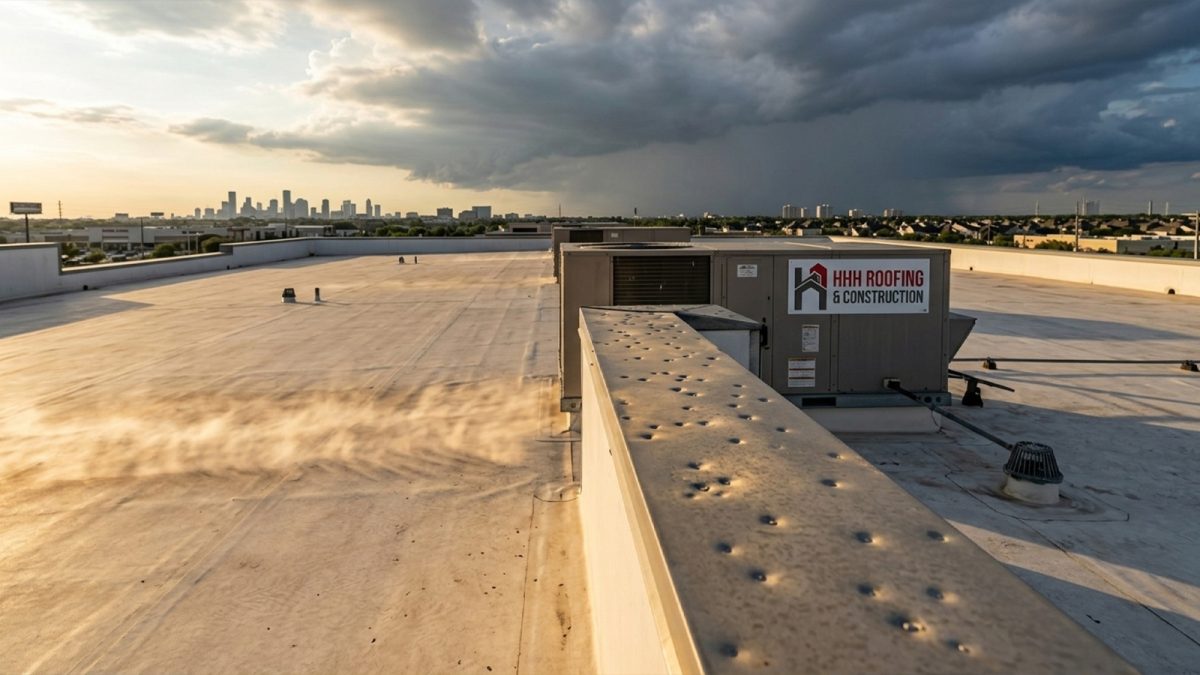
Local weather doesn’t create these nine signs. It speeds up every one of them. Houston averages more than 90 days per year above 90°F, and that kind of sustained heat puts real thermal stress on membrane seams, a major contributor to the blistering described earlier [2].
Extreme Heat and Membrane Stress
Repeated expansion and contraction from daily heat cycles works seams loose over time, particularly at HVAC penetration flashing points where two different materials meet. UV exposure alone wears down TPO, PVC, and EPDM membranes faster than in milder climates, one reason membrane selection matters so much for a Houston building.
Hail, Thunderstorms, and Hurricane Season Risk
Houston averages 50 to 60 thunderstorm days a year, with a good share producing severe weather [3]. Hurricane season runs May through November and regularly brings wind speeds and wind-driven rain that test every flashing point and seam on a commercial roof [4]. That combination of frequent storms and sustained heat is exactly why 48-hour ponding checks and post-storm walkthroughs matter more here than in most parts of the country. For property owners weighing which membrane holds up best to Gulf Coast conditions, our guide comparing TPO and EPDM roofing systems breaks down the tradeoffs.

Schedule Your Commercial Roof Inspection Before It Leaks
You now have what you need: the exact language to describe what you’re seeing, and a clear sense of what’s urgent versus what can wait for the next scheduled visit. We hold Texas contractor license #03-0470 and carry GAF and Versico manufacturer certifications that allow us to issue 20-year NDL (No Dollar Limit) warranties, credentials that many franchise vendor-approval lists require before a contractor can even bid the work.
We’ve completed roofing projects at Sonic Drive-In, Whataburger, Chick-fil-A, and Jack in the Box locations across the Houston area, and we schedule every job around your operating hours, not ours.
Bring this checklist to your next budget conversation, and if you’d like a second opinion on anything you found, call us at (832) 458-1602.
FAQ
How much does commercial roof repair cost?
Commercial roof repair costs typically range from a few hundred dollars for a small flashing or seam repair to several thousand dollars for larger membrane sections, depending on severity and roof size. Pricing depends heavily on how far damage has progressed before it’s addressed, exactly why catching a sign early matters. A free drone inspection gives you an accurate number rather than a guess.
What is the average lifespan of a commercial TPO or EPDM roof?
TPO and EPDM commercial roofing systems typically last 20 to 30 years when properly installed and maintained, while Modified Bitumen and BUR systems generally run 15 to 25 years [5]. Those figures assume regular maintenance and prompt repair of the signs covered above. An aging roof approaching the back half of that range should be inspected more often, not less.
How do you know if commercial roof damage is covered by insurance?
Storm-related roof damage, such as wind uplift or hail impact, is generally covered by commercial property insurance, while gradual wear from lack of maintenance typically is not. Insurers usually require documentation showing the damage resulted from a specific weather event rather than deferred maintenance. We provide inspection reports and insurance claims assistance to help document the difference clearly.
How much does it cost to replace a commercial roof versus repair it?
Full commercial roof replacement typically costs many times more than a targeted repair, which is why catching problems early has direct budget impact. Replacement costs scale with square footage and system type, while repair costs scale with how much damage has accumulated before it’s addressed. Scheduling an inspection is the most reliable way to keep repair costs from escalating into replacement costs.
What documentation should I bring to a franchise HQ budget meeting for roof repairs?
A franchise budget meeting typically requires dated photos, a written inspection report, and a contractor estimate to justify repair spend. Having this package ready before the meeting speeds up approval and shows ownership the request is based on documented conditions, not a guess. Our inspection reports are built specifically to support these conversations.
Do I need a licensed contractor for commercial roof repairs, or can maintenance staff handle it?
Commercial roof repairs generally require a licensed, manufacturer-certified contractor, particularly if the roof carries an NDL warranty that could be voided by unauthorized