
When replacing your roof, it’s important to understand every material involved—not just the shingles you see on top. Each layer plays a crucial role in protecting your Houston home from wind, rain, heat, and humidity. At HHH Roofing & Construction, we believe educated homeowners make better roofing decisions. This guide walks you through all the essential components of a quality roof replacement.
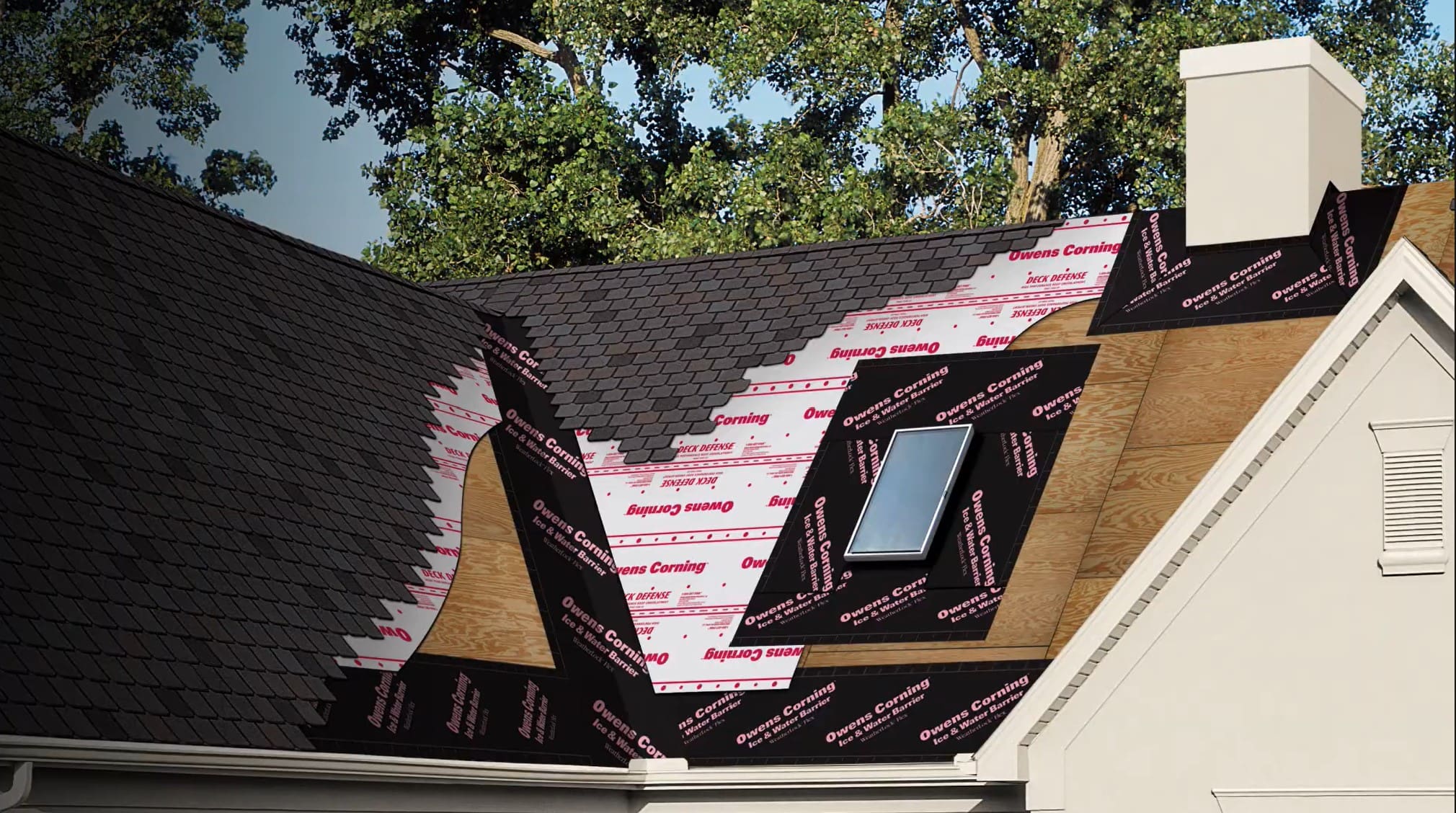
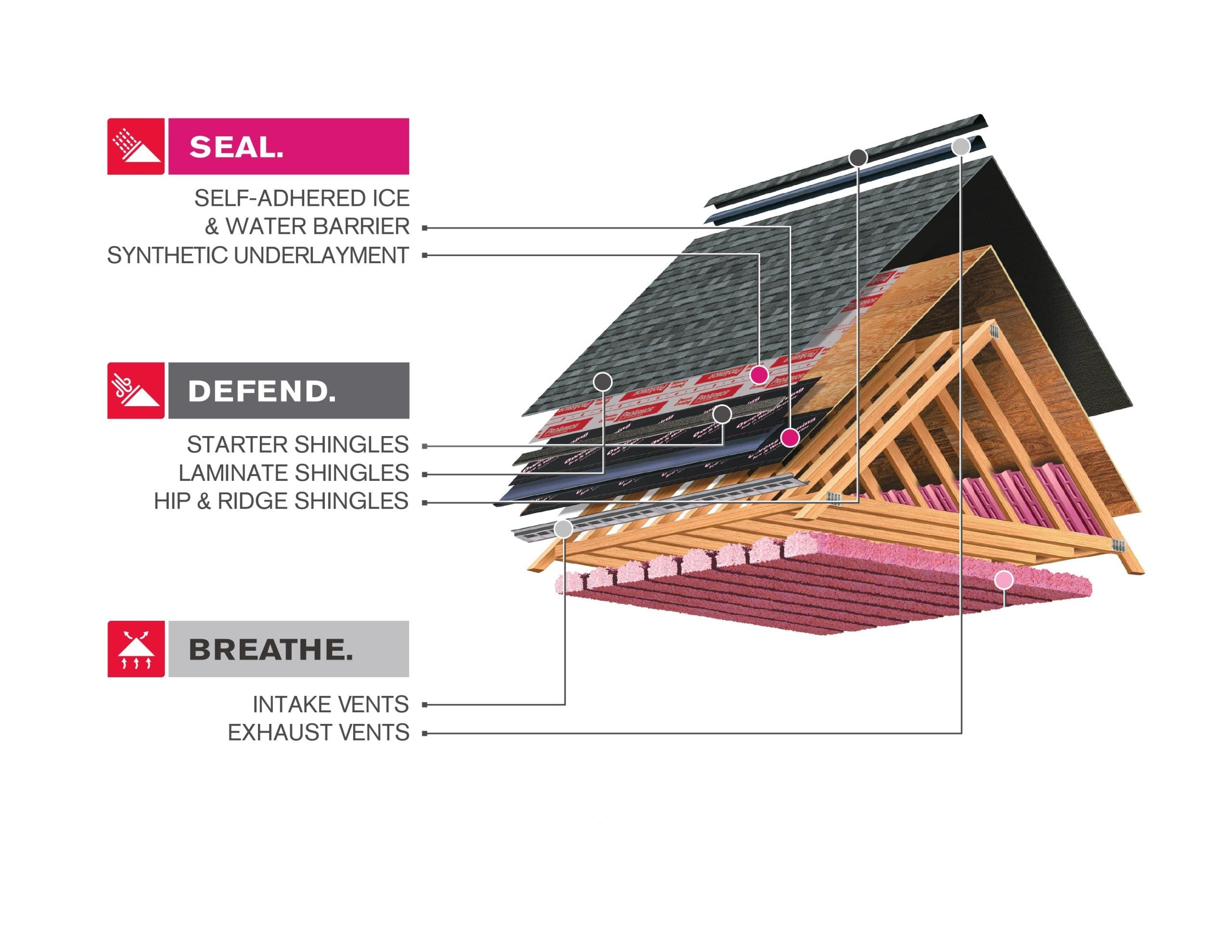
Roofing isn’t just shingles. A complete roofing system includes decking, underlayment, ventilation, and more—each working together to protect your home. In Houston, where intense heat, heavy storms, and hurricanes are common, the right materials can extend your roof’s lifespan and even lower your insurance premiums. Knowing what’s on your roof helps you make informed choices when comparing quotes.

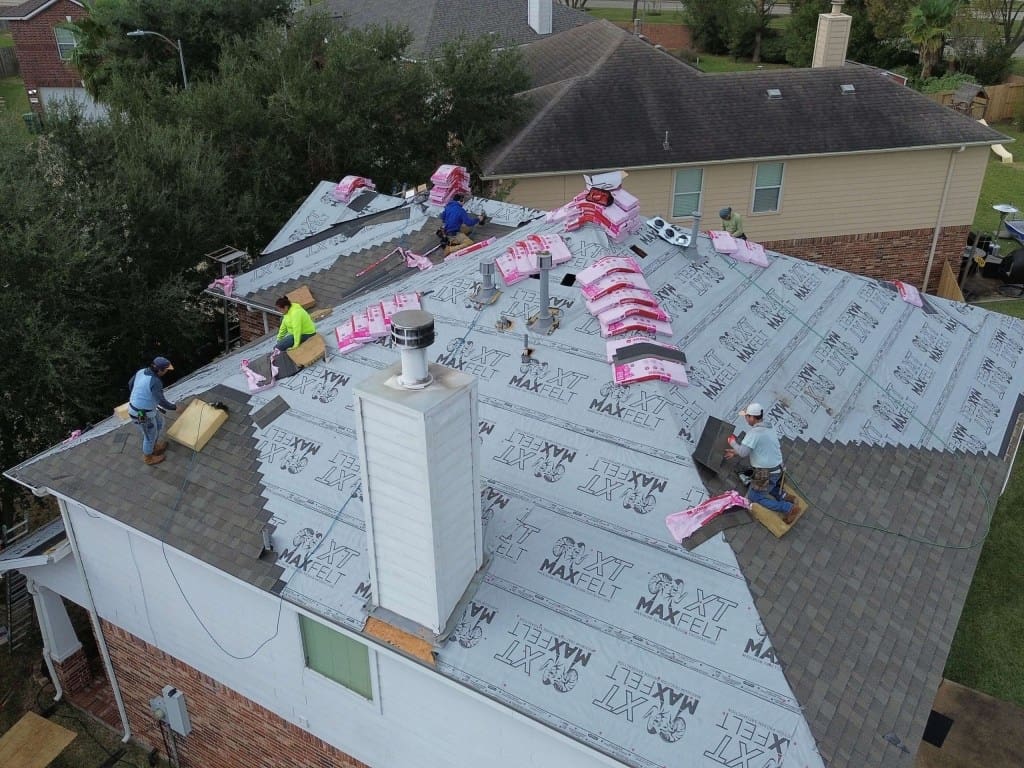
Every layer matters in a roof replacement. Below are the key materials we install on every project.
Roof decking is the wood layer that forms the base of your roof. It’s typically made from OSB (Oriented Strand Board) or plywood. During replacement, we inspect for water damage or rot and replace any compromised sheets.
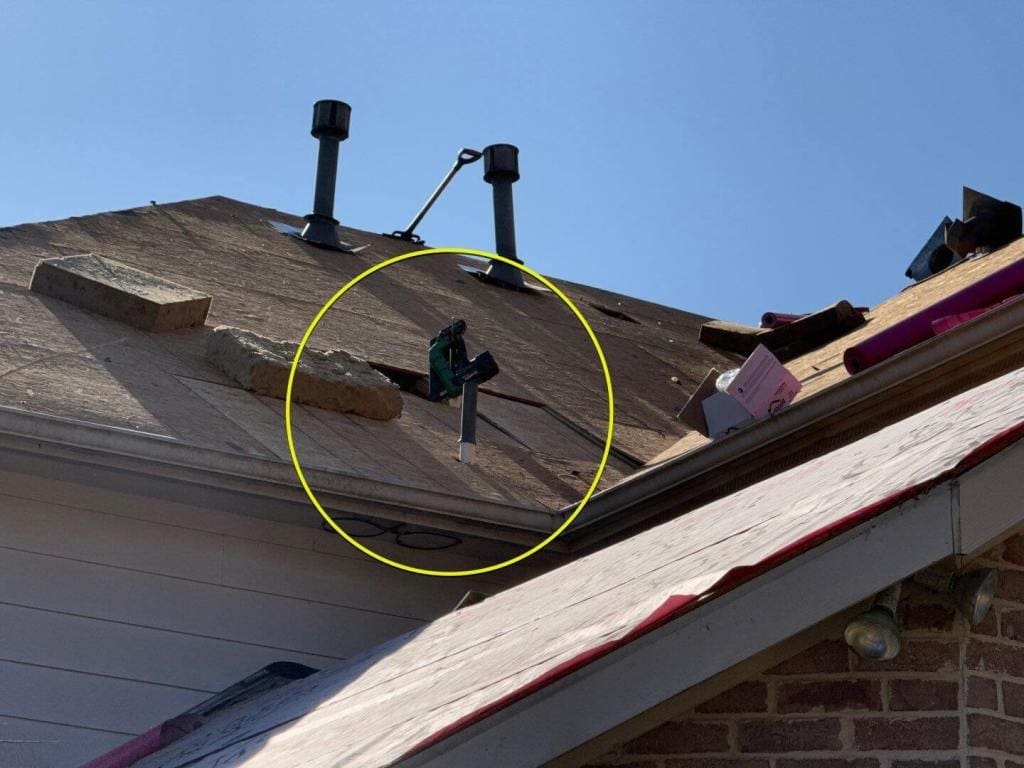
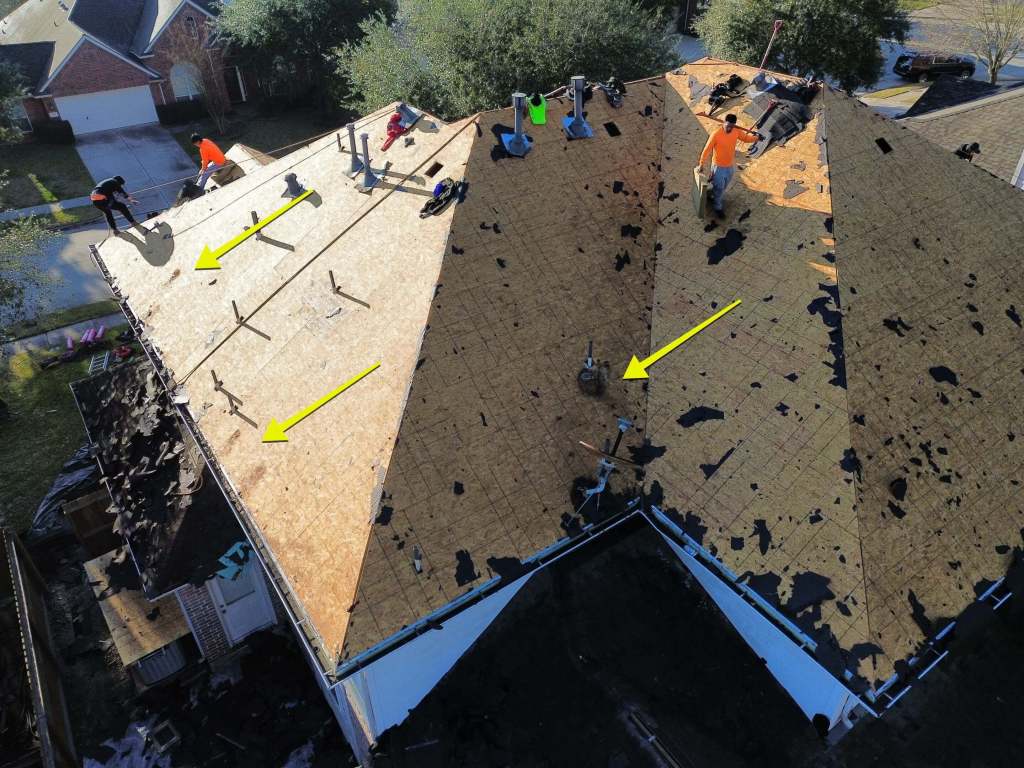
When you have a roof that has been leaking for awhile it can eventually damage your plywood. If you are getting a roof replacement, you might have to replaced some of your roof’s decking. On average, most contractors will provide 2-4 sheets to repair any rotten plywood found during the tear-off.
Your roofing contractor won’t know exactly how many sheets will need to be replaced until they tear off all your roofing materials. This is why a roofing company will include in their estimate how many sheets they are going to provide and the cost for each additional sheet after tear-off.
This waterproof membrane is installed in the most vulnerable areas of your roof, such as valleys and around roof penetrations like vents and chimneys. Where two roof faces meet to form a valley, it’s crucial to guide water in the right direction and prevent pooling. Roof valleys experience constant water flow every time it rains, which increases the risk of leaks.
That’s why the ice and water shield is essential—it’s a self-adhering membrane specifically designed to create a watertight seal in high-risk areas. In Houston’s heavy rainstorms, this added protection is key to keeping your home dry.

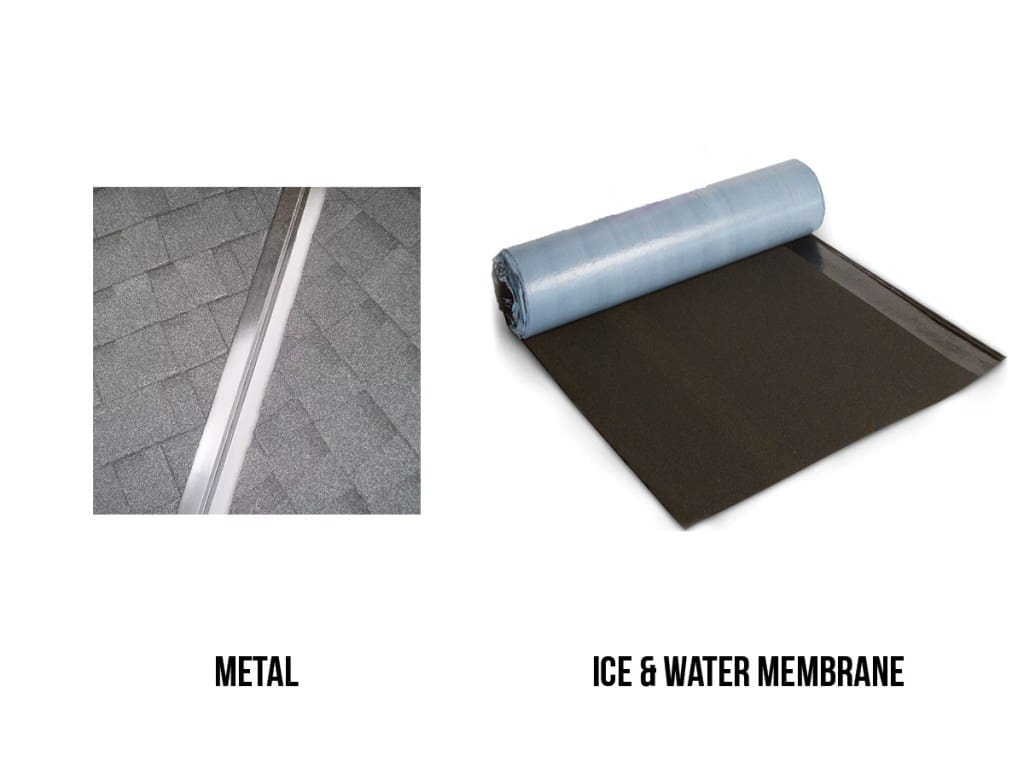
When it comes to protecting roof valleys, homeowners often ask whether metal or an ice and water shield membrane is better. While both methods serve to direct water away from these critical areas, we typically do not recommend using metal valleys in Houston due to the extreme heat.
Metal in the valleys can expand and contract with temperature swings, which over time may cause warping, oil-canning, or even loosening of fasteners. This can create weak spots and lead to potential leaks, especially during Houston’s heavy rainstorms.
In contrast, an ice and water shield membrane self-adheres directly to the decking, creating a seamless, watertight barrier that adjusts to your roof’s movement without cracking or shifting. It’s designed to handle constant water flow—especially in roof valleys where two slopes meet—and provides long-term, low-maintenance protection ideal for Houston’s hot and humid climate.
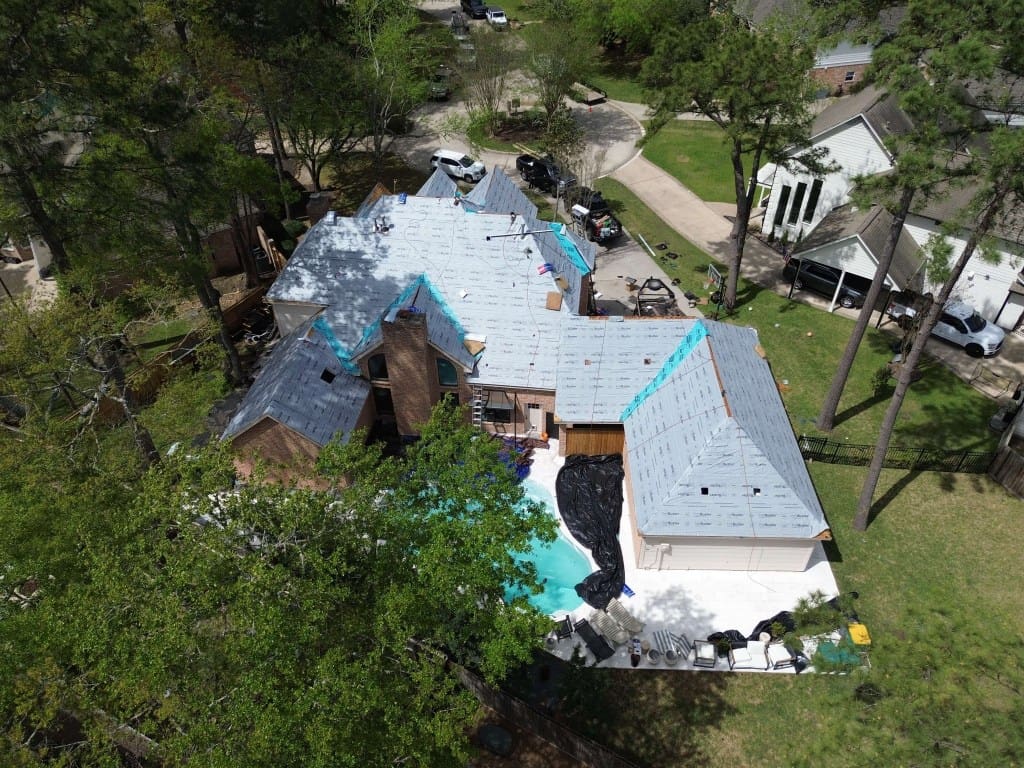
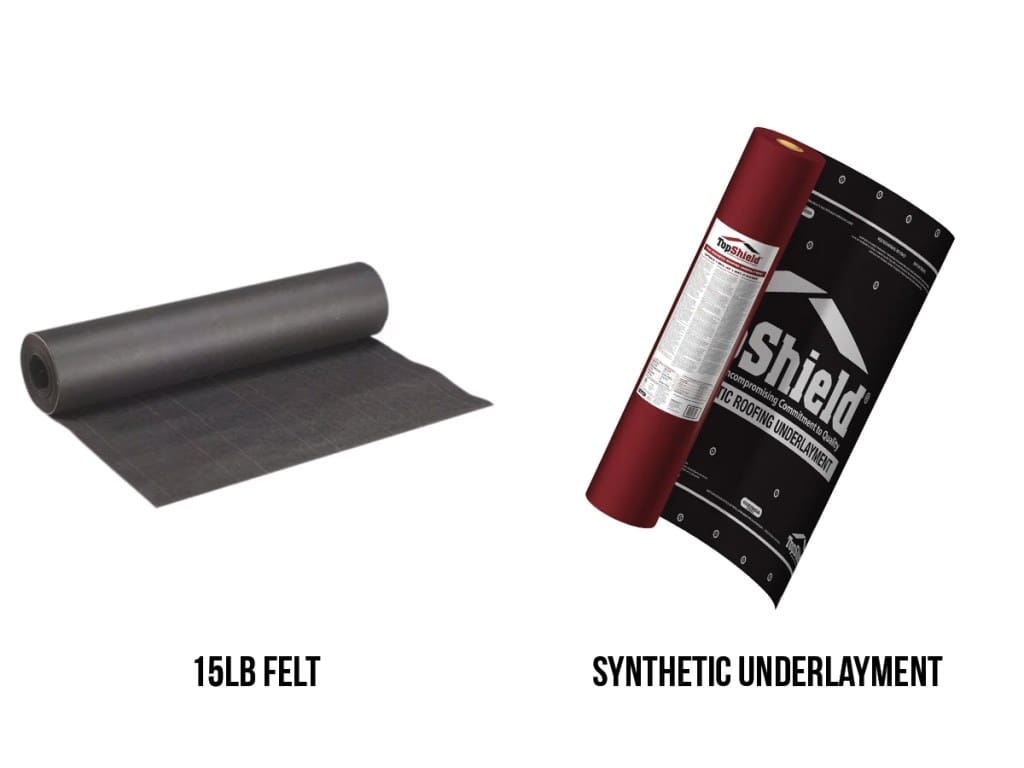
Synthetic underlayment sits on top of the decking and below the shingles. It adds an extra moisture barrier and protects your roof during Houston’s unpredictable weather. We use high-quality synthetic felt that’s more durable than traditional tar paper.
It is code to have Drip Edge installed on the perimeter of your roof (Eaves & Rakes). Here is the following code on Drip Edge according to the International Residential Code 2015 (IRC 2015):
R905.2.8.5 Drip Edge
A drip edge shall be provided at eaves and rake edges of shingle roofs. Adjacent segments of drip edge shall be overlapped not less than 2 inches (51 mm). Drip edges shall extend not less than 1/4 inch (6.4 mm) below the roof sheathing and extend up back onto the roof deck not less than 2 inches (51 mm). Drip edges shall be mechanically fastened to the roof deck at not more than 12 inches (305 mm) o.c. with fasteners as specified in Section R905.2.5. Underlayment shall be installed over the drip edge along eaves and under the drip edge along rake edges.

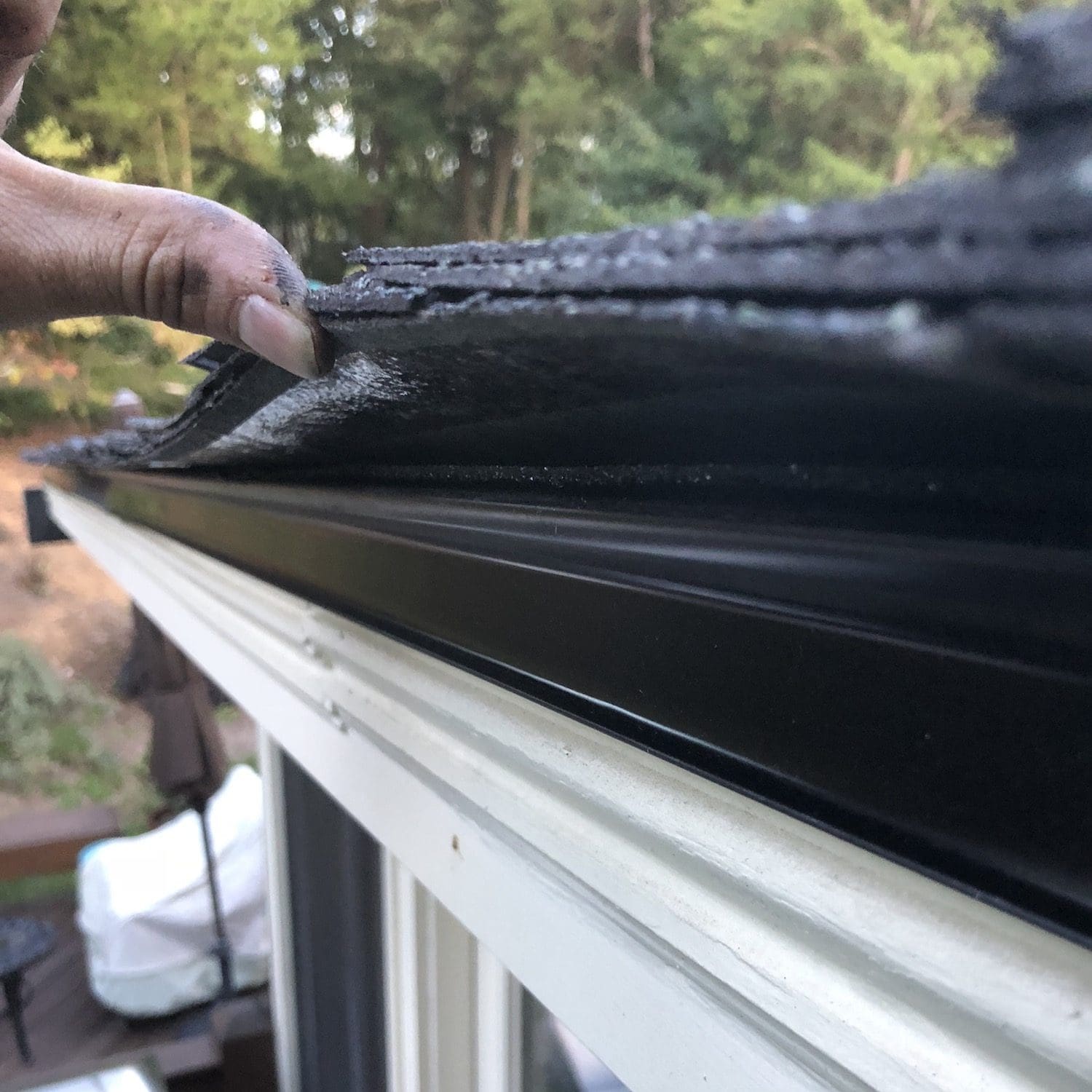
Starter shingles are installed along the edges of your roof to prevent wind uplift. They provide the foundation for your shingle rows and seal down the first course to avoid leaks.
Architectural asphalt shingles are the most visible part of your roof. We install Owens Corning Oakridge® or Duration® shingles for superior performance and curb appeal. These shingles offer excellent wind resistance, vibrant color options, and long-lasting protection.
Check out our Blog for a Full Comparison on Owens Corning Oakridge Vs. Duration shingles
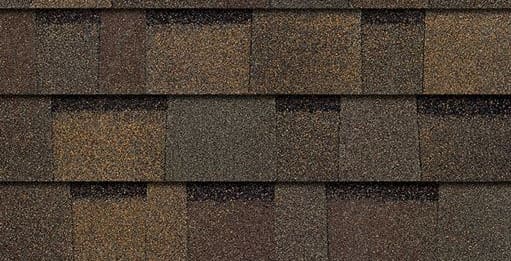
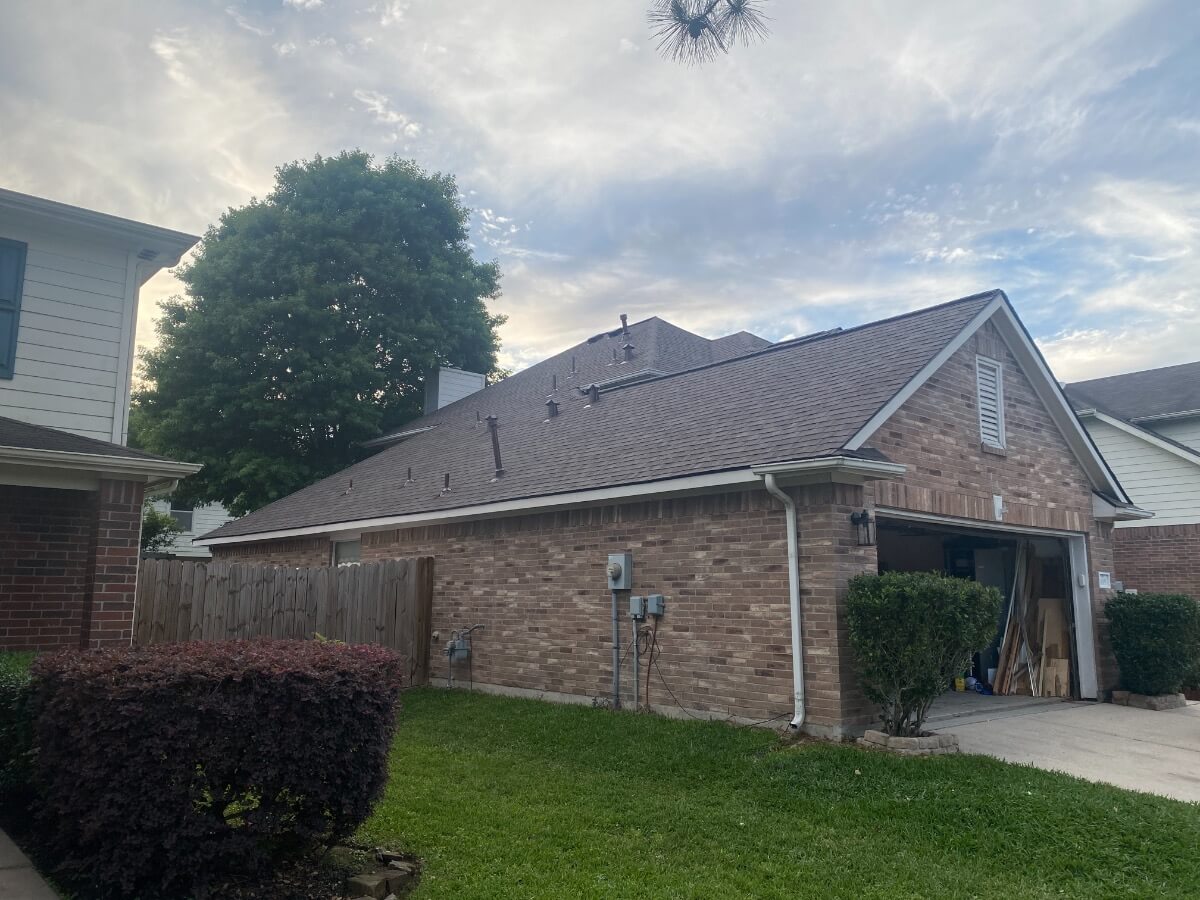
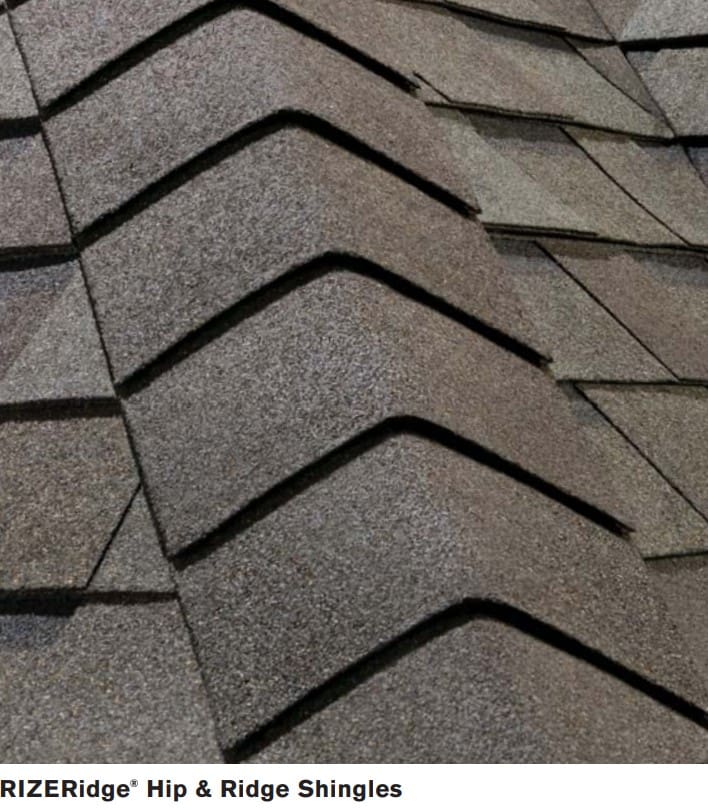
These specialized shingles cover the peak and ridges of your roof. They’re designed to bend and protect the most vulnerable seams where roof planes meet. We install matching Owens Corning ProEdge® Hip & Ridge and Owens Corning RIZERidge® Hip & Ridge
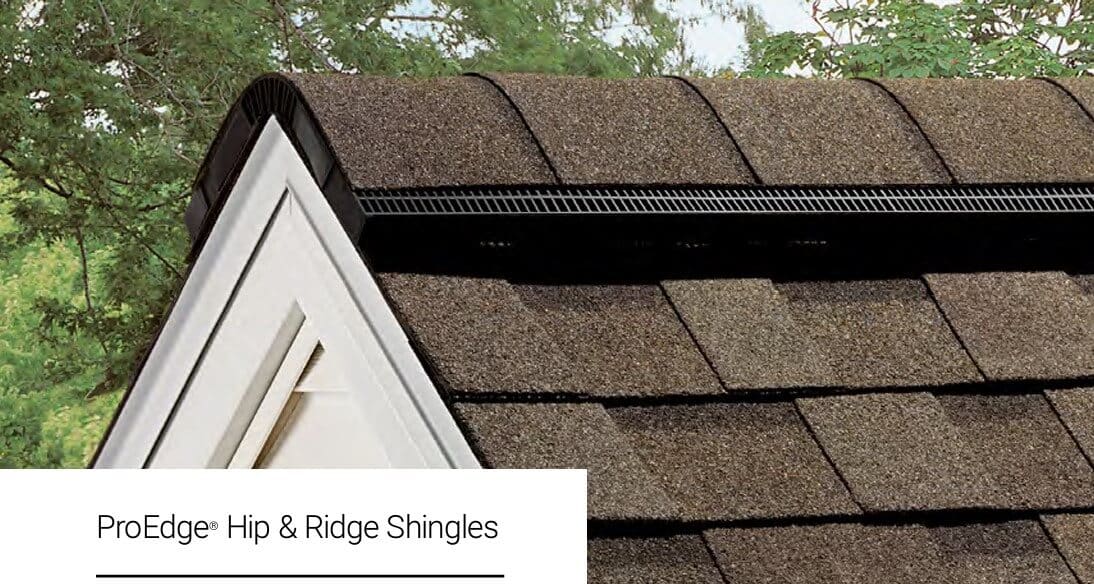
Proper roof ventilation is one of the most overlooked—but most important—parts of a complete roofing system. In Houston’s hot and humid climate, good ventilation helps keep your attic cooler, reduces moisture buildup, and extends the life of your roof. Without proper airflow, heat and humidity can get trapped in the attic, leading to mold, wood rot, and higher energy bills.
There are three common types of attic ventilation used in residential roofing:
Ridge Vents
Ridge vents run along the peak of your roof and allow hot air to escape evenly across the entire attic. Because they sit at the highest point of your home, ridge vents are highly effective when paired with proper intake vents (like soffit vents). They also maintain a clean, low-profile appearance.
Static Roof Vents
Also called box vents or turtle vents, these are small, fixed vents installed near the roof ridge. They allow hot air to exit but do not actively move air. Multiple units are usually installed based on the size of the attic. They’re simple and effective but can be less efficient than ridge vents when not paired properly with intake ventilation.
Whirlybird / Turbine Vents
Turbine vents spin when the wind blows, creating a suction effect that pulls hot air from the attic. They don’t require electricity, and when installed correctly, they can move large volumes of air. However, they rely on wind to function and can wear out over time in Houston’s weather.
No matter which system you choose, ventilation must be balanced—with both exhaust vents (at the top of the roof) and intake vents (typically at the eaves or soffits). This balance allows for continuous airflow, which is essential for energy efficiency and roof performance.
| Feature | Ridge Vents | Static Vents (Box/Turtle) | Turbine Vents (Whirlybird) |
|---|---|---|---|
| Appearance | Low-profile, blends into roofline | Small square vents, visible on roof | Dome-shaped, noticeable on roof |
| Air Movement Type | Passive (constant airflow) | Passive | Passive with wind-powered suction |
| Effectiveness | High (when paired with intake vents) | Moderate (requires multiple vents) | High (with consistent wind) |
| Energy Use | None | None | None |
| Wind Dependency | No | No | Yes (works best in windy areas) |
| Maintenance | Minimal | Minimal | Moving parts may wear over time |
| Durability in Houston Heat | Excellent (no moving parts) | Excellent | Good (can wear faster under sun/heat) |
| Installation Cost | Moderate | Low | Low to Moderate |
| Best For | New roofs, clean aesthetic, max airflow | Simple roof replacements | Budget-friendly airflow boost |
Chimney flashing is the metal installed where the chimney meets the roof, sealing the joint to prevent water intrusion. It’s usually composed of step flashing along the sides and counter flashing embedded into the chimney masonry. In Houston, with frequent rain and high humidity, poorly installed or aging chimney flashing is a common cause of leaks.
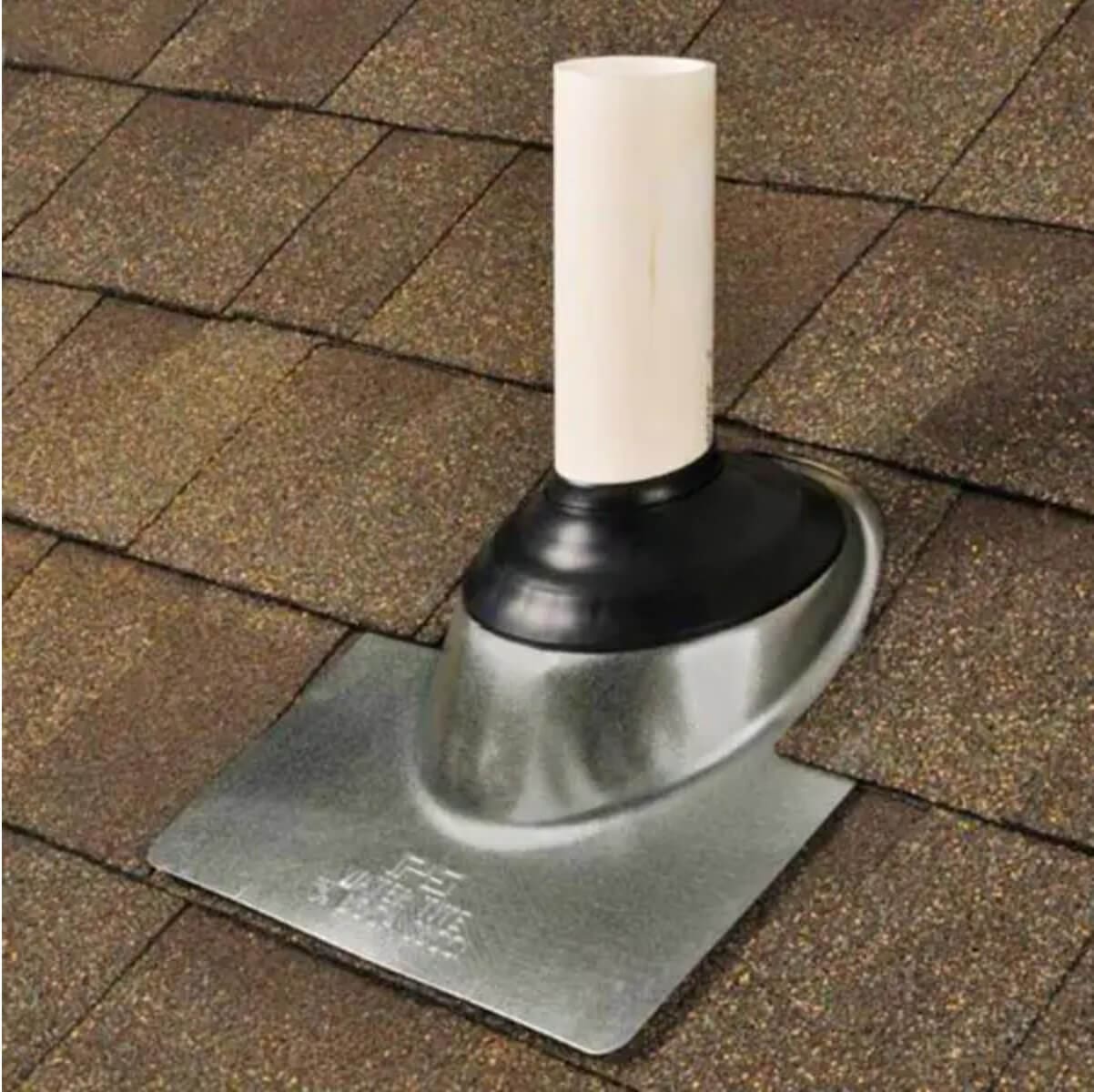
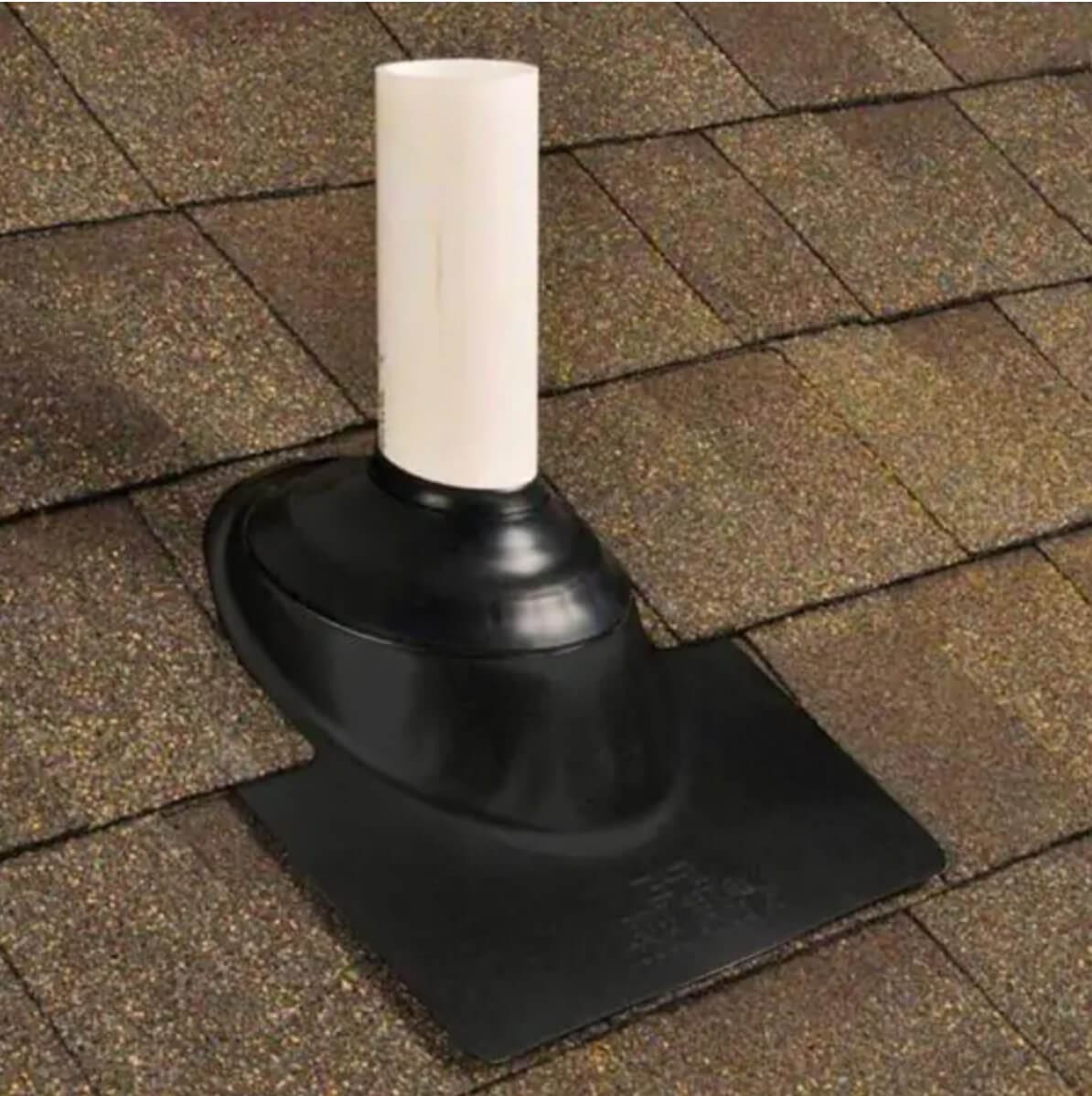
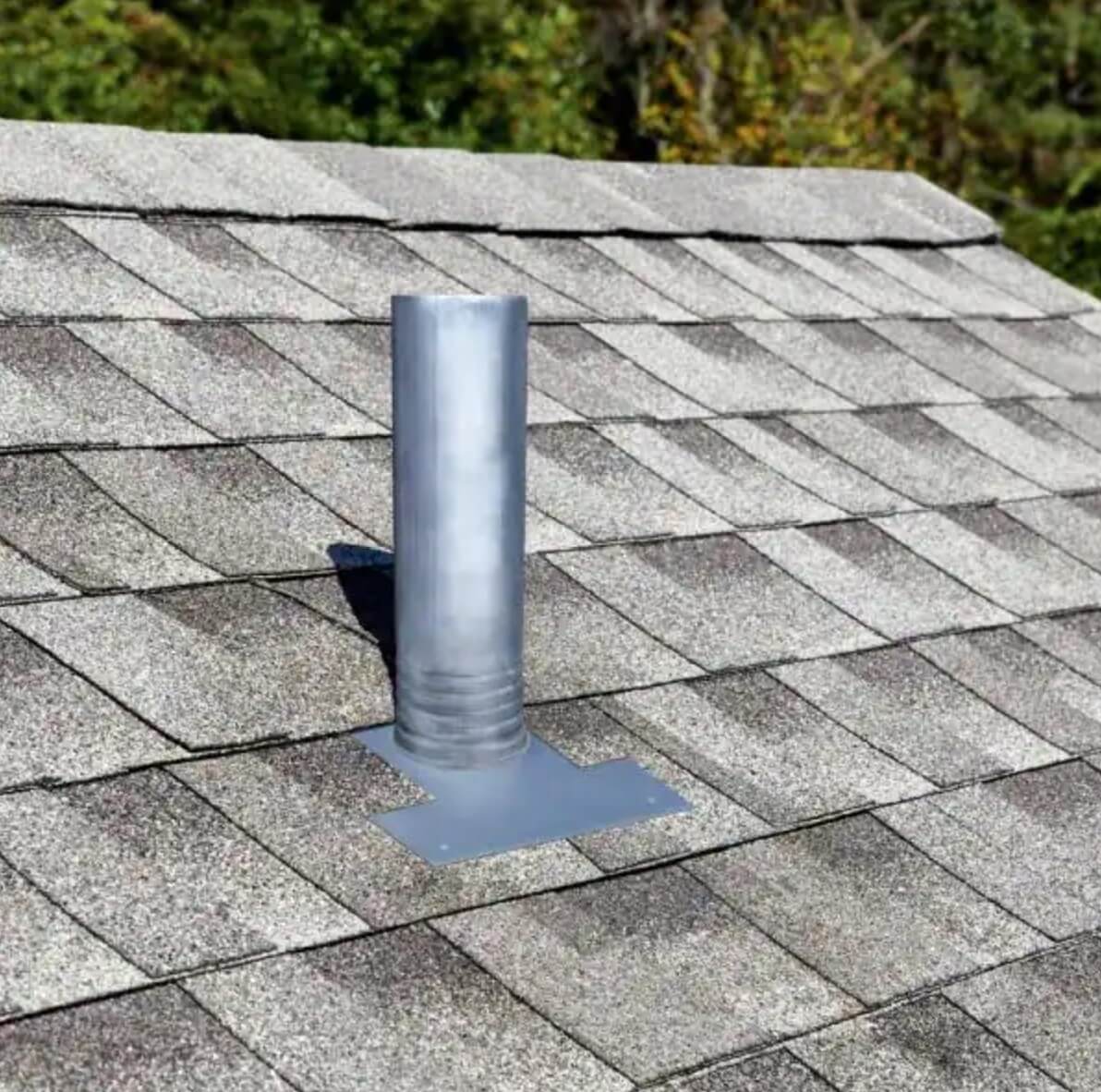
A pipe boot is a flashing device that seals around plumbing vent pipes to prevent water from leaking into your home. These penetrations are one of the most common sources of roof leaks if not sealed properly. There are several types of pipe boots, each with different materials and lifespans.
Metal Pipe Boots
Metal boots, often made of aluminum, are durable and resistant to UV rays. However, they typically rely on a rubber gasket around the pipe, which can dry out and crack over time—especially in Houston’s intense sun and heat. Regular inspection is important with metal boots.
Plastic Pipe Boots
Plastic boots are lightweight and cost-effective but tend to degrade faster under prolonged UV exposure. In Houston, where temperatures get extreme, plastic boots are more likely to crack and are not typically recommended for long-term performance.
Lead Pipe Boots
Lead boots are considered the most long-lasting option. The lead is flexible enough to form a tight seal around the pipe and is resistant to UV damage. Over time, the lead conforms to the shape of the pipe, creating a watertight bond that can last decades. These are ideal for Houston’s harsh climate.
Houston’s intense UV rays, humidity, and hurricane threats require roofing materials that go beyond the basics. At HHH Roofing, we use the Owens Corning Total Protection Roofing System® to ensure every layer of your roof works together to protect your home and maximize longevity.
If you’re considering a new roof, let us walk you through your options and help you understand what goes into your estimate. As a local, family-owned roofing company in Spring, TX, we’re proud to serve Greater Houston with honesty, craftsmanship, and Owens Corning certified quality.
Subscribe now to keep reading and get access to the full archive.